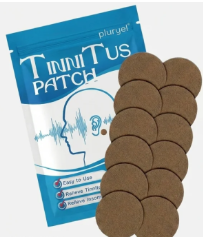

Living with tinnitus can be incredibly frustrating. When the ringing, buzzing, or humming won’t go away, it’s understandable why so many people are willing to try almost anything that promises relief. That’s exactly where Pluryel Tinnitus Relief Patches come in. The patches are advertised as a simple, natural solution that you stick behind your ear to reduce tinnitus symptoms. It’s an appealing idea because it sounds much easier than medication or ongoing treatments. Before I looked at the product, I asked myself one question: Is there good evidence that a patch applied to the skin can actually reduce tinnitus? That question ended up shaping my entire opinion of the product.
Quick Verdict
- What I liked: The patches are non-invasive and easy to apply.
- What concerned me: I couldn’t find independent clinical studies showing Pluryel Tinnitus Relief Patches actually relieve tinnitus.
- Scientific backing: The marketing relies much more on claims than published evidence.
- Would I buy it? I’d be very cautious, especially if you’re hoping for a cure.
- Bottom line: The advertising sounds promising, but I wasn’t able to find convincing proof that these patches work as promoted.
Table of Contents
- Quick Verdict
- What Pluryel Tinnitus Relief Patches Claim to Do
- I Couldn’t Find the Evidence I Was Hoping to See
- The Way the Patches Are Supposed to Work Left Me Curious
- The Advertising Sets Very High Expectations
- Does Pluryel Tinnitus Relief Patches Really Work?
- Pricing
- Who Might Consider Pluryel?
- Who Should Skip Them?
- While Researching Pluryel…
- My Take
- Frequently Asked Questions
What Pluryel Tinnitus Relief Patches Claim to Do
According to the sales pages, the patches gradually release herbal ingredients through the skin to help:
- Reduce ringing in the ears
- Ease buzzing and humming sounds
- Support ear health
- Improve hearing comfort
- Provide natural tinnitus relief without medication
For anyone dealing with constant ringing, those promises are naturally attractive. The difficulty is that tinnitus isn’t a single disease. It’s a symptom that can have dozens of different causes, including hearing loss, noise exposure, ear infections, certain medications, circulatory problems, and neurological conditions. That makes simple solutions much harder to evaluate.
I Couldn’t Find the Evidence I Was Hoping to See
Whenever a health product claims to relieve a medical condition, I immediately start looking for clinical studies. Not studies on herbs. Not studies on individual ingredients. Studies on the product itself. I couldn’t find any published, peer-reviewed clinical trials showing that Pluryel Tinnitus Relief Patches reduce tinnitus symptoms in people. That doesn’t prove they can’t help anyone. It simply means the strongest marketing claims aren’t backed by publicly available clinical evidence.
The Way the Patches Are Supposed to Work Left Me Curious
The company says the patches work by delivering herbal ingredients through the skin behind the ear. I spent quite a while trying to find research showing that this type of patch consistently improves tinnitus. I came up empty. Transdermal patches certainly exist for some medications. Tinnitus, however, is a much more complicated condition. Depending on what’s causing it, treatment may involve hearing aids, sound therapy, counseling, medication for underlying conditions, or simply managing the symptoms rather than eliminating them. There isn’t a widely accepted patch therapy that has been shown to stop tinnitus.
The Advertising Sets Very High Expectations
This was another part that made me slow down. The promotional material gives the impression that the patches can address ear ringing in a simple, natural way. That’s an attractive message, but it’s also easy to overinterpret. nPeople living with tinnitus are often searching for hope, and products marketed to that audience can unintentionally create expectations that current medical research hasn’t confirmed. Whenever I see phrases suggesting fast relief or dramatic improvement, I try to find the published evidence supporting those promises. I couldn’t find it here.
Does Pluryel Tinnitus Relief Patches Really Work?
Some people may feel more comfortable trying a non-invasive patch than taking supplements or medication. Whether the patches actually reduce tinnitus is another matter. Based on everything I found, I don’t think there’s enough independent evidence to confidently say they do. That doesn’t mean every customer will have the same experience. It means buyers should know that the advertising currently appears stronger than the publicly available research.
Pricing
Pluryel Tinnitus Relief Patches are typically sold through their official website, often with discounts for buying several packs at once. Before placing an order, I’d recommend reading the refund policy carefully and checking whether recurring charges or automatic renewals apply.
Who Might Consider Pluryel?
These patches may appeal to adults who:
- Prefer trying non-invasive wellness products.
- Understand the current evidence is limited.
- Are looking for additional symptom support rather than a guaranteed solution.
Who Should Skip Them?
I’d be cautious if you:
- Expect the patches to cure tinnitus.
- Have sudden hearing loss, severe dizziness, or rapidly worsening tinnitus. Those symptoms deserve prompt medical evaluation.
- Are delaying a proper hearing assessment because you’re hoping a patch will solve the problem.
While Researching Pluryel…
I’ve noticed similar marketing in Fuel Health Daily Tribiotic Review and Glyco Result Review, where a legitimate ingredient becomes the foundation for much broader promises than the evidence can fully support.
My Take
I understand why products like Pluryel attract attention. Tinnitus can wear people down, and it’s completely natural to look for something that promises relief. After researching the patches, I kept coming back to one issue. I couldn’t find convincing evidence showing that this specific product has been clinically proven to reduce tinnitus. If future research demonstrates that it works, I’d be happy to change my opinion. For now, I’d rather rely on treatments supported by hearing specialists and discuss persistent tinnitus with an audiologist or physician than put too much faith in a product whose biggest claims still need stronger evidence.
Frequently Asked Questions
Do Pluryel Tinnitus Relief Patches really work?
I couldn’t find published clinical trials showing that Pluryel Tinnitus Relief Patches have been proven to relieve tinnitus symptoms.
Can these patches cure tinnitus?
There’s no reliable evidence that they cure tinnitus. Tinnitus has many possible causes, and treatment usually depends on identifying the underlying reason.
Are the patches safe?
They’re intended for external use, but skin irritation or adhesive reactions are possible with topical patches. Stop using them if irritation develops.
Should I see a doctor for tinnitus?
Yes. If your tinnitus is new, affects only one ear, is accompanied by dizziness or hearing loss, or suddenly becomes worse, you should seek medical evaluation rather than relying on self-treatment.
Are Pluryel Tinnitus Relief Patches worth buying?
If you’re curious about alternative wellness products, you may consider them with realistic expectations. Personally, I’d like to see stronger clinical evidence before recommending them.
You can also check out my review of Halo Grow Hair Spray here.