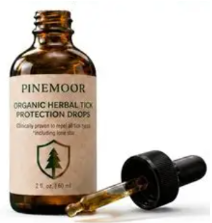

Ticks are not just annoying pests. They can carry serious diseases, which is why products promising easy protection naturally get attention. Pinemoor Tick Protection Drops take a different approach. Instead of spraying your skin or clothes, the product claims that taking a few drops each morning can change your scent and make you less attractive to ticks. The idea sounds convenient. No sticky spray. No strong chemical smell. Just a few drops and daily protection. But after looking at the claims, ingredients, and the science behind tick prevention, the biggest question isn’t whether the formula sounds natural. It’s whether an oral drop can realistically provide the level of protection being advertised.
Quick Verdict
- What I liked: The product uses plant-based ingredients that have some history in natural insect-repelling research.
- What concerned me: I couldn’t find strong clinical evidence showing Pinemoor drops prevent tick bites or tick-borne diseases.
- Scientific backing: Some botanical ingredients may repel insects in certain applications, but that does not prove an oral supplement changes body scent enough to stop ticks.
- Would I recommend it? I would be cautious, especially in areas where tick-borne diseases are a serious concern.
- Bottom line: The concept is interesting. The proof behind the main claim is what needs more attention.
Table of Contents
- Quick Verdict
- What Pinemoor Tick Protection Drops Are Actually Selling
- The Biggest Question: Can Drops Really Make You Invisible To Ticks?
- What’s Inside Pinemoor Tick Protection Drops?
- The “Natural” Marketing Needs Some Context
- What I’d Think About Before Buying Pinemoor Tick Protection Drops
- Better Alternatives I’d Consider
- A Pattern I Keep Seeing
- Conclusion: Is Pinemoor Tick Protection Drops Worth Buying?
- Frequently Asked Questions
What Pinemoor Tick Protection Drops Are Actually Selling
Pinemoor markets these drops as a natural alternative to traditional tick repellents. The main selling point is simple: take 8 drops every morning and supposedly change the way ticks detect you.
The product page highlights:
- 24-hour tick protection
- No DEET or harsh chemicals
- Plant-based ingredients
- A formula made with pure maple syrup
- Protection against tick-borne diseases
The problem is that preventing tick bites is a very specific challenge. A product needs strong evidence showing it works against real-world tick exposure, not just evidence that individual ingredients have insect-related properties.
The Biggest Question: Can Drops Really Make You Invisible To Ticks?
This was the part that needed the most investigation. Ticks do use scent and chemical signals to locate hosts. The idea that changing body odor could influence tick behavior is not impossible. The question is whether swallowing a blend of herbs creates a strong enough change to reliably prevent ticks from finding and biting someone. That is a much bigger claim. I couldn’t find published clinical trials showing that Pinemoor Tick Protection Drops can prevent tick bites or tick-borne diseases.
What’s Inside Pinemoor Tick Protection Drops?
The formula includes ingredients commonly associated with natural insect-repelling products, including herbs such as garlic, oregano, thyme, and other botanical extracts. That sounds promising at first.
However, there is an important difference between:
- A plant extract showing insect-repelling activity in certain situations.
- A person consuming that ingredient and becoming protected from ticks.
Those are not the same thing. Research on botanical tick repellents has generally focused on ingredients used externally, not necessarily swallowed as drops.
The “Natural” Marketing Needs Some Context
The appeal of Pinemoor is obvious. Many people want alternatives to products containing ingredients like DEET. But “natural” does not automatically mean proven. Some natural tick repellents can work in certain situations, but effectiveness varies depending on the ingredient, concentration, and how the product is used. When the claim changes from “may help repel insects” to “prevents tick-borne diseases,” the evidence needs to become much stronger.
What I’d Think About Before Buying Pinemoor Tick Protection Drops
Before relying on this product, I would want answers to a few questions:
- Has the finished formula been tested in humans?
- Are there published studies on this exact product?
- Are ingredient amounts fully disclosed?
- Can it really replace proven tick protection methods?
These questions matter because ticks are not just a comfort issue. They can carry illnesses where prevention is important.
Better Alternatives I’d Consider
For proven tick protection, I would look at products with stronger evidence behind them.
- Sawyer Premium Permethrin Clothing Treatment: Designed for treating clothing and gear to help repel and kill ticks.
- Sawyer Picaridin Insect Repellent: A popular skin-applied option that provides protection without the feel and smell many people dislike from DEET.
- OFF! Deep Woods Insect Repellent: A long-established DEET-based option for people who want a widely studied repellent.
These products may not have the same “all-natural” appeal, but they have a much stronger history of use for tick protection.
A Pattern I Keep Seeing
I’ve noticed similar marketing in products like Solaroza Moringa Microneedle Patch and Dotale Microneedle Patch Review, where a real concept is combined with much bigger promises than the available evidence supports.
Conclusion: Is Pinemoor Tick Protection Drops Worth Buying?
Pinemoor is built around an interesting idea. The ingredients sound familiar, and the desire for a natural tick solution is understandable. The problem is the main promise. Changing your body scent enough to stop ticks from biting is a much bigger claim than simply using a plant-based ingredient. Until there is stronger evidence showing Pinemoor works in real-world conditions, I would not rely on it as my only protection against ticks. For occasional outdoor use, it may seem appealing. For hiking, camping, or areas with serious tick risks, I would choose methods with stronger evidence behind them.
Frequently Asked Questions
Do Pinemoor Tick Protection Drops really work?
There is currently limited evidence showing that Pinemoor drops prevent tick bites or tick-borne diseases.
Are Pinemoor drops safer than DEET?
The product avoids DEET, but that does not automatically mean it provides equal protection.
Can garlic or herbs repel ticks?
Some botanical ingredients have been studied for insect-repelling effects, but that does not prove consuming them will prevent tick bites.
How do you protect yourself from ticks?
Proven options include EPA-registered repellents such as picaridin or DEET and treating clothing with permethrin.
Is Pinemoor Tick Protection Drops worth buying?
The idea is interesting, but the lack of strong product-specific evidence makes it difficult to recommend as a replacement for proven tick protection.