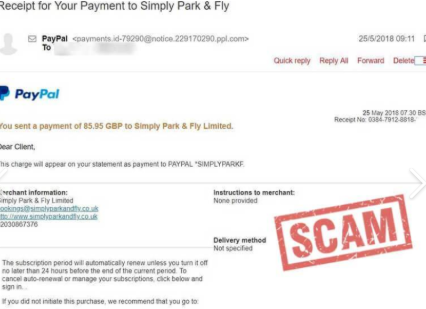

A PayPal Invoice You Never Expected? Imagine checking your email and seeing a message from PayPal informing you that you’ve received an invoice or payment request. The invoice may claim that you’ve purchased cryptocurrency, antivirus software, technical support services, or some other expensive product. Sometimes the amount is a few hundred dollars. Other times it’s over $1,000. Your heart skips a beat. You don’t remember making the purchase. You certainly don’t remember authorizing the payment. The invoice often includes a phone number and instructions to call immediately if you wish to dispute the charge. That’s where the scam begins. The PayPal Invoice Scam is one of the fastest-growing email scams because it exploits something unusual: scammers often use PayPal’s real invoicing system. This makes the emails appear more legitimate than traditional phishing messages.
In this review, we’ll examine how the PayPal Invoice Scam works, why the invoices look authentic, what happens if you call the number, and how to protect yourself.
Quick Takeaway
- The scam often uses PayPal’s legitimate invoicing system.
- Victims receive unexpected invoices for products or services they never ordered.
- The invoice frequently contains a phone number controlled by scammers.
- Fraudsters rely on panic and urgency to get victims to make contact.
- Calling the number can lead to refund scams, phishing attempts, or remote-access fraud.
- Receiving an invoice does not mean you’ve actually been charged.
What Is the PayPal Invoice Scam?
The PayPal Invoice Scam is a fraud scheme that uses fake or misleading invoices to convince recipients that they owe money for a purchase they never made. Unlike many phishing scams, the invoice itself may actually be delivered through PayPal’s legitimate platform. Scammers create invoices or payment requests using PayPal’s tools and send them to thousands of email addresses. Because the email comes through PayPal’s infrastructure, recipients often assume the transaction is genuine. But there’s an important detail many people miss. An invoice is not the same as a completed payment. Receiving an invoice does not mean money has left your account.Scammers depend on recipients overlooking this distinction.
I Looked Closely at How the Scam Works
At first glance, the invoice appears alarming. The recipient sees:
- A product description.
- A large payment amount.
- A transaction reference.
- A merchant name.
- Contact information.
The item being billed may vary. Common examples include:
- Cryptocurrency purchases.
- Norton subscriptions.
- Geek Squad renewals.
- McAfee renewals.
- Computer support services.
- Security software.
Many invoices contain notes urging recipients to call immediately if they did not authorize the purchase.
That phone number is usually the real objective.
The invoice itself is merely bait.
Why the Email Looks Legitimate
One reason this scam is so successful is that many of the emails are technically legitimate PayPal notifications. The scammers aren’t necessarily spoofing PayPal. Instead, they’re abusing PayPal’s invoicing system. This creates a confusing situation for victims. The email may genuinely come from PayPal. The invoice may genuinely exist. But the payment request itself is fraudulent. This distinction catches many people off guard. Recipients assume that because PayPal sent the email, the transaction must be legitimate. Scammers exploit that trust.
What Happens If You Call the Number?
The moment you call the phone number listed in the invoice, the scam enters its most dangerous stage. Victims are typically connected to someone posing as:
- A PayPal representative.
- A billing specialist.
- A technical support agent.
- A merchant representative.
The scammer often claims they can help cancel the charge immediately. They sound professional. They seem knowledgeable. And they know exactly how to create a sense of urgency. What follows depends on the version of the scam being used.
Investigation Findings
The Charge Usually Has Not Occurred
One of the biggest misconceptions surrounding these scams is that recipients believe they have already been charged. In many cases, no payment has actually been processed. The victim simply received an invoice requesting payment. The scammers hope recipients panic before realizing this.
The Phone Number Is Often the Real Scam
Many fraudulent invoices include a customer support number. The scammers want victims to call because phone conversations allow them to manipulate people more effectively than email. Once the victim is on the phone, the fraudster can answer questions, build trust, and guide them through the next stage of the scheme.
Some Victims Are Asked to Install Software
In certain versions of the scam, the fraudster claims remote access is required to resolve the billing issue. Victims may be instructed to install remote-access tools. Once access is granted, scammers can:
- View sensitive information.
- Access stored passwords.
- Monitor activity.
- Install malware.
- Manipulate banking transactions.
Refund Scams Frequently Follow
Another common tactic involves fake refunds. The scammer claims they accidentally issued too much money and asks the victim to return the difference. The overpayment is entirely fictional. The goal is to convince victims to send real money.
Red Flags We Found
Several warning signs appeared repeatedly throughout our investigation.
Unexpected Invoice
You receive a payment request for something you never purchased.
Pressure to Call
The invoice urges immediate contact.
Large Dollar Amounts
The charges are intentionally high enough to provoke concern.
Suspicious Product Descriptions
Many invoices reference products the recipient has never used.
Unverified Contact Information
The included phone number often belongs to scammers rather than legitimate support teams.
Urgent Language
The message attempts to create panic before the recipient verifies the facts.
Why PayPal Is Frequently Used
PayPal is one of the most trusted payment platforms in the world. Millions of people receive legitimate PayPal notifications every day. That familiarity helps scammers.Recipients are naturally less suspicious of messages associated with a trusted financial platform. The abuse of legitimate PayPal tools makes these scams particularly convincing.
How the PayPal Invoice Scam Works
Step 1: Fraudulent Invoice Created
The scammer generates an invoice or payment request.
Step 2: Invoice Is Sent
The recipient receives an email notification.
Step 3: Panic Begins
The invoice appears to show a large unauthorized purchase.
Step 4: Victim Calls the Number
The recipient contacts the phone number listed in the invoice.
Step 5: Social Engineering Starts
The scammer pretends to assist with canceling the transaction.
Step 6: Information or Money Is Stolen
The victim may be tricked into revealing information, granting remote access, or sending money.
Have You Actually Been Charged?
In many cases, no. Receiving a PayPal invoice does not automatically mean that payment has been made. The invoice is simply a request for payment. Before taking any action, log directly into your PayPal account and review your transaction history. Do not rely on information contained in the invoice itself.
Similar Scams We’ve Investigated
The PayPal Invoice Scam is part of a broader category of refund and invoice scams that use fake charges to create panic and pressure victims into contacting scammers.
You may also want to read our investigations into:
- Geek Squad Renewal Email Scam
- McAfee Invoice Email Scam
- Norton Renewal Email Scam
- Amazon Renewal Scam
- Costco Gift Card Giveaway Scams
Although the company names change, these scams typically follow the same pattern: a fake charge, a fraudulent support number, and a scammer attempting to steal money or personal information.
What To Do If You Received a Suspicious PayPal Invoice
If you receive an unexpected invoice:
- Do not call the phone number listed.
- Do not pay the invoice.
- Log directly into your PayPal account.
- Review your transaction history.
- Report the invoice to PayPal.
- Delete the message if it is fraudulent.
What If You Already Responded?
If You Called the Number
Be alert for future scam attempts.
If You Installed Remote-Access Software
Disconnect your device and remove the software immediately.
If You Shared Banking Information
Contact your bank or payment provider.
If You Shared Passwords
Change affected passwords and enable two-factor authentication.
If You Sent Money
Report the transaction immediately and seek assistance from your financial institution.
Frequently Asked Questions
Is the PayPal Invoice Email Legitimate?
The email itself may come from PayPal, but the invoice can still be fraudulent.
Why Did I Receive an Invoice for Something I Didn’t Buy?
Scammers create invoices and send them to large numbers of potential victims.
Does Receiving an Invoice Mean I Was Charged?
No. An invoice is simply a request for payment.
What Happens If I Call the Number?
You may be connected to scammers posing as customer support representatives.
How Can I Verify a Charge?
Log directly into your PayPal account and review your transaction history rather than relying on contact information provided in the invoice.
Bottom Line
The PayPal Invoice Scam is particularly deceptive because it often exploits PayPal’s legitimate invoicing system to make fraudulent payment requests appear authentic. Victims receive alarming invoices for products or services they never purchased and are encouraged to call a phone number controlled by scammers. Although the invoices may look genuine, receiving one does not mean you’ve been charged. The real danger begins when victims contact the fraudsters, who may attempt to steal personal information, gain remote access to devices, or trick victims into sending money.
If you receive an unexpected PayPal invoice, verify everything directly through your PayPal account and avoid using any contact information provided in the invoice itself.