
Onyclean is being sold as a brush-on treatment for thick, discolored, and fungus-damaged nails. Its advertising promises a convenient alternative to messy creams and complicated nail treatments, using a formula containing vitamin E, bergamot oil, and jojoba oil. But the ingredients raise an important question: can a blend of cosmetic oils actually clear a fungal nail infection? The sales page also displays impressive customer ratings and success percentages without providing independent evidence to support them. I examined the published formula, the claims about fungal treatment, the businesses behind the product, and the differences between its sales pages. There are several things buyers should know before spending money on this pen.
Quick Takeaways
- Product: Onyclean Anti-Fungal Pen, a topical nail-care product with a twist-and-brush applicator.
- Ingredients: Vitamin E, bergamot oil, jojoba oil, squalane, sea buckthorn oil, fragrance, and cosmetic carriers.
- Clinical evidence: No verified clinical trial demonstrating that the finished pen clears fungal nail infections.
- Main concern: The advertised success rates and customer ratings lack independently verifiable supporting data.
- Price: Advertised from $14.99 on one storefront to $39.98 for a single pen through a separate offer page.
- Verdict: Onyclean appears to be a real nail-care product, but its antifungal effectiveness remains unproven.
Table of Contents
- Quick Takeaways
- What Is Onyclean?
- Onyclean Does Not List a Recognized Antifungal Drug
- There Is No Verified Clinical Trial for Onyclean
- The Advertised 85% Success Rate Has No Verifiable Study Behind It
- The 21,000 Customer Reviews Cannot Be Independently Verified
- Two Onyclean Sales Pages Have Different Prices and Purchase Terms
- The Manufacturer Is Not Clearly Identified
- The Marketing Claims Go Beyond the Published Formula
- Onyclean May Improve Nail Appearance Without Clearing the Infection
- Is Onyclean a Scam?
- Final Verdict: Should You Buy Onyclean?
What Is Onyclean?
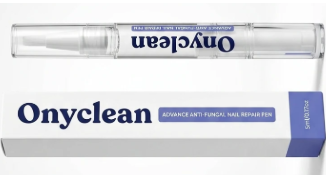
Onyclean is a small applicator pen designed to deliver a liquid formula directly onto fingernails or toenails. The seller recommends washing and drying the affected nail, twisting the base of the pen to release the formula, and brushing a thin layer over the nail and surrounding skin twice daily. The product is marketed toward people dealing with yellowing, brittleness, thickening, and other changes commonly associated with nail fungus. Its appeal is understandable because fungal nail infections can be persistent, and many people would prefer a simple treatment they can apply at home. However, the pen’s convenience doesn’t establish its medical effectiveness. The important issue is whether the formula contains ingredients capable of treating the underlying infection rather than simply conditioning the nail or improving its appearance.
Onyclean Does Not List a Recognized Antifungal Drug
The published Onyclean ingredient list contains ethylhexyl palmitate, hydrogenated polyisobutene, tridecyl trimellitate, diisostearyl malate, fragrance, tocopheryl acetate, jojoba seed oil, squalane, sea buckthorn fruit oil, tocopherol, and bergamot fruit oil. These ingredients are primarily associated with cosmetic formulations, skin conditioning, and moisture retention. Vitamin E acts as an antioxidant and conditioning ingredient, while jojoba oil and squalane help soften and moisturize the nail and surrounding skin. Bergamot oil has demonstrated antimicrobial activity in certain laboratory settings, but that doesn’t establish that it can penetrate an infected nail and eliminate the fungi responsible for onychomycosis. The formula doesn’t list established antifungal medications such as ciclopirox, efinaconazole, or terbinafine. It also doesn’t disclose the concentration of its highlighted botanical ingredients. As a result, there is no reliable basis for comparing the pen’s treatment strength with clinically evaluated antifungal products.
There Is No Verified Clinical Trial for Onyclean
I couldn’t find a published clinical trial demonstrating that the finished Onyclean pen successfully treats fungal nail infections. The distinction between studying an individual botanical ingredient and testing a complete product is especially important here. A substance may show antifungal activity in a laboratory experiment without reaching an effective concentration inside a human nail. Nail fungus is difficult to treat partly because the nail plate creates a barrier that limits how easily topical substances reach the infection. A credible clinical study would need to evaluate Onyclean’s exact formula in patients with confirmed fungal infections, ideally measuring both fungal clearance and visible nail improvement. Without such testing, the seller’s claims about eliminating fungus and restoring damaged nails remain unproven. The formula may help moisturize dry nails, but that is not equivalent to curing onychomycosis.
The Advertised 85% Success Rate Has No Verifiable Study Behind It
One promotional page claims an 85% success rate and refers to a user study involving 289 participants. It also displays percentage-based improvements associated with nail appearance and treatment results. However, the material doesn’t identify the researchers, study sponsor, publication date, methodology, or criteria used to determine success. There is no accessible clinical report showing whether participants had laboratory-confirmed fungal infections, how long they used the pen, or whether their results were compared with an untreated group. This makes the percentages impossible to evaluate independently. The absence of supporting documentation doesn’t establish that every figure is fabricated, but it means readers shouldn’t interpret the numbers as proven treatment outcomes. An advertised success rate is only useful when the study behind it can be examined.
The 21,000 Customer Reviews Cannot Be Independently Verified
Onyclean’s promotional material displays a 4.8 out of 5 rating attributed to more than 21,000 customers. That’s a substantial number for a product with such a limited publicly documented history. However, the sales page doesn’t identify an independent review platform where consumers can inspect those ratings, confirm the purchase history, or see how negative experiences are handled. The displayed testimonials are controlled by the seller, and some appear with generic posting labels rather than useful dates. I also found little established independent customer feedback that would allow me to compare the company’s claims with verified long-term experiences. This doesn’t mean nobody has purchased Onyclean or that every testimonial is false. It means the advertised rating shouldn’t carry the same weight as a large collection of independently hosted, verifiable customer reviews.
Two Onyclean Sales Pages Have Different Prices and Purchase Terms
One of the clearest problems with Onyclean is the difference between its storefront and promotional offer page. The BioCore Renew storefront advertised a single pen for $14.99, with a $9.99 subscription option that renews every 30 days. A separate Onyclean offer page listed one pen for $39.98, three pens for $69.96, and six pens for $99.99. Those are substantial price differences for a product being marketed under the same name. The two routes also describe different refund conditions, and I couldn’t establish whether the pens are identical in size or quantity. The promotional page advertises a 90-day guarantee, while the storefront has its own return authorization requirements and exceptions. Anyone ordering through a social media advertisement could end up paying considerably more than someone visiting the storefront directly. The subscription option is another detail to check carefully because a discounted purchase could lead to recurring charges if the buyer selects the wrong arrangement.
The Manufacturer Is Not Clearly Identified
Several names appear across Onyclean’s online presence, including Onyclean, BioCore Renew, Core Renew, and Represent Ecom. The storefront’s terms identify Represent Ecom as its operator and provide an address in Casper, Wyoming. A separate promotional page lists an Onyclean contact address in Fountain Valley, California, while the storefront’s return policy directs products to a logistics address in North Canton, Ohio. Different business and fulfilment addresses aren’t automatically suspicious because companies frequently outsource warehousing and customer service. However, these pages don’t clearly identify the company that actually manufactures or formulates the pen. There is also no independently verifiable manufacturing history establishing where the product is produced or whether it is a private-label formula. This doesn’t prove that Onyclean is a dropshipping scam, but it leaves buyers with limited information about the business responsible for the product’s quality.
The Marketing Claims Go Beyond the Published Formula
Onyclean describes its formula as natural and gentle, and some promotional material claims that its brush tip helps prevent fungus from spreading to healthy nails. However, the published ingredient list includes synthetic cosmetic carriers and fragrance, so describing the entire formula as plant-based would be inaccurate. The brush applicator may make the product easier to apply, but I couldn’t find independent testing demonstrating that the tip prevents cross-contamination. The advertising also refers to dermatologist recommendations without identifying a dermatologist whose endorsement can be independently verified. These claims may help the product appear more credible, but none establishes that the pen can treat a fungal infection. For comparison, I’ve previously reviewed the AntiFung Toenail Fungus Pen, another brush-on nail product. The important consideration with products in this category is the actual treatment formula, not simply how conveniently it can be applied.
Onyclean May Improve Nail Appearance Without Clearing the Infection
The ingredients in Onyclean could reasonably help moisturize dry cuticles and condition brittle-looking nails. Jojoba oil, squalane, and vitamin E are commonly used for these cosmetic purposes, and a conditioning formula may make rough nails appear smoother with regular application. However, a nail that looks healthier isn’t necessarily free from fungal infection. Onychomycosis can affect the nail plate and nail bed, and successful treatment requires eliminating the infection rather than temporarily improving its appearance. Toenails also grow slowly, meaning that even effective antifungal treatment may take many months before a healthy nail fully replaces the damaged portion. I discussed this difference between cosmetic improvement and actual fungal treatment in my Opti-Nail Renewal Patches review. People with persistent thickening, discoloration, or crumbling nails should consider professional diagnosis because psoriasis, trauma, and other conditions can resemble fungal infections.
Is Onyclean a Scam?
I wouldn’t classify Onyclean as a confirmed scam based on the available information. The product has a published ingredient list, application instructions, identifiable sales pages, and customer service details. However, there is a considerable difference between a product being available for purchase and its advertised treatment claims being reliable. Onyclean doesn’t list an established antifungal medication, and I found no verified clinical trial showing that its finished formula eliminates nail fungus. The unsupported success percentages, unverified customer ratings, unclear manufacturer, and conflicting purchasing arrangements further weaken the offer’s credibility. My assessment is that Onyclean is an unproven nail-care product being marketed with stronger antifungal claims than the available evidence supports. I wouldn’t recommend relying on it to treat an active fungal nail infection.
Final Verdict: Should You Buy Onyclean?
I would skip Onyclean if your main goal is to eliminate toenail fungus. Its formula may help condition dry or damaged-looking nails, but there is no convincing clinical evidence that it treats the underlying infection. The pricing differences and lack of independently verified customer results also make it difficult to justify purchasing the pen at its higher advertised prices. For persistent nail problems, a dermatologist or qualified healthcare professional can confirm the cause and recommend an appropriate treatment. This is especially important for people with diabetes, poor circulation, or weakened immunity.