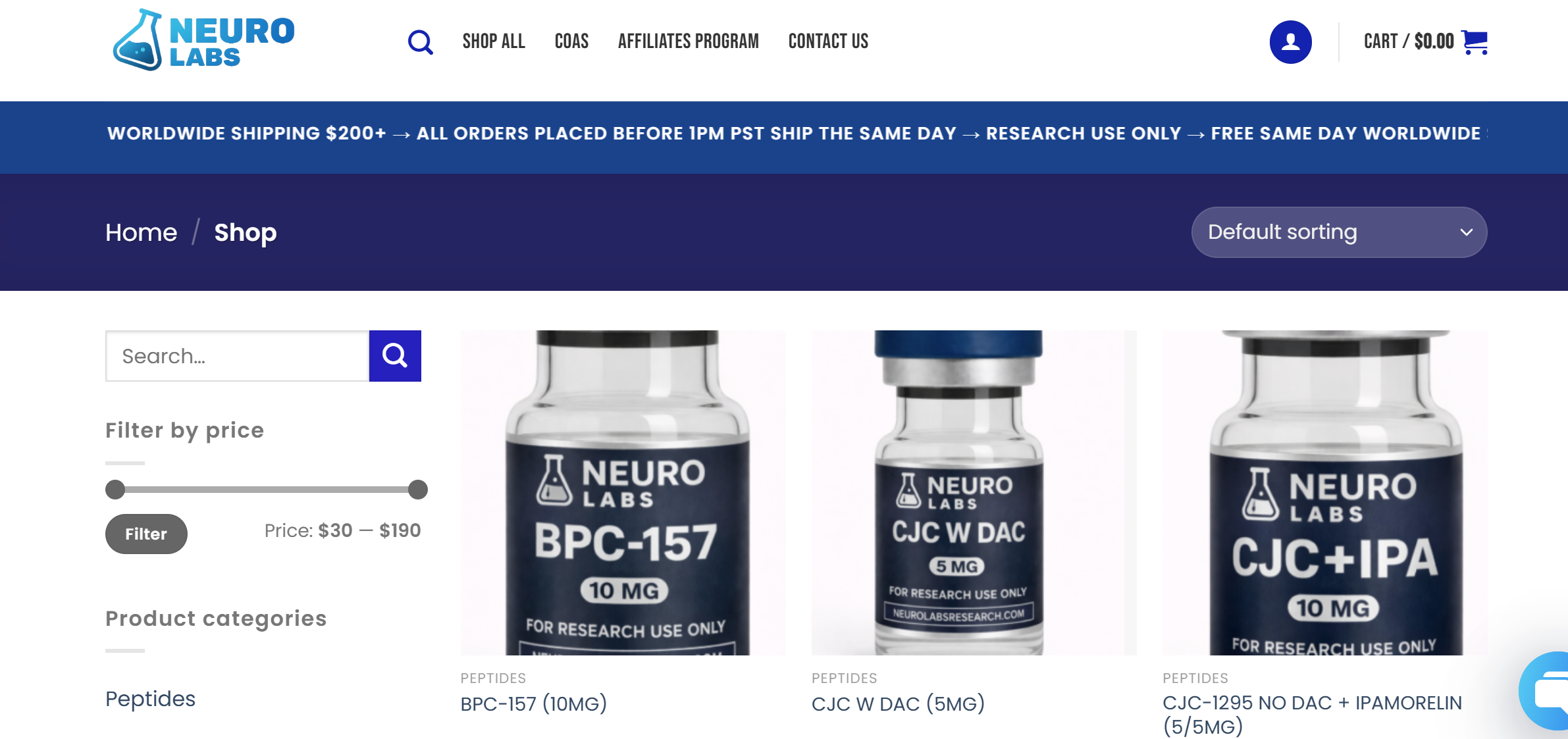

NeuroLabs Peptides kept popping up in biohacking spaces as a source of compounds like BPC-157, CJC-1295, and Semax linked to recovery, fat loss, and cognitive performance. On the surface, it looks like a legit research peptide supplier with serious scientific backing. But once you look closer at the marketing, disclaimers, and lack of clinical proof for real-world use, the picture starts to shift. This review breaks down what NeuroLabs Peptides really is and whether it’s actually legit or just another overhyped biohacking brand.
Quick Verdict
NeuroLabs Peptides sells compounds labeled strictly for research use, not for human consumption. While the website uses scientific language and references laboratory testing, the products operate in a regulatory gray area and are not approved supplements or medical treatments. The marketing often suggests performance or wellness benefits, but there is no clinical evidence showing that NeuroLabs’ specific products deliver those results.
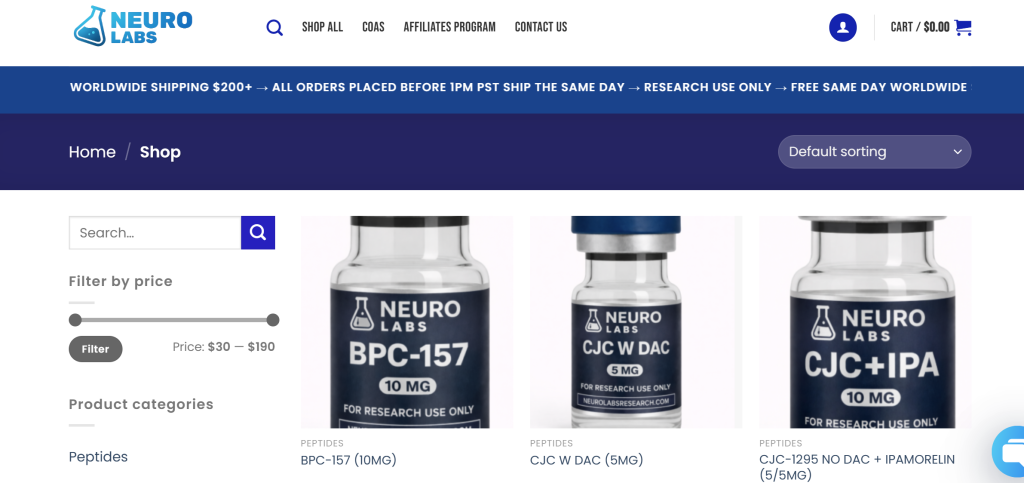
Table of Contents
- Quick Verdict
- Why I Started Looking Into NeuroLabs Peptides
- What NeuroLabs Peptides Claim to Offer
- The “Research Use Only” Label Explained
- Heavy Use of Scientific Language
- Product Naming That Suggests Outcomes
- Pricing and Discount Psychology
- Limited Transparency About the Company
- Real User Feedback Is Sparse
- Do NeuroLabs Peptides Actually Work?
- Red Flags Worth Considering
- Who Should Be Careful With Research Peptides
- Smarter Alternatives to Consider
- How to Avoid Similar Biohacking Product Traps
- Frequently Asked Questions
Why I Started Looking Into NeuroLabs Peptides
I started researching NeuroLabs Peptides after seeing the brand mentioned in biohacking discussions and peptide forums. The company promotes compounds linked to recovery, longevity, cognitive performance, and hormone signaling, which makes the products sound like cutting-edge wellness tools. At first glance, the website gives the impression of a specialized biotechnology supplier offering high-purity peptides backed by laboratory testing. The messaging focuses heavily on science, purity, and advanced research.But as I dug deeper into how the products are presented and what information is actually provided, several inconsistencies started to stand out. The gap between the marketing language and the legal disclaimers is especially noticeable.
What NeuroLabs Peptides Claim to Offer
NeuroLabs Peptides sells synthetic research compounds commonly discussed in experimental peptide research, including:
BPC-157
CJC-1295
Ipamorelin
Semax
Selank
GHK-CU
NAD+
These compounds are associated with areas of scientific study such as tissue repair, hormone signaling, neurological pathways, and metabolic regulation. However, while the marketing often references these biological processes, the company clearly states that its products are sold for research purposes only and are not intended for human consumption. This contradiction creates a confusing situation for buyers. The descriptions hint at benefits connected to performance and longevity, yet the official disclaimer makes it clear the products are not approved for personal use.
The “Research Use Only” Label Explained
One of the most important things to understand about NeuroLabs Peptides is the “research use only” designation attached to every product. This label means the peptides are intended for laboratory or scientific investigation rather than consumer health use. Products sold under this classification are not evaluated as supplements or medical treatments. Many peptide vendors operate in this regulatory gray area. By labeling the compounds for research purposes, companies can legally sell substances that have not gone through clinical approval processes. For buyers unfamiliar with the peptide industry, this distinction is easy to overlook. The presence of scientific terminology can make the products feel more legitimate than they actually are in terms of real-world use.
Heavy Use of Scientific Language
Another marketing element that stands out is the emphasis on laboratory credibility. The NeuroLabs website highlights features such as:
third-party testing
certificates of analysis
high purity standards
laboratory manufacturing
These terms help create the impression that the products are pharmaceutical-grade compounds produced under strict scientific oversight. However, certificates of analysis alone do not guarantee product quality or safety. Independent verification is typically required to confirm purity and dosing accuracy, especially in markets where regulation is limited. Scientific terminology can be useful, but it can also function as a credibility shortcut in marketing.
Product Naming That Suggests Outcomes
Some peptide vendors also rely on subtle psychological marketing through product naming and descriptions. Certain compounds are branded or described in ways that hint at benefits like improved recovery, cognitive performance, or anti-aging effects. Even when those outcomes are not explicitly promised, the association is enough to shape expectations. This type of benefit-anchoring strategy is common in both supplement and biohacking industries.
Pricing and Discount Psychology
Another pattern visible on the NeuroLabs site is the use of discount framing and promotional pricing. Products are sometimes shown with percentage discounts or limited-time offers, which can create the perception that buyers are getting access to expensive research compounds at a reduced price.
In reality, the manufacturing cost of synthetic peptides can be significantly lower than retail pricing suggests. Discounts often function primarily as a psychological trigger rather than a reflection of actual production costs.
Limited Transparency About the Company
While the website emphasizes product testing and purity claims, there is relatively little publicly verifiable information about the company itself. Important transparency details that are often present with established research suppliers include:
leadership information
manufacturing facility details
regulatory registrations
published research collaborations
Without this type of information, it becomes harder for buyers to independently evaluate the credibility of the supplier.
Real User Feedback Is Sparse
Outside of the NeuroLabs website, independent customer feedback is limited. Most discussions appear in niche online communities such as peptide forums or biohacking groups. In many of those conversations, users advise caution when purchasing research peptides from online vendors. The most common recommendation is to independently verify purity through third-party testing rather than relying solely on vendor claims. The lack of consistent, detailed buyer experiences makes it difficult to determine how reliable the products are in practice.
I’ve seen similar patterns in other supplement reviews I’ve done, including my Bioma Probiotics review and NeuroLyfe Sleep Gummies review, where marketing claims were much stronger than real-world evidence.
Do NeuroLabs Peptides Actually Work?
The key issue is that the peptides sold by NeuroLabs are experimental research compounds. While individual peptides may be studied in laboratory settings, there are no clinical trials demonstrating that NeuroLabs’ specific products produce measurable health or performance outcomes for consumers. Marketing language that references metabolism, recovery, or neurological benefits often relies on theoretical associations rather than proven results. Without transparent dosing, clinical evidence, and regulatory approval, it’s impossible to confirm the real-world effectiveness of these products.
Red Flags Worth Considering
- Several factors make NeuroLabs Peptides worth approaching cautiously.
- The products are labeled for research use only rather than approved health use.
- Marketing language often implies wellness or performance benefits despite the legal disclaimer.
- Transparency about the company’s leadership and manufacturing processes is limited.
- Independent customer feedback and verified buyer experiences are scarce.
- These issues don’t automatically prove that the company is fraudulent, but they do raise questions about reliability and expectations.
Who Should Be Careful With Research Peptides
Anyone expecting a proven supplement or medically validated treatment should approach research peptides cautiously.
People interested in biohacking or experimental health approaches are often the target audience for these products. However, the lack of regulation, clinical evidence, and standardized dosing makes them far less predictable than approved supplements or treatments.
Consumers who prefer transparency and safety data may find the peptide market uncomfortable to navigate.
Smarter Alternatives to Consider
Instead of relying on experimental compounds marketed through research-chemical loopholes, it usually makes more sense to focus on well-established health strategies.
Nutrition, exercise, sleep quality, and evidence-based medical care consistently produce better outcomes than unproven experimental substances.
When supplements are used, they should ideally have clear ingredient labeling, known dosages, and credible research supporting their effectiveness.
For example, in my RENPHO Smart Scale review, I looked at more grounded, data-driven approaches to health tracking compared to supplement-based shortcuts
The Bottom Line: NeuroLabs Peptides Raise Important Questions
After researching NeuroLabs Peptides, the pattern looks similar to many vendors operating in the research chemical space. The products are labeled for laboratory research rather than human use, yet the marketing often hints at wellness or performance benefits. With limited transparency, scarce independent reviews, and no clinical evidence tied to the brand’s specific products, NeuroLabs Peptides leave more questions than clear answers. Anyone considering them should understand that these are experimental compounds, not proven health solutions.
How to Avoid Similar Biohacking Product Traps
Be cautious of products that rely heavily on scientific language without providing clear clinical evidence. Always check whether a product is labeled for research use only, as this usually means it has not been evaluated for consumer use.
Look for companies that provide full ingredient transparency, clear dosing information, and verifiable manufacturing details. Avoid relying on marketing language that implies powerful medical effects without directly proving them.
Taking the time to research these details can help prevent costly mistakes.
Frequently Asked Questions
Is NeuroLabs Peptides a scam?
NeuroLabs appears to operate as a research peptide supplier rather than a traditional supplement company. While not officially labeled a scam, the lack of transparency and evidence raises legitimate concerns.
Are NeuroLabs Peptides approved for human use?
No. The products are labeled strictly for research purposes and are not approved as supplements or medical treatments.
Do NeuroLabs Peptides have proven health benefits?
There are no clinical trials demonstrating that NeuroLabs’ specific products produce measurable health or performance benefits for consumers.
Why are research peptides sold online?
Research peptides can legally be sold for laboratory study under the “research use only” classification, which allows vendors to sell them without supplement or pharmaceutical approval.
Should consumers buy research peptides?
Anyone considering them should understand that they are experimental compounds with significantly less safety and regulatory oversight than approved supplements or treatments.