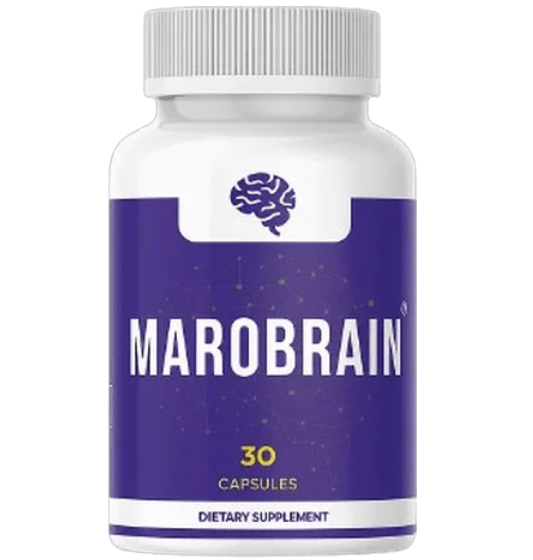

MaroBrain is being advertised as a brain supplement that can sharpen memory, clear brain fog, and improve concentration. Those are familiar promises in the nootropic market, but some advertisements promoting MaroBrain go much further. One campaign presents a supposed Harvard doctor’s discovery of a golden honey recipe that can reverse Alzheimer’s disease, wrapped inside what looks like a CNN Health article. That isn’t an ordinary supplement advertisement. It’s an attempt to borrow credibility from medical professionals and a major news organisation.
I looked into MaroBrain’s marketing, ingredients, sales websites, and scientific claims. What concerned me most wasn’t simply the absence of convincing clinical evidence. It was the difficulty of establishing which formula buyers are actually purchasing, combined with misleading medical endorsements and conflicting information across websites using the MaroBrain name.
Table of Contents
- The Fake CNN Alzheimer’s Cure Story
- MaroBrain Ingredients and Dosage
- Bacopa, Huperzine-A, and the Memory Claims
- The FDA Approval Claim Is Misleading
- MaroBrain’s Manufacturer and Official Website
- MaroBrain Pricing and Refund Guarantees
- MaroBrain Customer Reviews
- Does MaroBrain Actually Work?
- What to Do If You’ve Ordered MaroBrain
- My Verdict: Is MaroBrain Fake or Real?
- Frequently Asked Questions
The Fake CNN Alzheimer’s Cure Story
One documented MaroBrain promotion used Facebook and Instagram advertisements to direct people to a website designed to resemble CNN Health. The supposed article described a Harvard doctor discovering a $12 golden honey recipe that restored his mother’s memory and reversed Alzheimer’s disease. The page used CNN-style branding, medical authority, and an emotional family story to make the claim convincing. But the article wasn’t hosted on CNN’s website, and the alleged medical breakthrough wasn’t supported by genuine published research. The story eventually directed readers toward MaroBrain capsules rather than an independently verified treatment. This is a significant distinction: a fabricated news presentation is not medical evidence, no matter how professionally it is designed. There is no credible clinical basis for claiming that a honey recipe or MaroBrain can reverse Alzheimer’s disease.
MaroBrain Ingredients and Dosage
The ingredient information is inconsistent across websites promoting the product. One MaroBrain website highlights Bacopa monnieri, L-tyrosine, Rhodiola rosea, and Huperzia serrata while describing the formula as stimulant-free. Another lists vitamin B1, B6, B12, caffeine from green coffee bean, L-tyrosine, theacrine, theobromine, Bacopa monnieri, Rhodiola rosea, and Huperzia serrata. A separate sales portal describes a 151 mg proprietary cognitive blend alongside 8.5 mg of vitamin B6 and 24 mcg of vitamin B12, without disclosing the individual quantities inside the blend. Those descriptions cannot all be treated as one verified formula. A 151 mg blend containing several botanical extracts and stimulants also provides too little information to determine whether any ingredient reaches the amounts used in clinical research. Without a consistent Supplement Facts label tied to an identifiable manufacturer, meaningful dose-by-dose evaluation isn’t possible.
Bacopa, Huperzine-A, and the Memory Claims
Some ingredients associated with MaroBrain have been studied for cognitive effects, but that doesn’t establish that this product works. Bacopa monnieri, for example, has been investigated for memory performance, with studies commonly using standardised extracts at approximately 300 mg daily over several weeks. MaroBrain’s various websites don’t establish that the product supplies a comparable amount of a similarly standardised extract. Huperzine-A has also been investigated for cognitive effects, but the concentration of Huperzia serrata extract isn’t the same as a verified amount of active huperzine-A. Theacrine, caffeine, and theobromine may affect alertness, but feeling more stimulated isn’t evidence of improved long-term memory or protection against dementia. Ingredient research cannot substitute for a clinical trial of the finished supplement, particularly when the actual formulation is uncertain.
The FDA Approval Claim Is Misleading
MaroBrain promotional websites display phrases such as “FDA Approved,” “FDA Approved Facility,” and “GMP Certified.” These statements need to be separated. The FDA does not approve dietary supplements for safety and effectiveness before they reach the market, and registration of a manufacturing facility isn’t approval of the products manufactured there. Good Manufacturing Practice requirements concern manufacturing standards, not proof that a supplement improves memory. I couldn’t independently verify a specific MaroBrain manufacturer’s compliance or certification from the promotional statements alone. One website even describes the supplement as FDA approved while including a disclaimer that its statements haven’t been evaluated by the FDA. That contradiction matters because buyers may interpret an FDA badge as evidence that the government has tested and endorsed the product’s cognitive benefits.
MaroBrain’s Manufacturer and Official Website
There are several websites presenting themselves as MaroBrain sales or information portals, including marobrain.com, marrobrain.com, marobrainz.com, and other similarly named domains. Their descriptions don’t consistently agree about the ingredients, serving instructions, or guarantees. One portal identifies Maumee Ridge Nutrition, Inc. as the distributor and publishes a batch number and laboratory-testing claims. However, information posted by a seller isn’t the same as independent confirmation of the manufacturer, laboratory results, or distribution rights. I couldn’t establish one authoritative source connecting all these websites to a single verified product. That makes authenticity unusually difficult to assess. Before buying a supplement, shoppers should be able to identify its responsible company, complete label, manufacturing information, and exact formulation without having to decide which of several competing websites is telling the truth.
MaroBrain Pricing and Refund Guarantees
The pricing is another source of confusion. One promotional website advertises a regular price of $595 per bottle reduced to $49, while another shows $297 reduced to $49. Those enormous advertised discounts aren’t evidence that the supplement was genuinely sold at the higher prices. Refund terms also differ: one website promises 180 days, while another describes a 60-day guarantee. A separate portal promotes multi-bottle packages, with the lowest advertised per-bottle price available only on a larger purchase. I wouldn’t assume that a guarantee displayed on one MaroBrain website applies to purchases made through another. The responsible seller, payment processor, return address, and actual refund conditions should be established before checkout, especially when an advertisement encourages buying several bottles at once.
MaroBrain Customer Reviews
Some MaroBrain promotional pages publish enthusiastic testimonials, including claims of noticeable improvements in memory and concentration. One website advertises thousands of verified customer reviews, but I couldn’t independently confirm those purchase records or determine whether the feedback relates to the same formula sold through other MaroBrain domains. Customer testimonials are also a poor substitute for controlled evidence because changes in sleep, stress, caffeine consumption, and expectations can all influence how mentally alert someone feels. The fake news campaign makes independently verifiable reviews especially important. I would give more weight to consistent feedback from established third-party retailers, identifiable purchasers, and independent testing than to testimonials appearing on pages designed to sell the supplement.
Does MaroBrain Actually Work?
There isn’t convincing clinical evidence that the finished MaroBrain supplement improves memory, prevents dementia, or reverses Alzheimer’s disease. Some ingredients may have limited evidence for specific cognitive outcomes, but that evidence depends on the extract, dose, duration, and population studied. None of those details can be reliably matched to a consistent MaroBrain formulation from the marketing information I reviewed. The Alzheimer’s claims are especially indefensible. No vitamin or dietary supplement has been proven to prevent Alzheimer’s disease, and people experiencing progressive memory problems need medical assessment rather than a product advertised through sensational cure stories. Even for ordinary brain fog or concentration difficulties, there is no sound basis for expecting MaroBrain to deliver the dramatic results described in its promotions.
What to Do If You’ve Ordered MaroBrain
If you’ve already purchased MaroBrain, save the advertisement, checkout receipt, seller’s website address, and refund terms that were displayed when you paid. Check the bottle for a complete Supplement Facts panel, manufacturer or distributor details, lot number, and expiration date. If the information doesn’t match what was advertised, contact the seller in writing and request clarification or a refund. If a misleading medical claim influenced your purchase or the seller refuses to honour the stated terms, ask your payment provider about its dispute process. I would also avoid taking an unfamiliar formula until a pharmacist or qualified healthcare professional has reviewed its ingredients, particularly if you use prescription medication. Anyone experiencing worsening memory problems should seek medical advice rather than delaying evaluation while trying the supplement.
My Verdict: Is MaroBrain Fake or Real?
MaroBrain is a product name attached to multiple supplement sales websites, but its marketing contains serious credibility problems. The fake CNN-style Alzheimer’s cure story is deceptive, the formulas and guarantees aren’t consistent across websites, and I found no convincing clinical evidence supporting the finished product’s promised benefits. I wouldn’t recommend buying it. If a seller wants consumers to trust a brain-health supplement, it should begin with a clearly identifiable manufacturer, one verifiable formula, and claims supported by proper research, not fabricated medical breakthroughs.
Frequently Asked Questions
Can MaroBrain reverse Alzheimer’s disease? No credible clinical evidence supports that claim. Alzheimer’s disease cannot be reversed by a supplement or honey-based home remedy.
Is MaroBrain FDA approved? No. Dietary supplements are not FDA approved for safety and effectiveness before marketing. Facility registration doesn’t change that.
Is MaroBrain stimulant-free? That depends on which advertised formula is being described. At least one MaroBrain website lists caffeine, theacrine, and theobromine, contradicting stimulant-free claims elsewhere.
Are MaroBrain’s ingredients natural? Several advertised ingredients are plant-derived, but natural origin doesn’t guarantee safety, effectiveness, or freedom from medication interactions.
Is there an official MaroBrain website? Multiple domains claim to sell or represent MaroBrain. I couldn’t independently establish a single authoritative website covering all the advertised formulations and guarantees.
Read also >>> Letlade.com Reviews: Suspicious Discounts and Returns to China



[…] Also read >>> MaroBrain Supplement EXPOSED – Fake or Real? […]