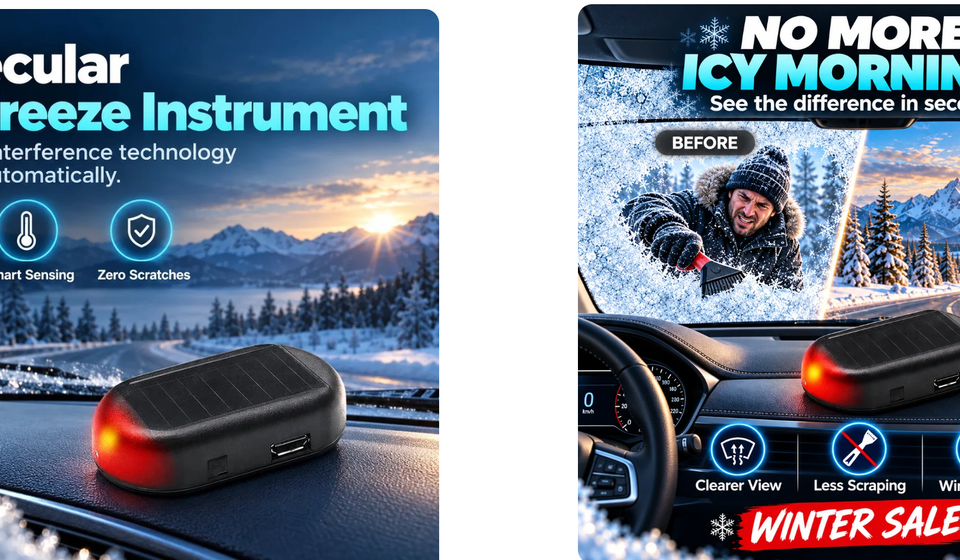

Mintac Molecular Anti-Frost is advertised as a clever little device that can stop frost and snow from building up on your car windshield. The sales pitch makes it sound like some kind of advanced automotive technology, with references to molecular interference and frequency control. At $16.99, it is also priced low enough to tempt drivers who are tired of scraping ice off their vehicles on cold mornings. But when you look beyond the promotional language, some fairly important questions come up. What exactly is inside this device? How is it supposed to prevent frost from forming? And is there any real evidence that the technology works? I looked into the product, the claims surrounding it, and the website selling it. What I found raises serious doubts about whether this is a useful car accessory or simply a familiar low-cost gadget being marketed with a much more impressive story.
Table of Contents
- What Is Mintac Molecular Anti-Frost?
- The Original Product
- How the Device Supposedly Works
- The Technology Claims
- Inside the Mintac Website
- Pricing and Discounts
- Customer and Website Concerns
- Better Alternatives
- Refunds and Cancellations
- Final Verdict
What Is Mintac Molecular Anti-Frost?
Mintac markets the product as a car windshield anti-frost and snow removal device. Its product description uses terms such as electromagnetic molecular interference and precision frequency control, suggesting that the gadget somehow affects the formation of frost on a vehicle’s glass. The idea is appealing: rather than manually scraping ice or using a conventional de-icer, drivers are led to believe that they can place a small device inside the car and let it do the work. The product is compact and listed at $16.99, reduced from a claimed original price of $32.99. However, the description does not provide a convincing technical explanation of how the device produces its supposed anti-frost effect. It is one thing to give a product an impressive scientific name; it is another to explain the mechanism and demonstrate that it actually works.
The Original Product
One of the more interesting findings is that this type of gadget has appeared online before. In December 2023, Tire Meets Road investigated a similar electromagnetic molecular interference antifreeze device. The investigation traced the product to a much more ordinary item: a solar-powered rotating car perfume accessory, also listed by suppliers under names such as Solar Powered Rotating Car Perfume. That is a significant difference from the advanced anti-frost technology suggested by the marketing. It does not establish that every device sold under this name is identical to the one examined in that investigation, and I cannot confirm that Mintac sends customers the exact same item. Still, the resemblance is worth taking seriously. When a product category has already been associated with an ordinary dashboard accessory being presented as a sophisticated frost-removal device, buyers have good reason to ask what they are actually paying for.
How the Device Supposedly Works
Mintac’s description leans heavily on the idea of molecular interference and frequency control, but it does not explain the process in enough detail to make the claim convincing. There is no clear account of what frequency the device produces, how much power it uses, how that energy interacts with windshield moisture, or how the effect would prevent ice from forming across a large glass surface. These are not minor technical details. They are the basic questions a buyer would expect a genuine anti-frost technology to answer. A small gadget sitting on a dashboard would need a credible mechanism to influence the temperature or freezing conditions of the windshield. Without that explanation, the language sounds more like technical decoration than a demonstrated description of how the product works.
The Technology Claims
The promotional presentation also needs to be separated from actual evidence. Images and videos showing a device glowing red or blue can make it look like it is emitting some kind of powerful energy, but a light inside a plastic housing does not demonstrate that it can prevent frost. LEDs can illuminate for many ordinary reasons, and visual effects in promotional footage do not establish what a product can do in real conditions. More importantly, I could not identify independent test results showing that this device prevents frost from forming on a vehicle windshield. There is no clear comparison of treated and untreated glass, no controlled cold-weather demonstration with measurable results, and no technical documentation that explains the claimed molecular effect. For a product whose entire selling point is an unusual scientific mechanism, that absence is a major weakness.
Inside the Mintac Website
The website itself raises a few questions about the business behind the product. Mintac’s homepage currently promotes a mixture of unrelated goods, including a plantable calendar, a heat-reveal religious mug, and the anti-frost device. Its wider product catalogue also contains a broad range of general merchandise rather than focusing on automotive equipment or frost-prevention technology. That does not automatically make a retailer unreliable, but it does make it harder to assess Mintac as a specialist source for an unusual automotive device. There is also an inconsistency worth noticing in the business information: the website’s About Us page names Yingshang County Tongju Trade Co., Ltd. as the operator and gives an address in Anhui, China, while the footer identifies VELMORA COMMERCE INC and lists an Austin, Texas address. Both pages display the same support email address, support@baylinkco.com. Buyers may reasonably want clarification about which company is responsible for their order and where returns would actually be handled. (Mintac About Us; Mintac homepage)
Pricing and Discounts
Mintac lists the anti-frost device for $16.99, displaying a reduction from $32.99 and advertising a 48% saving. The low price makes the offer look like a relatively harmless purchase, especially when compared with more expensive automotive accessories. But the important question is not whether the gadget is cheap; it is whether it performs the job being advertised. A low-cost item can still be poor value if it does not deliver its main function. The website also advertises free shipping above $39.99, which may encourage customers to add more items to their cart. Its shipping policy lists estimated delivery times of around 10–15 business days in normal circumstances, with longer waits possible for remote areas. Those details matter because a buyer should consider the full purchase experience, not just the discounted price shown beside the product. (Mintac shipping policy)
Customer and Website Concerns
Mintac advertises a 30-day money-back guarantee and 24/7 support, but those statements are not a substitute for clear, practical return conditions. Before ordering, customers should establish who handles refunds, where returned items must be sent, whether return shipping is their responsibility, and what evidence is required if the product does not work. The website’s different company details make those questions particularly relevant. I would also be cautious about treating the site’s displayed customer-rating claims as independent proof of product performance. A retailer’s own promotional statements do not tell us whether customers have tested the anti-frost function under genuine winter conditions. The most useful evidence would be detailed, independently verifiable customer demonstrations showing the device working on a cold windshield, rather than general praise or attractive product images.
Better Alternatives
If the goal is to prevent frost from becoming a problem in the morning, there are much more straightforward options. A proper windshield frost cover protects the glass overnight and can be removed before driving. A purpose-made ice scraper is inexpensive and does not depend on an unproven electronic mechanism. Automotive de-icing products can also help loosen ice when used according to their instructions, while a vehicle’s built-in defroster is designed to clear the windshield using the car’s heating and ventilation system. These options may not sound as futuristic as a molecular anti-frost gadget, but their purpose is clear and their basic operation is easy to understand. I would rather spend money on one of these established solutions than rely on a small dashboard device with no convincing evidence behind its central claim.
Refunds and Cancellations
Mintac advertises a 30-day money-back guarantee, but buyers should read the actual return policy and confirm the conditions before paying. Its shipping policy says that orders generally cannot be cancelled once handling has started, although the company says it will try to communicate with customers about possible solutions. That is worth considering if you change your mind shortly after ordering. I would recommend saving a copy of the product listing, the advertised guarantee, the checkout total, and any order confirmation. If you do purchase the device and it fails to perform as advertised, contact the seller in writing and keep the response. Do not assume that a headline promising a money-back guarantee automatically means a return will be simple or free.
Final Verdict
I would not recommend buying Mintac Molecular Anti-Frost based on the evidence currently available. The product is presented as an advanced electromagnetic device, but the website does not provide a convincing explanation of how it prevents frost, and I could not find independent testing demonstrating that it works. The earlier investigation into a similar product category, which traced a version of the gadget to a solar-powered car perfume accessory, adds another reason to be sceptical. There are also questions about the identity of the business operating the Mintac website and the practical details of its returns process. None of this proves exactly what every customer will receive, but it leaves too many unanswered questions for a product whose main selling point is an unusual technological claim. If you need to keep your windshield clear during cold weather, a frost cover, scraper, or proper de-icer is a much safer purchase.
Read Also >>> Casufit Car Vacuum EXPOSED: Is This $55 Cleaner Worth the Hype?