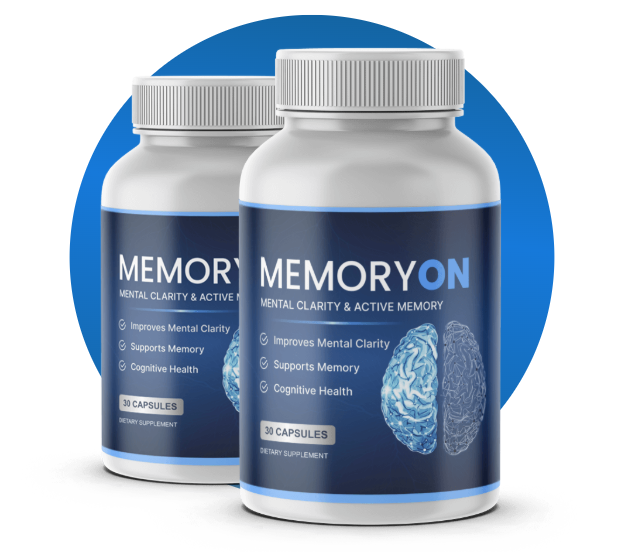

MemoryOn is marketed as a natural brain-support supplement for people experiencing forgetfulness, poor concentration, brain fog and age-related cognitive decline. Some promotional campaigns go further, using Alzheimer’s disease and dementia to make the product appear like a breakthrough solution for serious memory problems. The sales pages use scientific terminology, testimonials and claims about clinically studied ingredients, but I could not find published clinical research establishing that MemoryOn itself improves memory or prevents cognitive decline. I also found inconsistencies across the websites selling it, making it difficult to establish exactly which formula and manufacturer customers are receiving.
Table of Contents
- What Is MemoryOn?
- MemoryOn Ingredients and Dosage
- What the Ingredients Can and Cannot Establish
- There Is No Verified Clinical Trial of MemoryOn
- MemoryOn’s Alzheimer’s and Dementia Marketing
- MemoryOn’s Official Website and Manufacturer Information
- MemoryOn Pricing and Refund Policy
- FDA Approval and Manufacturing Claims
- Safety and Possible Ingredient Interactions
- A Pattern I Keep Seeing
- What to Do If You Ordered MemoryOn
- Final Verdict: Is MemoryOn Worth Buying?
What Is MemoryOn?
MemoryOn is a dietary supplement sold in capsule form and promoted for memory retention, mental clarity, concentration and general cognitive support. Its marketing describes the formula as a combination of herbal extracts, amino acids and nutrients intended to support blood circulation, neurotransmitter activity and brain-cell function. Some sales pages also associate it with Alzheimer’s disease, dementia and age-related memory loss. Those are much more serious claims than ordinary nutritional support, and they require stronger evidence than testimonials or explanations about how individual ingredients might work.
MemoryOn Ingredients and Dosage
One MemoryOn sales website lists six ingredients: Ginkgo biloba leaf extract, phosphatidylserine, N-acetyl L-carnitine HCl, Bacopa monnieri leaf extract, L-glutamine and Alpha-GPC. However, the pages I reviewed do not provide a complete, independently verifiable breakdown of the quantities of each ingredient in the formula. Without those amounts, it is difficult to compare the product with doses used in published research or assess whether the combination is appropriately formulated. The sales material recommends one capsule daily, but buyers should follow the directions on the actual bottle rather than rely solely on online promotional copy.
What the Ingredients Can and Cannot Establish
Ginkgo biloba: Ginkgo is frequently marketed for circulation and cognitive support. However, the National Center for Complementary and Integrative Health reports that large studies have not shown it prevents dementia or slows Alzheimer’s progression. Evidence for improving cognitive performance in otherwise healthy people is also uncertain.
Bacopa monnieri: Bacopa has been studied for memory and cognitive performance, with some small studies suggesting possible benefits. The research varies in quality, extract preparation and dosage. Evidence about a particular Bacopa extract cannot automatically be applied to MemoryOn.
Phosphatidylserine: This phospholipid is naturally present in cell membranes and has been investigated for possible effects on cognitive function. Research findings are not sufficient to establish that MemoryOn produces meaningful improvements in memory.
N-acetyl L-carnitine: This compound is involved in cellular energy metabolism and has been investigated in neurological and age-related conditions. Those investigations do not establish that the amount in MemoryOn improves memory in healthy adults.
L-glutamine: Glutamine is an amino acid involved in several metabolic processes. Its presence in a brain-support formula does not demonstrate that taking additional glutamine improves memory or reverses cognitive decline.
Alpha-GPC: Alpha-GPC supplies choline, which the body uses to produce acetylcholine, a neurotransmitter involved in memory and learning. That biological role is not proof that an Alpha-GPC-containing supplement produces better memory or prevents dementia.
The distinction is straightforward: research on individual ingredients is not the same as a clinical trial of the finished supplement.
There Is No Verified Clinical Trial of MemoryOn
I could not locate a published, peer-reviewed clinical trial testing MemoryOn’s finished formula against a placebo or another appropriate comparison. The sales pages use phrases such as scientifically backed, clinically proven and research-supported, but they do not provide a product-specific study demonstrating that users experience measurable improvements. There is also no independently established evidence that MemoryOn reverses Alzheimer’s disease, removes brain toxins or prevents dementia. The product’s claims therefore go beyond what I could verify.
MemoryOn’s Alzheimer’s and Dementia Marketing
MemoryOn is promoted through advertorial-style campaigns that use stories about hidden causes of memory decline, breakthrough discoveries, medical authorities and simple recipes supposedly capable of restoring brain function. Some campaigns invoke Harvard doctors or familiar news-media branding to make the presentation look like independent medical reporting. These techniques can make a sales pitch appear more authoritative than it is. The FDA has separately warned consumers about unapproved products marketed with claims to prevent, treat or cure Alzheimer’s disease. That warning does not identify MemoryOn specifically, but it reinforces why consumers should not treat a supplement advertisement as medical evidence.
MemoryOn’s Official Website and Manufacturer Information
I found multiple websites using the MemoryOn name, including memoryon-memoryon.us, memoryon.co and several similarly named domains. Their marketing language is remarkably similar, but the pages do not consistently provide the same level of ingredient information. One page claims the supplement is made in the United States in an FDA-registered, GMP-certified facility, yet I could not independently verify the manufacturing facility or establish a clearly identified manufacturer from the information reviewed. A claim that a product is made in an FDA-registered facility is not the same as FDA approval of the supplement. The different sales domains also make it important to verify the exact website and seller before ordering.
MemoryOn Pricing and Refund Policy
One sales page advertises a single bottle for $79, three bottles for $207 and six bottles for $294, reducing the advertised price to $49 per bottle in the largest package. It promotes the six-bottle option as the best value and claims that 97% of customers choose it, but I found no independent evidence supporting that percentage. The same website advertises a 60-day money-back guarantee, including returns of empty bottles, while stating that shipping and handling are deducted. These are seller-published terms, not proof that refunds are always processed as promised. I would save the exact checkout price and refund conditions before making any purchase, particularly when ordering through a promotional link.
FDA Approval and Manufacturing Claims
Some MemoryOn pages use FDA-approved or FDA-certified language. This is misleading when applied to the supplement itself. The FDA does not approve dietary supplements for safety and effectiveness before they are marketed in the United States. A manufacturer may operate in an FDA-registered facility, but registration does not mean the FDA has tested or approved MemoryOn. The responsibility for ensuring that a dietary supplement meets applicable safety and labelling requirements rests initially with the manufacturer and distributor.
Safety and Possible Ingredient Interactions
Natural ingredients are not automatically harmless. Ginkgo biloba can increase bleeding risk, particularly when combined with anticoagulant or antiplatelet medication, and supplements can interact with prescription medicines. The absence of clearly disclosed ingredient quantities also makes it harder to assess the formula’s overall safety. Older adults, people taking regular medication and anyone with an existing medical condition should have a pharmacist or healthcare professional review the complete product label before using it. MemoryOn should not replace prescribed treatment or medical assessment for worsening memory problems.
A Pattern I Keep Seeing
MemoryOn is part of a category where claims about memory, concentration, and mental performance often sound more convincing than the evidence behind them. I have encountered similar marketing approaches in my investigations of Golden Brain and NeuroRecall. Looking at these products side by side reinforces why I pay close attention to the actual formula, ingredient quantities, and research supporting the finished supplement rather than relying on promises about better memory and sharper thinking.
What to Do If You Ordered MemoryOn
If you have already purchased MemoryOn, keep your receipt, order confirmation, product-page screenshots and the exact website address used to place the order. Check your payment statement for the amount charged and look for any additional transactions or subscription terms. If you no longer want the product, contact the seller in writing, request cancellation of any recurring arrangement and ask for the return instructions and full refund conditions. Do not assume that an advertised guarantee means you can ignore its deadline or shipping requirements. If you notice an unauthorised charge, contact your card issuer or payment provider promptly. If you have memory problems, particularly new or worsening symptoms, arrange a proper medical assessment instead of relying on the supplement.
Final Verdict: Is MemoryOn Worth Buying?
I cannot recommend MemoryOn as a clinically established memory supplement. Its advertised ingredients have been studied individually, but I found no verified clinical trial demonstrating that the finished formula improves memory, reverses cognitive decline or protects against Alzheimer’s disease. The unclear manufacturer information, multiple similarly branded sales websites and exaggerated medical marketing add further reasons for caution. MemoryOn may be sold as a dietary supplement, but its promotional claims should not be mistaken for proof of effectiveness. My assessment is that MemoryOn is an inadequately substantiated supplement with misleading health-marketing concerns, and I would avoid buying it as a solution for memory loss or dementia.