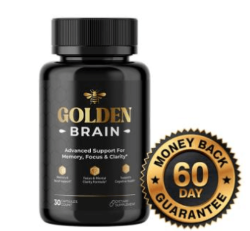

Golden Brain is being promoted through advertisements claiming that a simple honey and cinnamon trick can reverse Alzheimer’s disease and restore lost memories. Some videos feature Bill Gates discussing what sounds like an extraordinary medical discovery, while others resemble television news reports involving familiar journalists and celebrities. The promise is that people struggling with memory loss can recover their mental abilities without relying on conventional treatment.
I became curious about Golden Brain because the advertisements seemed more interested in selling a dramatic discovery than explaining what was actually inside the capsules. After looking into the celebrity videos, the supposed medical breakthrough, and the websites connected to the product, I found a deceptive advertising campaign and some serious questions about what customers are being asked to purchase.
Quick Takeaways
- Product: Golden Brain, advertised as a memory and cognitive-support supplement.
- Celebrity ads: AI-generated videos impersonating Bill Gates and other public figures.
- Main claim: A honey and cinnamon discovery that supposedly reverses Alzheimer’s in 45 days.
- Ingredients: Conflicting formulas and no consistently verified Supplement Facts label.
- Checkout concern: One Golden Brain promotional route redirects buyers to MemoHoney.
- Verdict: The Alzheimer’s cure advertising is a scam, and I would avoid buying through it.
Table of Contents
- Quick Takeaways
- What Is Golden Brain?
- The Bill Gates Golden Brain Video Is an AI-Generated Scam
- The Fake News Reports Make the Alzheimer’s Cure Look Real
- The Honey and Cinnamon Trick Leads to a Supplement Sales Pitch
- Golden Brain’s Ingredients Are Difficult to Verify
- The Golden Brain Order Link Redirects to MemoHoney
- There Is No Reliable Evidence of Golden Brain’s Advertised Results
- Is Golden Brain a Scam?
- What To Do If You Already Ordered Golden Brain
- Conclusion
What Is Golden Brain?
Golden Brain is the name used for a dietary supplement promoted to people experiencing forgetfulness, brain fog, poor concentration, and age-related memory problems. Some websites describe it as a natural brain-health formula, while the more aggressive advertisements suggest that it can reverse dementia and restore memory in people diagnosed with Alzheimer’s disease.
The problem is that Golden Brain doesn’t have a clearly established product identity across the websites promoting it. Different pages describe different ingredients, bottle designs, and formulations. Some appear to be informational or affiliate websites rather than the actual manufacturer. That makes it difficult to determine whether everyone searching for Golden Brain is being directed toward the same supplement.
The Bill Gates Golden Brain Video Is an AI-Generated Scam
The most widely circulated Golden Brain promotion uses an apparent video of Bill Gates discussing a breakthrough for Alzheimer’s disease. The presentation makes it seem as though Gates has discovered or endorsed a treatment capable of restoring memory within 45 days. Other versions feature Anderson Cooper, Morgan Freeman, Bruce Willis, Clint Eastwood, and Japanese scientist Yoshinori Ohsumi. The campaign uses manipulated or AI-generated footage to create the impression that these recognizable figures are involved in the discovery.
There is no credible evidence that Bill Gates developed, funded, or endorsed Golden Brain. The same applies to the other celebrities and public figures appearing in the promotional material. Their faces and voices are being used to lend authority to a supplement advertisement, not to communicate an authentic medical announcement. Anyone who encountered Golden Brain through these videos should disregard the supposed endorsements entirely.
The Fake News Reports Make the Alzheimer’s Cure Look Real
The advertisements also borrow the appearance of established television news organizations, including CNN, CBS, and 60 Minutes. Viewers are shown what looks like an investigative report about a hidden treatment, sometimes accompanied by suggestions that the medical industry has kept the discovery from the public. This presentation makes the promotion appear more credible than an ordinary supplement commercial.
The central medical claim is particularly troubling. Alzheimer’s disease is a progressive neurological condition, and there is no credible clinical evidence that a honey recipe or Golden Brain capsules can reverse it in 45 days. Some treatments can help manage symptoms or slow progression in eligible patients, but that is very different from curing dementia. The advertised breakthrough has not been supported by an authenticated clinical study demonstrating the promised recovery.
The Honey and Cinnamon Trick Leads to a Supplement Sales Pitch
The campaign often begins with a promise to reveal a simple homemade recipe involving honey and cinnamon. That makes the advertisement seem like free health advice rather than a commercial. Viewers are encouraged to keep watching to learn how the ingredients supposedly remove the underlying cause of memory loss.
However, the presentation eventually introduces Golden Brain capsules as the product to purchase. The honey recipe functions as a way to attract attention and build interest before the commercial offer appears. Neither honey nor cinnamon has been shown to reverse Alzheimer’s disease, and the advertisement doesn’t establish that the capsules can reproduce the effects it describes.
Golden Brain’s Ingredients Are Difficult to Verify
I found conflicting ingredient descriptions associated with the Golden Brain name. One promotional information page describes baobab fiber, L-arabinose, spermidine, and konjac glucomannan. Other listings mention ingredients such as bacopa, lion’s mane mushroom, L-theanine, and ginseng. Marketplace listings under similar branding show yet another combination, including amino acids and botanical extracts.
These differences are too significant to dismiss as minor changes in packaging. I couldn’t independently authenticate a complete Supplement Facts panel connecting the advertised Alzheimer’s treatment to a specific, consistently identified formula. Without knowing the actual ingredients and their quantities, it’s impossible to assess the product properly. Research on an individual compound also cannot establish the effectiveness of an unidentified mixture.
The Golden Brain Order Link Redirects to MemoHoney
One of the more unusual findings involves the purchasing process. An investigation of a Golden Brain information website found that its order link redirected visitors to a sales page for a different supplement called MemoHoney. The destination wasn’t simply another page using the Golden Brain name. It presented MemoHoney as the product being sold.
The MemoHoney offer advertised two bottles for $158 plus $9.99 shipping, three bottles for $207, or six bottles for $294. It also promoted a 60-day refund guarantee, with return conditions requiring customers to send back the bottles and packing slip. These are the terms observed on that particular sales route, not verified prices or refund conditions for every product called Golden Brain. The redirect doesn’t prove that customers receive a substituted product after payment, but I wouldn’t complete a purchase when the item at checkout differs from the one I researched.
There Is No Reliable Evidence of Golden Brain’s Advertised Results
Searching for Golden Brain reviews brings up promotional websites, affiliate articles, marketplace listings, and independent scam investigations. The problem is that these pages don’t consistently refer to the same formula or seller. A favorable review of one bottle doesn’t necessarily tell you anything about the supplement featured in the Bill Gates advertisement.
I also couldn’t establish a reliable body of independent customer feedback demonstrating meaningful improvements in diagnosed dementia or Alzheimer’s disease. Even genuine testimonials about feeling more focused wouldn’t prove that a supplement treats a neurological condition. That would require properly designed clinical trials using the finished product and measuring medically meaningful outcomes.
Is Golden Brain a Scam?
Yes, the Golden Brain advertising campaign promising an Alzheimer’s cure through Bill Gates and a honey trick is a scam. The celebrity appearances are fabricated, the news-style presentation is deceptive, and the extraordinary medical promises lack credible evidence. I wouldn’t trust a supplement being sold through that campaign.
This doesn’t establish that every bottle sold under the Golden Brain name is counterfeit or that every similarly named product comes from the same seller. The evidence is strongest against the specific advertising campaign and its unsupported treatment claims. Still, I found no convincing reason to purchase Golden Brain through those promotions.
What To Do If You Already Ordered Golden Brain
Start by checking your order confirmation to identify the exact product, merchant, quantity, and total amount charged. This is especially important if the checkout displayed MemoHoney or another name instead of Golden Brain. Keep screenshots of the advertisement, payment confirmation, and refund terms, and contact the merchant promptly if the product or charge doesn’t match what you authorized.
If the seller refuses to resolve an unauthorized charge or legitimate refund dispute, contact your card provider. Anyone considering Golden Brain for a family member with memory loss should also avoid delaying medical assessment. Memory problems can have several causes, and identifying them is more important than trying an unverified supplement promoted through fabricated medical news.
Conclusion
After investigating Golden Brain, I found a deceptive Alzheimer’s cure campaign built around AI-generated celebrity endorsements, a misleading honey recipe, and a confusing supplement sales process. The available evidence doesn’t support the claim that Golden Brain can restore lost memories or reverse dementia.
I wouldn’t recommend buying Golden Brain through these advertisements. The supposed Bill Gates discovery isn’t real, and the product’s uncertain identity makes the offer even harder to trust.
Check Out // Tmrw Daily Reviews 2026: Does This Longevity Supplement Really Work?