
EsoRepair is being pushed heavily toward people dealing with throat clearing, mucus, a lump-in-the-throat feeling, hoarseness, and what marketers call “silent reflux.” The idea is easy to understand. Instead of simply reducing stomach acid, EsoRepair is supposed to soothe and protect the irritated throat and esophagus. That sounds interesting. Then I started looking at the actual product listings, and things got confusing very quickly. There are different EsoRepair formulas being sold online, with different ingredient lists, different companies, and even different explanations of how the product works. That ended up being the part of this product I cared about most.
Quick Verdict
- What I liked: The formulas contain several recognizable ingredients used for digestive and throat support.
- What concerned me: There isn’t one clearly identifiable EsoRepair formula online. Different sellers are offering substantially different versions.
- Science: Some individual ingredients have legitimate research behind them, but that doesn’t prove the finished EsoRepair formula works as advertised.
- Would I recommend it? I’d be cautious until the manufacturer and exact formula are clear.
- Bottom line: The concept makes sense, but the product identity is far less clear than the advertising makes it seem.
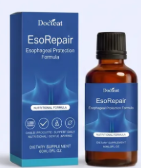
Table of Contents
- Quick Verdict
- What Is EsoRepair Actually Supposed to Do?
- There Are Two Very Different Formulas
- The Ingredient List Isn’t Actually Bad
- The “Coat and Heal” Explanation Sounds Better Than the Evidence
- The NanoRevive Version Makes Even Bigger Claims
- Some of the Numbers Sound More Impressive Than They Are
- What About the Customer Reviews?
- There’s Another Thing I’d Be Careful With
- The Company Question Is Still Unclear
- Better Alternatives I’d Consider
- A Pattern I Keep Seeing
- Conclusion: Is EsoRepair Worth Buying?
- Frequently Asked Questions
What Is EsoRepair Actually Supposed to Do?
EsoRepair is marketed primarily toward people with reflux symptoms that seem to reach the throat. The Docteat version describes itself as a daily liquid for “silent reflux” and focuses heavily on throat clearing, morning mucus, hoarseness, irritation, and that annoying feeling that something is stuck in the throat.
Another version sold under the NanoRevive name goes even further, calling itself a “nano-powered esophageal protection” formula and talking about supporting the esophageal lining and mucosal barrier. So we’re not really talking about a generic digestive supplement. The whole product is built around the idea of protecting irritated upper digestive tissue.
There Are Two Very Different Formulas
This was the biggest thing I noticed. The Docteat EsoRepair formula contains aloe vera, licorice root, turmeric, grape seed extract, and vitamins C, E and B6.
The NanoRevive EsoRepair formula is completely different. It contains zinc-L-carnosine, DGL, slippery elm, aloe vera, hyaluronic acid, chondroitin sulfate, sodium alginate, marshmallow root, L-glutamine, vitamin D3 and quercetin.
Those aren’t minor differences. They’re two very different formulations using the exact same product name. That makes it difficult for someone researching EsoRepair to even know which product they’re reading about.
The Ingredient List Isn’t Actually Bad
Some of the ingredients actually make sense for what the product is trying to do. Slippery elm and marshmallow root have traditionally been used as soothing, mucilage-rich herbs. DGL licorice is commonly used in digestive supplements. Zinc-L-carnosine has been investigated for gastrointestinal and mucosal support, while sodium alginate has evidence for forming a physical barrier that can reduce reflux episodes. So I wouldn’t call the formulas nonsense. There is a legitimate idea underneath them. The problem is what happens when those individual ingredients are turned into claims about the finished product.
The “Coat and Heal” Explanation Sounds Better Than the Evidence
The Docteat sales page describes EsoRepair as something that coats the throat, calms inflammation, and helps the lining heal. That’s a very appealing explanation if you’ve been dealing with constant throat irritation. But the body is more complicated than the sales pitch makes it sound.
Swallowing a liquid containing soothing ingredients doesn’t mean the entire esophagus is being covered with a therapeutic layer for hours. And even if an ingredient has demonstrated a useful effect in a study, that doesn’t prove this particular combination produces the same result.
The NanoRevive Version Makes Even Bigger Claims
The NanoRevive version calls its delivery system “nano technology” and claims it can provide up to 98% nutrient absorption. That’s a claim I’d want to see some serious evidence behind. I couldn’t find published clinical evidence demonstrating that the finished EsoRepair formula achieves 98% absorption.
The website does cite studies involving individual ingredients and uses those results to support the overall formulation. That’s useful background. It just isn’t the same as a clinical trial of EsoRepair.
Some of the Numbers Sound More Impressive Than They Are
The NanoRevive sales page highlights figures such as 58% less inflammatory signaling, 4.4 times more heartburn relief, and 60% lower risk of severe tissue injury. Those numbers come from studies of individual ingredients or related research, not from a trial showing that people taking EsoRepair experienced those exact results. It’s easy to read those numbers and assume the product itself has been clinically tested. But the study never actually tested EsoRepair.
What About the Customer Reviews?
This is where things get interesting because the feedback isn’t uniformly negative. Some people say EsoRepair helped with throat clearing, reflux symptoms, hoarseness, or that persistent lump sensation. There are also complaints about cost and product consistency. One customer reported receiving bottles with noticeably different taste and consistency and questioned whether the formula was consistent from bottle to bottle.
NanoRevive also has a substantial number of positive Trustpilot reviews, although some of the review language is remarkably similar to the claims made on the product pages.
I wouldn’t use testimonials as proof that the product works. But I also wouldn’t ignore them completely. They’re useful for seeing what people actually notice, especially when the experiences aren’t all the same.
There’s Another Thing I’d Be Careful With
Both versions lean heavily on the idea that reflux is damaging the throat and that the product can help the tissue recover. If someone has persistent swallowing difficulty, unexplained weight loss, vomiting, chest pain, bleeding, or ongoing symptoms despite treatment, that’s not something I’d try to manage indefinitely with a supplement. The underlying cause needs to be established. A supplement can be part of someone’s routine, but it shouldn’t become an excuse to avoid finding out what’s actually causing the symptoms.
The Company Question Is Still Unclear
This is where EsoRepair gets particularly messy. The trademark records I found show EsoRepair associated with more than one applicant, including Seven Trends LLC in the United States and Ten Digital Pte. Ltd. in Singapore. Meanwhile, the product is being sold through Docteat and NanoRevive websites using different formulations. That doesn’t necessarily mean the products are fake. But it does mean I wouldn’t casually assume that every bottle advertised as “EsoRepair” comes from the same manufacturer. If someone orders this product, I’d check the company name on the bottle, the exact ingredient panel, and the website they actually purchased from.
Better Alternatives I’d Consider
For reflux support, I’d rather compare EsoRepair with established options such as Gaviscon Advance, Pepcid AC, or DGL Plus depending on the actual symptoms and what a healthcare professional recommends.
For persistent reflux or throat symptoms, I’d also put proper evaluation ahead of experimenting with multiple supplements.
A Pattern I Keep Seeing
I’ve noticed something similar with Neuvelys, YouthRite Thyroid Patch, and Blood Pril. The basic product idea can sound reasonable. Then the advertising starts adding layers around it: advanced delivery systems, impressive percentages, scientific terminology, and testimonials that make the product seem much more proven than it actually is. The interesting part is usually separating the reasonable idea from everything added around it.
Conclusion: Is EsoRepair Worth Buying?
I’m not convinced that EsoRepair is a bad supplement. I’m more concerned that EsoRepair isn’t clearly one supplement. The Docteat version and NanoRevive version have substantially different formulas, different marketing, and different companies behind them. That’s not something I’d overlook when I’m trying to decide whether a digestive supplement is worth buying.
The ingredients themselves are more interesting than I expected, particularly in the NanoRevive formula. But I couldn’t find enough evidence to say that EsoRepair itself has been clinically proven to repair the esophagus, heal reflux damage, or deliver the impressive absorption numbers used in the advertising. If I were considering it, I’d first make sure I knew exactly which EsoRepair I was buying.
Frequently Asked Questions
What is EsoRepair used for?
EsoRepair is marketed for reflux-related throat and digestive discomfort, including throat clearing, mucus, hoarseness, irritation, and a lump-in-the-throat sensation.
Is EsoRepair a reflux medicine?
No. It is marketed as a dietary supplement, not as a conventional acid-reducing medication.
What ingredients are in EsoRepair?
That depends on which product you’re buying. The Docteat version contains aloe, licorice, turmeric, grape seed extract, and vitamins C, E and B6. The NanoRevive version contains a substantially different combination including zinc-L-carnosine, DGL, slippery elm, marshmallow root, sodium alginate, hyaluronic acid, chondroitin, L-glutamine, vitamin D3 and quercetin.
Does EsoRepair really repair the esophagus?
I couldn’t find clinical evidence showing that the finished EsoRepair product repairs esophageal tissue. Some of its individual ingredients have research involving digestive or mucosal support, but that’s not the same thing.
Can EsoRepair replace omeprazole?
I wouldn’t treat it as a replacement for prescribed reflux medication without discussing it with a healthcare professional. If you’re already taking omeprazole or another medication for reflux, don’t stop it suddenly because a supplement claims to work differently.
Are there side effects?
The ingredients can cause problems for some people. Licorice, for example, can affect blood pressure when consumed in significant amounts, while some herbal ingredients may interact with medications.

[…] bile metabolism, and build an entire detox story around it. We’ve seen similar marketing with EsoRepair, where familiar ingredients are presented as though they can solve a much bigger health problem […]