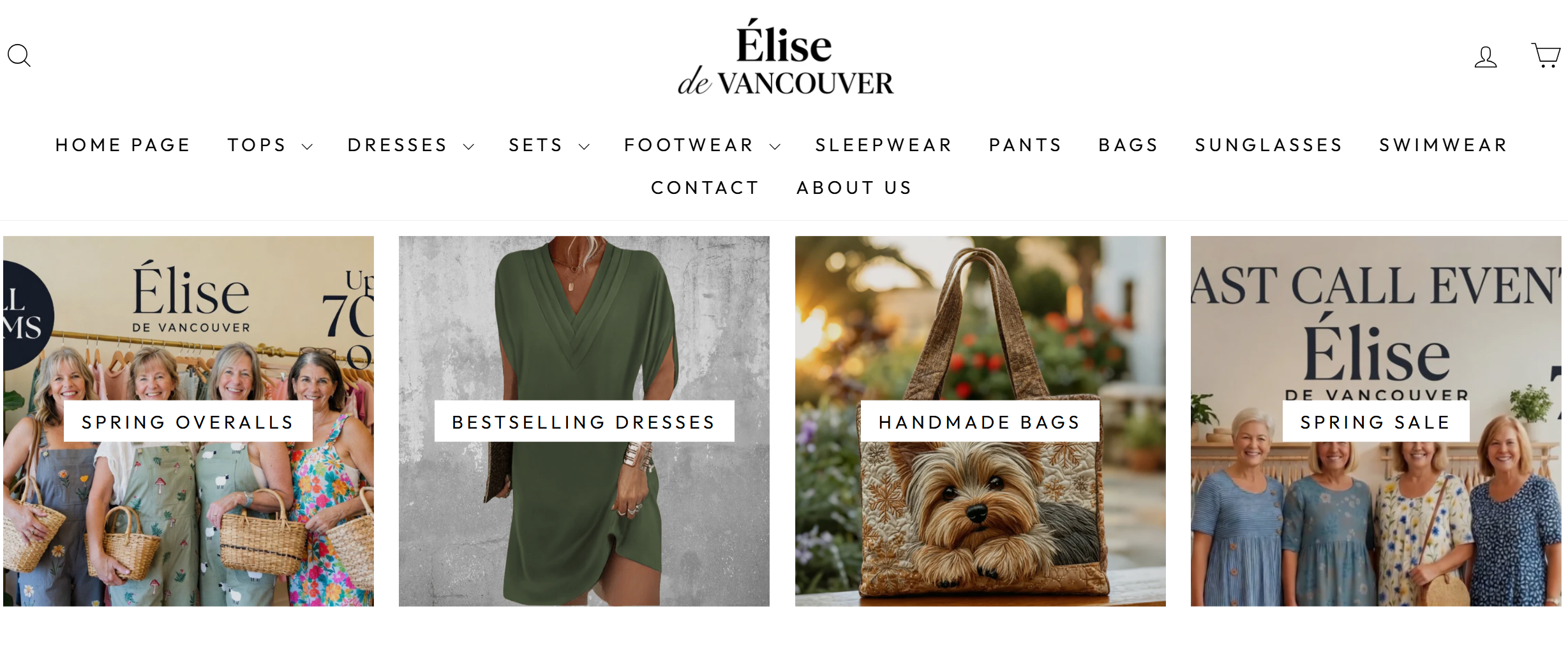

Élise de Vancouver presents itself as a Canadian women’s fashion boutique offering elegant clothing, shoes, bags, and accessories at attractive prices. The branding feels polished, the story sounds personal, and the store leans heavily on seasonal promotions like Spring Sale and Closing Sale campaigns.
The question is whether you’re looking at a genuine fashion retailer or another online store built around marketing-first tactics that rely more on emotion than long-term brand trust. I spent some time digging into Élise de Vancouver to see what sits behind the storefront.
Quick Takeaways
- Élise de Vancouver sells women’s fashion, shoes, bags, and accessories
- The store pushes heavy promotional campaigns like Spring Sale and Closing Sale
- Domain was created in May 2026 and expires in May 2027
- The brand story leans heavily on emotional storytelling rather than verifiable history
- Several trust signals shoppers typically rely on are limited or difficult to confirm
- Proceed cautiously before placing an order
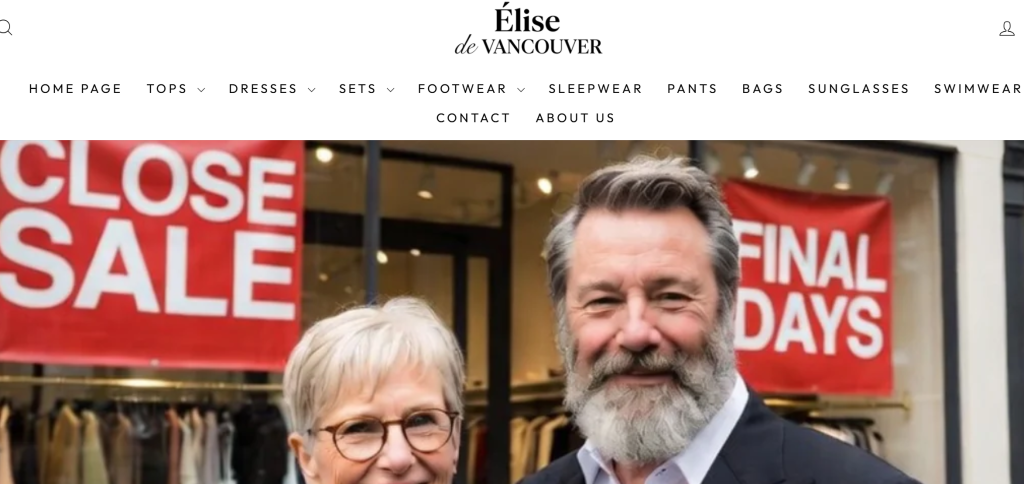
Table of Contents
- Quick Takeaways
- What Is Élise de Vancouver Selling?
- Red Flags
- What Happens After You Place An Order?
- Why The Story Starts To Feel Engineered
- A Pattern I Keep Seeing
- What To Do If You’ve Ordered
- Is Élise de Vancouver Legit or a Scam?
- Conclusion
- FAQ
What Is Élise de Vancouver Selling?
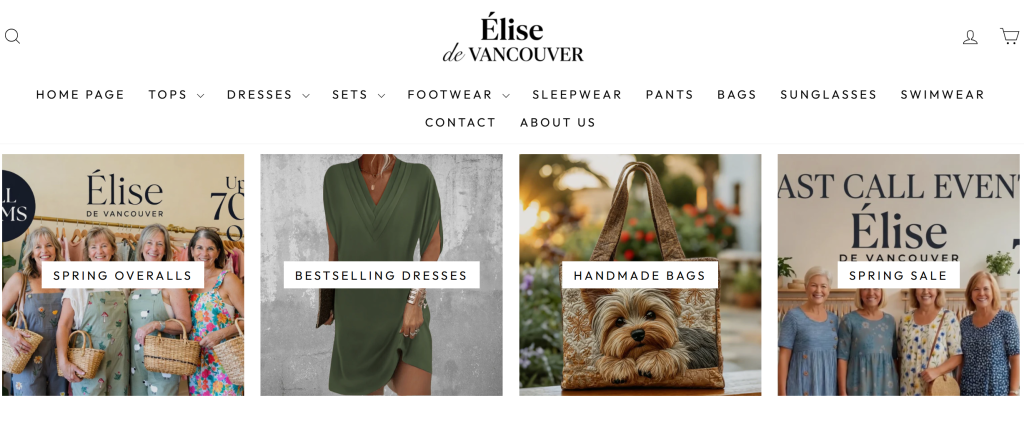
Élise de Vancouver focuses on women’s fashion, offering dresses, footwear, handbags, and accessories. On the surface, it presents itself as a boutique-style brand aiming to deliver elegant, accessible fashion at lower prices.
What stands out immediately is not just the clothing, but the framing around it. The entire shopping experience is wrapped in storytelling, seasonal urgency, and “limited opportunity” messaging designed to make the brand feel personal and time-sensitive.
This is where the store shifts away from simple fashion retail and starts leaning into emotional selling.
Red Flags
Weak Domain History
One of the first things I check is how long a store has actually existed. The Élise de Vancouver domain was registered in May 2026 and expires in May 2027. That’s a very recent footprint for a brand presenting itself as an established fashion house. Real retailers usually leave years of traceable history through reviews, customer interactions, and external mentions.
Here, that long-term trail is limited.
Selling Emotion, Not Just Clothing
One detail that really changes how this store feels is the narrative used across its messaging. The “After 37 years, we’re closing our doors for good” story reads like this:
AFTER 37 YEARS, WE’RE CLOSING OUR DOORS FOR GOOD…
Hello, I’m Élise, and this is my husband, Michael. For 37 years, side by side, we’ve poured our hearts into choosing and curating a selection of clothing made to last, not just for a season. Today, the big chains have taken over, and together we’re preparing to close the doors of our atelier for good.
Our granddaughters have come to help us through this final chapter and it’s thanks to them that we’ve found the strength to offer you this one last gift. Thank you, from the bottom of our hearts, for being part of this journey.
This type of messaging is not just branding. It is emotional framing built around urgency, nostalgia, and empathy. It positions the buyer inside a sentimental story where purchasing feels like “supporting a legacy” rather than simply buying clothing.
That emotional pull is powerful, but it also raises a question: how much of the buying decision is being driven by the product itself versus the story attached to it?
Brand Consistency Questions
Another thing that stands out is the overall identity presentation. The store uses a refined “Vancouver fashion house” image, but the storytelling style, closing narrative, and promotional structure feel more like a marketing script than a long-established brand voice.
When a store relies heavily on emotional storytelling while lacking external proof of history, it becomes harder to separate brand identity from marketing narrative.
What First Made Me Look Closer
A few patterns stood out quickly:
- A newly registered domain
- Heavy reliance on “closing forever” messaging
- Emotional storytelling built around family legacy
- Strong urgency-driven promotional structure
- Limited independent brand footprint outside the website
None of these are proof of wrongdoing on their own. Together, they form a pattern often seen in short-lifecycle fashion storefronts.
What Happens After You Place An Order?
This is usually where the difference between branding and reality becomes clearer. The checkout experience is typically smooth. Orders go through, confirmation emails arrive, and everything feels standard. The uncertainty usually starts after payment.
With stores built heavily around emotional marketing and urgency campaigns, customers often report slower shipping timelines than expected, limited tracking clarity, or delayed support responses when issues arise. That doesn’t mean every order fails. It simply means the real experience becomes visible only after commitment has already been made.
The Expectation Gap
A common issue with emotionally marketed fashion stores is the gap between perception and delivery. The storytelling builds a sense of heritage, quality, and curated craftsmanship. Product images reinforce that impression. When the physical item doesn’t fully match that expectation in material quality or finish, the emotional trust that was built during checkout tends to collapse quickly.
Why The Story Starts To Feel Engineered
The more established a brand is, the more its reputation exists outside its own website. With Élise de Vancouver, most of the credibility is internal: story, branding, and presentation. External verification is limited. That doesn’t automatically make it unsafe. It does mean the trust is being built through narrative rather than independently verifiable history.
A Pattern I Keep Seeing
Élise de Vancouver follows a pattern I’ve seen across several newly surfaced fashion stores where emotional storytelling plays a central role in conversions. Similar patterns have appeared in stores like Dailyanddecor.com, Lucy and Claire Charleston Boutique, Maison Alto, and Rearedition. The structure is consistent: strong emotional framing, urgency-driven sales language, and limited external brand validation.
That doesn’t mean they are connected. It means they are using a very similar approach to selling.
What To Do If You’ve Ordered
If you’ve already placed an order, keep everything documented:
- Order confirmation
- Payment receipts
- Product page screenshots
- Any communication with support
This helps if you need to dispute a charge or request a refund later.
Is Élise de Vancouver Legit or a Scam?
The biggest concern here is not a single red flag, but how heavily the store relies on emotional storytelling and urgency-driven marketing while lacking a strong independent reputation footprint. It operates in a space that feels more like narrative-driven ecommerce than a clearly established fashion brand.
At minimum, it deserves caution before purchase.
Conclusion
By the end of the review, Élise de Vancouver feels less like a long-established fashion house and more like a brand built around emotional storytelling and promotional urgency. The clothing may be the product, but the real driver of sales appears to be the feeling behind the story.
FAQ
Is Élise de Vancouver a real fashion brand?
It operates as an online fashion store, but independent verification of long-term brand history is limited.
When was elisedevancouver.com created?
The domain was registered in May 2026 and expires in May 2027.
Why does the store use emotional storytelling?
The website uses a narrative-driven approach that creates urgency and emotional connection around purchasing decisions.
Does Élise de Vancouver offer refunds?
Refund policies exist, but buyers should carefully review terms before purchasing due to limited external trust signals.
Should I buy from Élise de Vancouver?
Only after careful consideration and independent research, especially given the strong emotional marketing approach.