
I didn’t start looking into the Easewell Restore because I was searching for another seat cushion. I looked into it because I kept seeing the same promise repeated in the ads. Sit comfortably for hours. Reduce pressure on your back. Relieve tailbone pain. Improve posture. Those are big claims for something that sits on top of an office chair.
After researching the Easewell Restore, I don’t think the biggest question is whether it works. The more interesting question is whether it does enough to justify choosing it over the dozens of other ergonomic cushions that all promise similar results.
Quick Takeaways
- The Easewell Restore is designed to reduce pressure on the tailbone and hips while encouraging better sitting posture.
- The ergonomic concept behind it is legitimate, but it should not be viewed as a treatment for chronic back pain.
- Comfort appears to depend heavily on your chair, body type, and how long you spend sitting.
- The marketing is more ambitious than the evidence available.
- It looks like a reasonable ergonomic accessory, but not the miracle solution some advertisements suggest.
Table of Contents
- Quick Takeaways
- What Is the Easewell Restore?
- Why So Many People Are Interested In Easewell Restore
- Can a Seat Cushion Really Help?
- What Customer Feedback Actually Looks Like
- The One Thing I’d Think About Before Buying
- A Pattern I Keep Seeing
- Pros And Cons
- Is the Easewell Restore Worth Buying?
- Better Alternatives
- Conclusion
- FAQ
What Is the Easewell Restore?
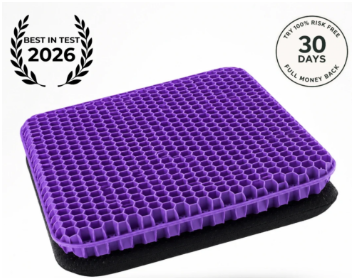
The Easewell Restore is an ergonomic seat cushion designed for people who spend long hours sitting at a desk, driving, or working from home. Unlike traditional memory foam cushions, the current version uses a medical-grade TPE honeycomb structure that the company says distributes pressure more evenly and keeps air flowing to reduce heat buildup. The cushion is also shaped to take pressure off the tailbone while supporting the hips.
None of those ideas are unusual on their own. Ergonomic cushions with coccyx cut-outs and pressure-relieving designs have been around for years. What Easewell is trying to do differently is combine those features into a product that stays supportive over longer periods without flattening as quickly as foam cushions.
Why So Many People Are Interested In Easewell Restore
The appeal is easy to understand. Most office chairs aren’t designed for eight or nine hours of sitting. Even expensive chairs can leave your hips sore or your lower back stiff by the end of the day. Replacing an office chair can cost hundreds of dollars. A seat cushion feels like a much cheaper fix. That’s why products like the Easewell Restore attract so much attention. People aren’t necessarily looking for luxury. They’re looking for something that makes long days at a desk a little easier.
Can a Seat Cushion Really Help?
This is where I think it’s important to separate the product from the marketing. A good seat cushion can absolutely improve comfort. By changing how your weight is distributed, it may reduce pressure on the tailbone and make sitting feel less fatiguing. The coccyx cut-out and supportive shape used in products like the Easewell Restore are based on established ergonomic principles. What it cannot do is fix every cause of back pain. If your chair is poorly adjusted, your desk setup is wrong, or you’re sitting for hours without moving, no cushion is going to solve those problems on its own. The cushion may help, but it works best as part of a better sitting setup rather than a complete solution.
What Customer Feedback Actually Looks Like
One thing I always pay attention to is whether people keep talking about the same strengths and weaknesses. For the Easewell Restore, the positive comments are fairly consistent. People who like it often mention that it feels supportive without being overly firm and that it stays cooler than traditional memory foam cushions because of the open honeycomb design. Several users also say they noticed an improvement during long workdays or commutes. The more cautious feedback is just as interesting. Some people question whether it’s worth paying significantly more than other ergonomic cushions that appear similar. Others point out that comfort is highly personal. A cushion that feels perfect for one person may feel too firm or too soft for someone else. That seems to be one of the biggest patterns with ergonomic seating products in general.
The One Thing I’d Think About Before Buying
The biggest decision isn’t whether the cushion is comfortable. It’s whether your chair is actually the problem. If you’re sitting on a worn-out office chair with poor lumbar support, a seat cushion can only do so much. Likewise, if your posture is causing discomfort, adding more padding won’t automatically fix it. That’s why I’d look at the Easewell Restore as an upgrade rather than a cure. If your current chair is basically comfortable but needs better pressure relief, this kind of cushion makes sense. If the chair itself is uncomfortable, replacing the chair may have a much bigger impact.
A Pattern I Keep Seeing
Researching the Easewell Restore reminded me of products like the Borneau Pillow, Viral Cloud Pillow, and Hanare Mattress Topper. Different products. Same idea. They all promise to make an everyday activity more comfortable without replacing the furniture you already own. Sometimes that works surprisingly well. The mistake is expecting an accessory to completely solve a problem that’s caused by the furniture itself.
Pros And Cons
Pros
- Ergonomic design focused on reducing tailbone pressure
- Breathable honeycomb structure instead of traditional memory foam
- Portable enough for office chairs, cars, and home seating
- May improve comfort during long periods of sitting
Cons
- Comfort is highly subjective
- More expensive than many similar seat cushions
- Won’t solve underlying posture or chair problems
- Marketing promises go further than the available evidence
Is the Easewell Restore Worth Buying?
I think it depends on what you’re trying to fix. If your current chair is reasonably supportive but becomes uncomfortable after several hours, the Easewell Restore could make a noticeable difference. If you’re hoping it will eliminate chronic back pain or completely transform an uncomfortable chair, I think you’re expecting too much from any seat cushion. The product makes the most sense as a comfort upgrade, not as a replacement for proper ergonomics.
Better Alternatives
- For better value: Everlasting Comfort Seat Cushion delivers similar ergonomic support at a more affordable price.
- For tailbone pain: ComfiLife Gel Enhanced Seat Cushion offers excellent coccyx support and is one of the best-known ergonomic cushions.
- For posture support: Cushion Lab Pressure Relief Seat Cushion is designed to encourage better sitting posture during long workdays.
- For hot weather: Purple Simply Seat Cushion stays cooler than most memory foam cushions thanks to its GelFlex Grid.
Conclusion
After researching the Easewell Restore, I don’t think it’s trying to solve a problem that doesn’t exist. Long hours of sitting really can become uncomfortable, and ergonomic cushions have helped many people feel better during work or driving. Where I’d be more cautious is with the marketing. Comfort isn’t something that can be guaranteed because every body, every chair, and every workspace is different. The Easewell Restore looks like a well-designed ergonomic cushion with a sensible concept behind it. Just don’t expect it to replace good posture, regular movement, or a supportive chair.
FAQ
Does the Easewell Restore really work?
It may improve sitting comfort by reducing pressure on the tailbone and hips, but results vary from person to person.
Is the Easewell Restore a scam?
No. It appears to be a genuine ergonomic seat cushion. The bigger question is whether its premium positioning justifies the price compared with similar cushions.
Can it help with tailbone pain?
Its coccyx cut-out is specifically designed to reduce pressure on the tailbone, although it should not be considered a medical treatment.
Is it worth buying?
If you spend long hours sitting and your current chair is reasonably supportive, it may be a worthwhile upgrade. If your chair itself is the problem, replacing the chair may provide greater long-term comfort.
You can also check out my review of Ironbark Relief here.