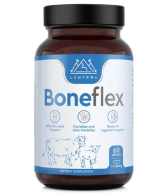

Have you seen BoneFlex being promoted as a simple way to restore joint comfort, improve mobility, and strengthen bones as you age? It’s the kind of product that sounds reassuring on the surface, especially if you’re dealing with stiffness or everyday joint discomfort that keeps building over time.
In this review, I’ll break down what BoneFlex claims to do, what’s actually inside it, what the science says about those ingredients, and whether it looks like a genuinely useful joint support supplement or just another overhyped formula in a crowded market.
Quick Takeaways
- Marketed for joint comfort, mobility, and bone strength
- Multiple versions of BoneFlex appear online with different ingredient lists
- Common ingredients include vitamin D3, vitamin K2, collagen, glucosamine, MSM, turmeric, Boswellia, and mineral blends
- No published clinical trials specifically on BoneFlex itself were identified
- Overall impression: ingredients are familiar and well-studied individually, but product-level proof is missing
Table of Contents
- Quick Takeaways
- What Is BoneFlex?
- First Things I Noticed
- How BoneFlex Is Supposed To Work
- Key Ingredients In BoneFlex
- Red Flags to Consider
- Does BoneFlex Really Work?
- Pricing
- Who Should Take BoneFlex?
- Who Should Skip BoneFlex?
- What Most BoneFlex Reviews Leave Out
- A Pattern I Keep Seeing
- What To Do If You Already Ordered
- Conclusion
- Frequently Asked Questions
What Is BoneFlex?
BoneFlex is a dietary supplement positioned for people dealing with joint stiffness, reduced mobility, and age-related bone concerns.
It is typically marketed toward adults who want to:
- Improve joint flexibility
- Support cartilage health
- Reduce stiffness and discomfort
- Maintain bone strength
- Stay active with less daily pain
One thing to note is that, BoneFlex is not always presented as a single consistent formula. Different websites promote slightly different versions with varying ingredient combinations, which already makes evaluation less straightforward.
At its core, BoneFlex sits in the general “joint and bone support” supplement category rather than being a clinically proven treatment for arthritis or osteoporosis.
First Things I Noticed
The first thing that stood out to me was how broad the claims are, compared to what joint supplements are realistically known to do.
The marketing often focuses on ideas like:
- “Rebuilding cartilage”
- “Restoring youthful mobility”
- “Reducing inflammation at the source”
- “Strengthening bones naturally”
- “Fast improvement in flexibility”
Another noticeable pattern is how heavily the product relies on ingredient familiarity. Most of the compounds used are well-known in the supplement space, which creates a sense of trust even when product-specific evidence is not clearly shown. I also kept seeing heavy use of testimonials. They’re framed in a way that makes the product feel effective, but they don’t really show how consistent those results are across different people. The ingredient list itself is familiar. That’s part of the strategy. It uses compounds people already recognize in joint health conversations, which makes the product feel more credible at first glance.
How BoneFlex Is Supposed To Work
According to promotional descriptions, BoneFlex works by supplying nutrients that support bone structure, cartilage integrity, and inflammatory balance.
The general process looks like this:
- Nutrients like vitamin D3 and K2 support bone metabolism
- Collagen and minerals support joint and cartilage structure
- Anti-inflammatory compounds help reduce discomfort
- Glucosamine and MSM support joint lubrication and tissue repair
- Over time, movement becomes easier and less painful
On paper, this is a reasonable explanation of how joint-support nutrients function individually. The issue appears when these effects are extended into stronger claims about full joint restoration or significant structural reversal.
Key Ingredients In BoneFlex
Vitamin D3
Vitamin D3 supports calcium absorption and bone health. Low levels have been associated with weaker bone density and higher fracture risk in some populations.
Vitamin K2
Vitamin K2 works alongside vitamin D in calcium regulation and bone metabolism. It is often included in bone health formulas for structural support.
Collagen
Collagen is a structural protein found in cartilage, skin, and connective tissue. Supplemental collagen is commonly used for joint comfort and flexibility support.
Glucosamine
Glucosamine is widely used in joint supplements and has been studied for its role in cartilage support and joint function.
MSM (Methylsulfonylmethane)
MSM is included for potential anti-inflammatory and joint comfort effects.
Turmeric & Boswellia
Both are plant-based anti-inflammatory compounds often used in joint support formulas for stiffness and discomfort management.
Red Flags to Consider
Multiple formulas across different websites
One of the biggest issues is inconsistency. Different versions of BoneFlex show different ingredient lists, which makes it unclear what the “true” formula actually is.
No product-specific clinical trials
While individual ingredients have research, there is no published clinical evidence testing BoneFlex as a complete product.
Heavy reliance on testimonials
Marketing leans strongly on personal stories and before-and-after style claims, which are not reliable indicators of consistent effectiveness.
Strong claims vs realistic outcomes
Joint supplements can support comfort, but claims about cartilage “rebuilding” or structural reversal are far more difficult to support scientifically.
Does BoneFlex Really Work?
BoneFlex may offer mild to moderate support for some users because several of its ingredients are commonly used in joint and bone health research.
That said, most of the evidence applies to individual compounds, not the combined formula itself. Realistically, if users notice benefits, they are more likely to be gradual and subtle rather than dramatic improvements in mobility or pain reversal.
Pricing
BoneFlex is typically sold through multi-bottle bundles, with pricing often ranging around $49 per bottle depending on promotions. Discounted packages are commonly advertised, especially for larger supply purchases. As with many supplements in this category, pricing alone does not reflect scientific strength or clinical validation.
Who Should Take BoneFlex?
BoneFlex may be considered by individuals who:
- Experience mild to moderate joint stiffness
- Want general bone and joint nutritional support
- Are looking for a non-prescription wellness option
- Prefer supplements with familiar ingredients like collagen and glucosamine
It is best viewed as a supportive wellness product rather than a treatment.
Who Should Skip BoneFlex?
BoneFlex may not be suitable for individuals who:
- Have severe arthritis or diagnosed joint disease requiring medical treatment
- Expect rapid or dramatic pain relief
- Are looking for clinically proven cartilage restoration
- Are pregnant or managing complex medical conditions without medical guidance
- Prefer supplements backed by published clinical trials on the finished product
In these cases, medical advice and targeted treatment are more appropriate than supplements alone.
What Most BoneFlex Reviews Leave Out
The biggest issue with BoneFlex isn’t obvious side effects, it’s how easily expectations can drift away from reality.
One concern is medication overlap. Ingredients like turmeric, Boswellia, glucosamine, and MSM may interact mildly with blood thinners or diabetes medication, which many reviews don’t clearly warn about.
Another is delayed treatment risk. People with ongoing joint pain may rely on supplements too long instead of checking for underlying conditions that actually need medical care.
There’s also formula inconsistency across different versions, meaning users may not always know exactly what strength or ingredient mix they’re getting.
Finally, small early improvements can create a false sense of effectiveness, making it easy to assume the product is doing more than it actually is.
A Pattern I Keep Seeing
BoneFlex follows a pattern I keep seeing in products like Core GLP, GL-Defend, and Beomma Gut-Glucose. Different health problem. Same structure underneath. A familiar set of ingredients is packaged into a promise-heavy formula, then marketed as if the combination itself has been clinically proven, even when only the individual ingredients have research behind them.
What To Do If You Already Ordered
If you’ve already purchased BoneFlex:
- Track symptoms like stiffness and mobility over time
- Give it a fair trial period before judging results
- Check refund and return policies carefully
- Avoid expecting immediate or dramatic changes
- Consult a healthcare professional if joint pain is persistent or worsening
Conclusion
After reviewing BoneFlex, it comes across as a typical joint and bone support supplement built around widely recognized ingredients like collagen, vitamin D3, glucosamine, and anti-inflammatory plant extracts. These ingredients do have legitimate roles in supporting bone and joint health, which is the strongest part of the formula. The limitation is that there is no clear clinical evidence showing that BoneFlex itself delivers the stronger claims often seen in marketing, especially around cartilage restoration and major mobility improvement.
In practical terms, BoneFlex is best viewed as a general wellness supplement that may provide mild joint support for some users, rather than a proven solution for chronic joint conditions or significant structural bone issues.
Frequently Asked Questions
What is BoneFlex used for?
BoneFlex is marketed for joint comfort, mobility, cartilage support, and bone health.
Does BoneFlex actually work?
It may offer mild support due to ingredients like collagen, vitamin D3, glucosamine, and turmeric, but there are no clinical trials on the finished product.
Is BoneFlex legit or a scam?
It appears to be a real supplement, but the main concern is that marketing claims are stronger than product-level evidence.
How long does it take to work?
If it works, results are usually gradual and may take a few weeks of consistent use.
Are there side effects?
Possible side effects include mild digestive issues, bloating, nausea, or headaches in sensitive users.
Who should avoid it?
People on blood thinners, diabetics on medication, pregnant or breastfeeding women, and those with allergies to certain ingredients should be cautious.
Can it cure joint problems?
No. It may support joint health but is not a treatment or cure for arthritis or other joint diseases.