
Lumissea’s Hyaluronic Acid Herbal Stickers are marketed as an easy way to soothe joint stiffness and muscle soreness without taking another pill or rubbing on a cream. That sounds convenient. But the more I looked at Lumissea itself, the less this felt like a simple product review. The sticker is one thing. The store selling it is another.
Quick Verdict
- What I liked: The product is positioned as a simple, non-oral option for temporary muscle and joint comfort.
- What concerned me: I couldn’t find a clear ingredient breakdown or good evidence showing that hyaluronic acid delivered through this type of sticker can produce the advertised results.
- The bigger issue: Lumissea is a very young store with a broad catalog and several outside trust concerns.
- Would I recommend it? No. There are too many unanswered questions for me to feel comfortable recommending it.
- Bottom line: The sticker sounds appealing, but the lack of product transparency is hard to overlook.
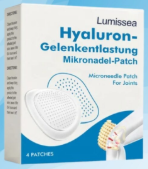
Table of Contents
- Quick Verdict
- The Product Sounds Simple Enough
- The Ingredient Information Was All Over the Place
- The Hyaluronic Acid Part Deserves a Closer Look
- Then I Looked at the Store Behind It
- The Website Is Also Very Young
- This Is Where I Became More Cautious
- The Store’s Product Catalog Raised Another Question
- What I’d Want to Know Before Buying Lumissea
- Better Alternatives I’d Consider
- A Pattern I Keep Seeing
- Is Lumissea Hyaluronic Acid Herbal Stickers Worth Buying?
- Frequently Asked Questions
The Product Sounds Simple Enough
Lumissea describes these as Hyaluronic Acid Herbal Heat Stickers designed to soothe joint stiffness and ease muscle soreness. They’re sold from the company’s online store for around $35.99. The basic idea is easy to understand. Put a sticker on the uncomfortable area and let it provide localized support without swallowing capsules. That’s appealing, particularly for someone who doesn’t want another supplement. The trouble starts when you try to work out exactly what you’re getting.
The Ingredient Information Was All Over the Place
The product name puts hyaluronic acid front and center, but I couldn’t find a detailed ingredient panel for the sticker on the product listing available from Lumissea. That’s a problem for me. With something applied directly to the skin, I’d want to know exactly what is in the adhesive and active material, especially if the company is calling it an herbal sticker. “Herbal” isn’t really an ingredient list. It doesn’t tell you how much of anything is present or what is actually responsible for the claimed effect.
The Hyaluronic Acid Part Deserves a Closer Look
Hyaluronic acid is a legitimate substance found naturally in the body, and it’s widely used in skincare and joint-related products. But putting hyaluronic acid on the skin isn’t automatically the same as delivering it into a painful joint. That’s an important distinction with a product like this.
I couldn’t find convincing evidence that Lumissea’s particular sticker has been clinically tested for joint stiffness or muscle soreness. So I’d be careful about turning the reputation of hyaluronic acid into proof that this particular patch works.
Then I Looked at the Store Behind It
This was actually more interesting than the sticker. Lumissea says it is a new international B2C team selling various products in the United States. Its current catalog includes the pain stickers alongside mascara, a posture bra, hair concealer, eye products and other unrelated items.That doesn’t automatically make the sticker bad. But it’s not the product lineup I’d expect from a company that has spent years specializing in joint health. It looks much more like a general online store testing different products.
The Website Is Also Very Young
The Lumissea.com domain was registered on 10/2024, and its ownership information is hidden behind a privacy service.Again, a young domain isn’t proof that a company is dishonest. Lots of legitimate businesses start new websites. What matters is what you can verify about the business once you get there. In Lumissea’s case, there isn’t much company information beyond a general description, an email address and a phone number.
This Is Where I Became More Cautious
Outside website-checking services have also raised concerns about Lumissea.com. ScamAdviser currently gives the site a very low trust assessment, while Gridinsoft has classified it as a suspicious shop. Gridinsoft also records a user complaint involving a refund dispute. These are third-party assessments, not proof that every order will go badly, but they’re certainly worth knowing about before entering payment details. There are some normal signs too. The store uses Shopify, offers PayPal and other payment methods, and advertises a return policy. Its shipping page says orders can take 2–5 weeks depending on destination, with different warehouses potentially being used. So this isn’t a case where every single detail points in one direction. It’s the combination that makes me uncomfortable.
The Store’s Product Catalog Raised Another Question
A specialist joint-health company would usually have a fairly focused range. Lumissea doesn’t. The same store sells beauty products, clothing, eye products, hair products and pain-relief products. That makes me question how much research and product development is actually going into the Hyaluronic Acid Herbal Stickers. It may simply be a product sourced for the store rather than something developed by a company specializing in joint care.
What I’d Want to Know Before Buying Lumissea
I’d want the complete ingredient list. I’d want to know where the stickers are manufactured. I’d want evidence that the finished product has actually been tested for the problems it’s advertised to address. And I’d want a clearer explanation of how the hyaluronic acid is supposed to work through a sticker. Those aren’t unreasonable questions for a product being sold as a solution for joint and muscle discomfort.
Better Alternatives I’d Consider
If the goal is straightforward joint or muscle support, I’d look at established options such as Salonpas Pain Relieving Patch, ThermaCare HeatWraps, or Voltaren Arthritis Pain Gel rather than taking a chance on a poorly documented sticker.
A Pattern I Keep Seeing
I’ve noticed similar issues in my Solaroza Moringa Microneedle Patch Review, GeeLemon Microneedle Patch Review, and PurePath Smoker’s Detox Patches Review.
A familiar wellness ingredient gets put into a patch or sticker and the delivery method becomes part of the sales pitch. The difficult part is proving that the ingredient actually reaches the body in a meaningful amount through that particular product.
Is Lumissea Hyaluronic Acid Herbal Stickers Worth Buying?
The idea isn’t ridiculous. Heat can provide temporary comfort for sore muscles, and topical products can certainly be useful for localized aches. But I don’t see enough evidence to give the Lumissea Hyaluronic Acid Herbal Stickers any special credit for those effects. The unclear formula is one problem. The very young store, broad product catalog, limited company information and outside trust concerns make me even more hesitant.
For something going on my skin and being sold for nearly $36, I’d rather know exactly what’s in it, who made it and what evidence supports the claims.
Frequently Asked Questions
What are Lumissea Hyaluronic Acid Herbal Stickers supposed to do?
They’re marketed as heat stickers intended to soothe joint stiffness and muscle soreness. Lumissea specifically describes them as a product for localized comfort.
Does hyaluronic acid in a sticker really help joint pain?
Hyaluronic acid itself has legitimate uses in medicine and skincare, but that doesn’t prove that applying it through a consumer sticker will relieve joint pain. I couldn’t find clinical evidence on Lumissea’s finished product.
Are Lumissea stickers safe?
The available product information doesn’t provide enough detail about the complete formula for me to make a confident safety assessment. Anyone with sensitive skin or allergies should be particularly careful with adhesive products.
Where is Lumissea based?
Lumissea describes itself as an international B2C team serving the U.S., but its public company information is limited. The domain registration uses privacy protection.
Is Lumissea a legitimate company?
The website is active and accepts orders, but several independent website-checking services have raised concerns about its reputation. I would use caution and choose a payment method with buyer protection if purchasing.
Is Lumissea Hyaluronic Acid Herbal Stickers worth buying?
I wouldn’t make it my first choice. The lack of a clear formula and product-specific evidence, combined with concerns surrounding the store itself, gives me too many reasons to look elsewhere.
