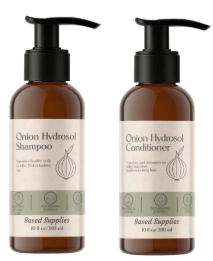

There’s a lot of advertising around Based Supplies Onion Hydrosol Shampoo, particularly the videos showing people who supposedly went from thinning hair to noticeably fuller hair. The company credits much of this to onion hydrosol, an ingredient it says can help reduce shedding and encourage new growth. It’s an interesting selling point because most people associate onions with cooking, not washing their hair. But the shampoo is being sold as more than an unusual hair-care product. It’s being presented as something that can help people struggling with hair loss. I wanted to see how much of that promise held up, so this review covers my experience, the ingredients, the company’s advertising and what other customers have reported.
Quick Take
- What it is: An onion hydrosol shampoo marketed for thinning hair, shedding and regrowth.
- My experience: Nice smell, good lather, but no noticeable improvement in my hair loss.
- The advertising: Makes some ambitious claims about stimulating follicles and reducing shedding that haven’t been demonstrated in clinical trials of the shampoo.
- Customer feedback: Mixed, with some buyers reporting better-looking hair and others complaining about irritation or dryness.
- Worth buying? Not for hair regrowth, in my opinion. There isn’t enough evidence to justify buying it specifically for that purpose.
Table of Contents
- Quick Take
- What Is Based Supplies Onion Hydrosol Shampoo?
- My Experience Using Based Supplies Onion Hydrosol Shampoo
- The Claims Behind the Hair Growth Advertisements
- Does the Onion Hydrosol Formula Have Any Real Benefits?
- What Other Buyers Have Experienced
- The Questions Around the Company’s Small-Batch Claims
- What I Liked and Didn’t Like
- A Pattern I’ve Seen With Other Hair Products
- Is Based Supplies Onion Hydrosol Shampoo a Scam?
- What to Do If You’ve Already Ordered
- My Final Thoughts
- 15 Tips on How to Shop Safely Online
What Is Based Supplies Onion Hydrosol Shampoo?
Based Supplies Onion Hydrosol Shampoo is a hair-care product made with what the company describes as 15% onion hydrosol, along with rosemary, nettle, peppermint, aloe vera and other ingredients commonly found in botanical shampoos. Onion hydrosol is an aromatic water produced through the distillation of onions, so it isn’t the same as raw onion juice. The shampoo is advertised as sulfate-free and is sold on its own or with a matching conditioner. The company positions it as a product for people experiencing weak, thinning hair rather than simply another shampoo for everyday cleansing.
My Experience Using Based Supplies Onion Hydrosol Shampoo
I first saw Based Supplies Onion Hydrosol Shampoo in an advertisement, and the claims about reducing shedding and helping thinning hair were what got my attention. I’ve been dealing with both, so I decided to try it. I wasn’t expecting dramatic results overnight, but I was hoping I’d notice some improvement. The first thing I liked was the smell. With onion being the main advertised ingredient, I thought it might have an unpleasant scent, but it actually smelled pretty good. It also lathered properly, which I appreciated because I like a shampoo that works into my hair easily. Unfortunately, those were the only two things I ended up liking about it. I didn’t notice any reduction in shedding, and my hair didn’t look fuller or thicker. I was still dealing with the same problems that made me buy it in the first place. It wasn’t unpleasant to use, and I wouldn’t say it’s a bad shampoo for washing hair, but I could have gotten a similar washing experience from a regular shampoo. I bought Based Supplies because I wanted something that would help with my thinning hair, and it didn’t do that for me.
The Claims Behind the Hair Growth Advertisements
One of the main things Based Supplies promotes is the idea that conventional shampoos are contributing to hair thinning because they strip away sulfur and weaken the follicles. The company presents onion hydrosol as a way to restore what the hair supposedly needs, while other ingredients in the formula are said to improve circulation and help block DHT, a hormone associated with pattern hair loss. Some advertisements also describe a fairly quick progression, beginning with less shedding and eventually leading to visible baby hairs and thicker hair within several weeks. The problem is that sulfate-containing shampoos don’t automatically cause hair loss by depriving follicles of sulfur, and washing with onion hydrosol hasn’t been shown to reverse common pattern baldness. Based Supplies refers to research involving onion juice, but the study often mentioned in this context examined a different onion preparation in people with alopecia areata. It wasn’t a clinical trial of this shampoo. That leaves a significant gap between what the advertisements suggest and what has actually been demonstrated.
Does the Onion Hydrosol Formula Have Any Real Benefits?
The ingredients aren’t necessarily useless, but their benefits need to be understood in the context of a shampoo. Rosemary oil has been studied for hair growth, although the limited human research doesn’t establish that a rinse-off product containing rosemary will have the same effect. Nettle extract is sometimes promoted for its potential effect on DHT, but there isn’t convincing clinical evidence that nettle in shampoo can treat hormone-related hair loss. Peppermint may provide a cooling sensation, and aloe vera is commonly included for its soothing and conditioning properties. Biotin also appears frequently in hair-care marketing, despite having little evidence as a hair-growth treatment for people without a deficiency. What matters is not simply whether an ingredient has appeared in a study, but whether the amount, formulation and method of application can produce a meaningful result. I couldn’t find an independent clinical trial showing that the finished Based Supplies shampoo increases hair density.
What Other Buyers Have Experienced
The customer feedback I found was quite divided. Some buyers on Reddit and Trustpilot say their hair feels softer, looks fuller or has become easier to manage after using the shampoo and conditioner. A few also report less shedding, although those accounts don’t establish that the product caused new hair to grow. Other customers describe less pleasant experiences, including scalp burning, itching, dryness, difficult detangling and increased breakage. One Trustpilot reviewer described using the products for nearly three months before deciding they weren’t helping, while another complained about the small bottle size. I also looked for reviews of the exact Based Supplies shampoo on Amazon, Walmart and eBay, but couldn’t verify a substantial collection of product-specific buyer feedback on those platforms. Trustpilot has additionally displayed a notice about the company’s review-invitation practices, which is worth knowing when assessing the overall ratings. The mixed experiences suggest that how someone’s hair and scalp respond to the formula can vary considerably.
The Questions Around the Company’s Small-Batch Claims
Based Supplies uses a small-business story in some of its advertising, describing limited production and suggesting that customers should order before the shampoo sells out. Some buyers have questioned that presentation after receiving shipping information associated with China or noticing differences between the packaging they received and what they expected. That doesn’t prove the shampoo is counterfeit or that the company is dishonest about manufacturing. Products can be made in one country and shipped from another, and fulfillment arrangements can change. Still, the advertising would be more useful if it clearly identified where the shampoo is manufactured and where orders are dispatched from. The repeated limited-stock messaging also creates pressure to buy quickly, even though customers should have time to check the product and its return conditions.
What I Liked and Didn’t Like
What I liked
- Pleasant smell, especially considering the onion-based marketing.
- Lathers well and works adequately for washing hair.
- Some buyers report good cosmetic results.
What I didn’t like
- No noticeable improvement in my shedding or thinning.
- Strong regrowth claims without convincing trials of the finished product.
- Reports of irritation and breakage from some customers.
- Limited independently verified marketplace reviews.
- Questions about the company’s promotional and review practices.
A Pattern I’ve Seen With Other Hair Products
This isn’t the first hair product I’ve come across where the advertising creates expectations that go beyond the actual results. I had a somewhat better experience with Nutrafol Shampoo and Conditioner, particularly when it came to how my hair felt, but that didn’t translate into the increase in thickness I wanted. Spoiled Child A22 Hair + Scalp Serum was another product where the cosmetic benefits were easier to notice than any actual regrowth. The products are different, but the distinction matters: hair that feels healthier or looks better after styling isn’t necessarily hair that’s becoming denser. It’s worth keeping that in mind when advertisements use those changes to suggest a product can reverse thinning.
Is Based Supplies Onion Hydrosol Shampoo a Scam?
Based Supplies sells an actual shampoo, and there’s no reason to assume everyone who likes it is being dishonest. I wouldn’t describe it as a fake product. However, I do think the hair-growth advertising goes too far. The company presents the shampoo as a way to address thinning, shedding and follicle activity without providing convincing clinical evidence that the finished formula can do those things. That’s a marketing problem rather than proof that the product itself is fraudulent. My verdict is that it may be an acceptable everyday shampoo for some people, but I wouldn’t recommend buying it as a treatment for hair loss.
What to Do If You’ve Already Ordered
If you’ve ordered Based Supplies and aren’t satisfied, check the refund terms that applied when you purchased it and contact customer support within the allowed period. Keep your receipt, order number and any relevant messages, especially if you’re having trouble with delivery or receiving a refund. If the item never arrives or differs substantially from what was advertised, your payment provider may have a dispute process you can use. Anyone who experiences burning, redness or persistent itching should stop using the shampoo rather than trying to push through the reaction. A healthcare professional can assess symptoms that don’t settle.
My Final Thoughts
Trying another shampoo can seem like the simplest thing to do when you’re worried about losing hair. It’s less complicated than making an appointment or trying to work out whether the problem is hereditary, hormonal or related to something else. But hair thinning doesn’t have one cause, and that’s probably the biggest reason I’m becoming more selective about products that claim to fix it. I’d rather understand what’s happening with my hair than keep buying bottles because the advertising makes the solution sound easy.
15 Tips on How to Shop Safely Online
- Research before ordering. Don’t rely only on what an advertisement tells you.
- Check independent reviews. Look for feedback on platforms the seller doesn’t control.
- Read detailed complaints. They often reveal practical problems missing from promotional videos.
- Check the ingredients. Know what’s actually in the product.
- Question quick-result promises. Significant changes usually need more evidence than testimonials.
- Look for product-specific testing. Ingredient studies aren’t the same as clinical trials of the product.
- Check the seller’s identity. Look for clear company and contact information.
- Compare prices. Expensive products aren’t automatically more effective.
- Read the refund policy. Pay attention to deadlines and restrictions.
- Watch for subscriptions. Make sure you’re not signing up for repeat deliveries unintentionally.
- Save the advertisement. Keep a record of claims that influenced your purchase.
- Keep order records. Save confirmations, receipts and tracking details.
- Use protected payment methods. Choose payment options with dispute procedures.
- Be cautious with endorsements. Paid promotions may not reflect independent experiences.
- Ignore artificial urgency. A countdown timer isn’t a reason to skip researching a purchase.