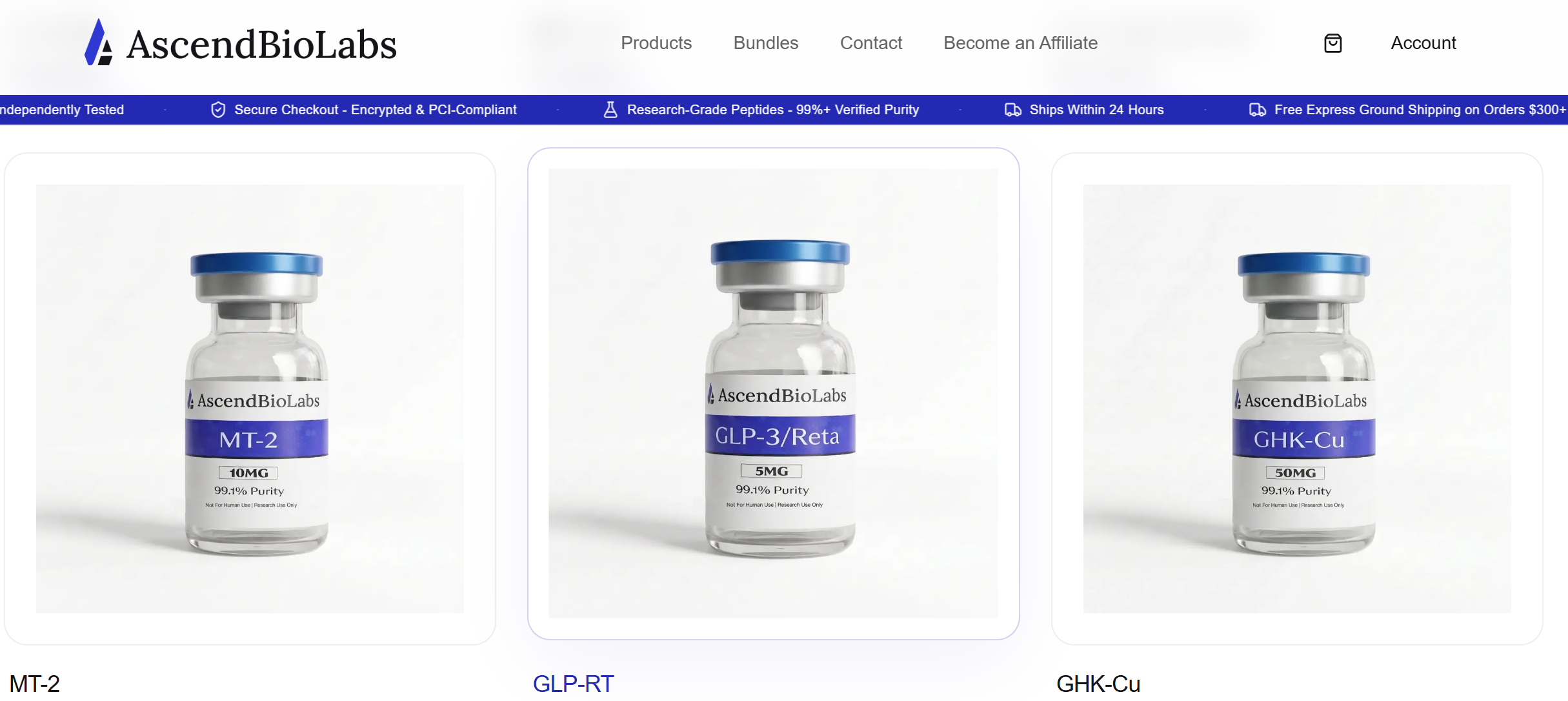

Peptides have completely exploded online lately, especially in fitness, anti-aging, TRT, and biohacking circles. Ascend BioLabs is one of the newer names showing up in that space, selling research peptides tied to recovery, muscle growth, metabolism, longevity, and performance support.
At first glance, the company looks polished and science-focused, which is exactly what makes peptide brands feel convincing so quickly. But once I started looking deeper into how these products are marketed and how the peptide industry actually works, the situation became much more complicated.
In this review, we’ll break down what Ascend BioLabs actually sells, why peptides have become such a massive wellness trend, and whether this looks like a trustworthy research supplier or another risky grey-market operation wrapped in biohacking hype.
Quick Takeaways
- Ascend BioLabs sells research peptides tied to recovery, performance, metabolism, and anti-aging support
- The peptide industry operates in a medically and legally grey area that already carries significant risk
- The marketing leans heavily into biohacking culture and optimization-focused messaging
- Some peptides are genuinely being researched, but online claims often move far ahead of the evidence
- Product quality, purity, dosing, and long-term safety remain major concerns across the peptide market
- Ascend BioLabs looks more like a typical modern peptide vendor than a fully established medical-grade company
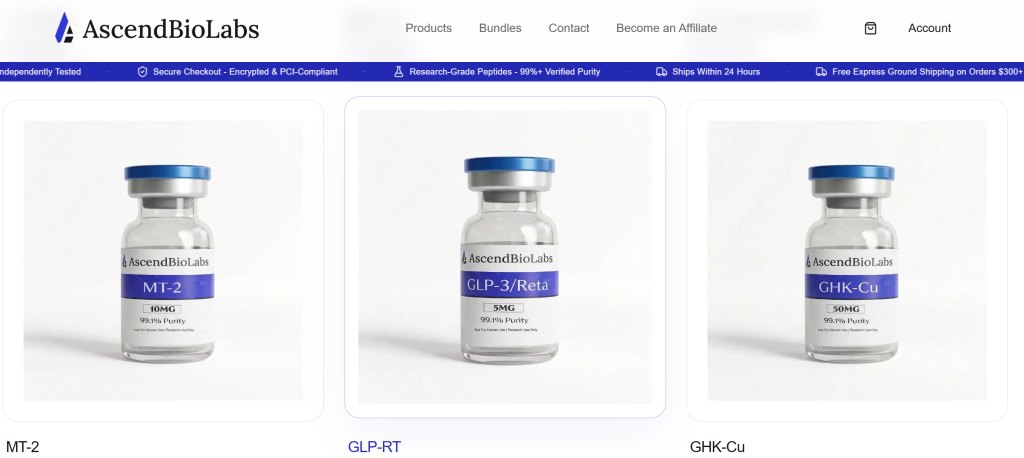
Table of Contents
- Quick Takeaways
- What Is Ascend BioLabs?
- Why Peptides Became So Popular So Fast
- Does The Science Actually Hold Up?
- What Realistically Happens If You Use Peptides?
- Who This May Appeal To
- The Part That Starts Feeling Risky
- A Pattern I Keep Seeing
- Is Ascend BioLabs Worth Trying?
- Final Thought
- Frequently Asked Questions
What Is Ascend BioLabs?
Ascend BioLabs is an online peptide supplier selling compounds commonly discussed in:
fitness communities,
TRT spaces,
biohacking groups,
and anti-aging circles.
The products are usually marketed around:
fat loss,
recovery,
muscle support,
performance,
healing,
and metabolism optimization.
Like many peptide companies online, Ascend BioLabs uses “research use only” language throughout the site while simultaneously appealing to people interested in real-world wellness and physical optimization.
That contradiction is extremely common in the peptide industry right now.
Why Peptides Became So Popular So Fast
A huge part of the peptide boom comes from how they’re discussed online.
Social media, podcasts, fitness influencers, and optimization-focused communities often talk about peptides like hidden biological shortcuts capable of improving:
recovery,
sleep,
muscle growth,
fat loss,
energy,
and longevity.
The science-heavy presentation makes everything sound futuristic and medically advanced almost immediately.
That’s part of what makes peptide marketing so effective.
The problem is that the internet conversation around peptides often moves much faster than the actual long-term evidence, regulation, or safety data.
Does The Science Actually Hold Up?
This is where the conversation becomes much more nuanced than the marketing usually suggests.
Some peptides genuinely are being researched for areas involving tissue repair, hormone signaling, recovery, metabolism, and healing. That’s part of why interest in peptides exploded in the first place.
But online discussions often present peptides like fully proven wellness tools instead of compounds still sitting in a much more experimental category.
That distinction matters a lot.
The quality, sourcing, purity, and consistency between peptide vendors can vary dramatically, especially in loosely regulated online markets.
That’s one reason peptide discussions online become so divided.
What Realistically Happens If You Use Peptides?
This is where experiences become extremely mixed.
Some people describe:
better recovery,
improved sleep,
enhanced performance,
or body composition changes.
Others report:
no noticeable effects,
unexpected side effects,
or concerns about product quality and consistency.
That inconsistency is one of the biggest realities of the peptide world right now.
The marketing often makes peptides sound predictable and transformational, while real-world experiences tend to look much less certain.
Who This May Appeal To
Ascend BioLabs will probably appeal most to people already deep into:
biohacking culture,
TRT communities,
fitness optimization,
or performance-enhancement spaces.
People looking for medically supervised treatment, pharmaceutical-level oversight, or fully established long-term wellness solutions will probably find the peptide industry much riskier and less proven than the marketing sometimes implies.
The Part That Starts Feeling Risky
This was the biggest thing that stood out while researching Ascend BioLabs.
The peptide industry overall relies heavily on:
scientific branding,
optimization culture,
before-and-after storytelling,
and transformation-focused messaging.
Ascend BioLabs follows that same structure closely.
The “research use only” positioning also creates a strange situation where companies legally distance themselves from human use while still marketing products in ways that clearly attract wellness and performance-focused buyers.
That disconnect is everywhere in the peptide space right now.
And because the industry itself is still loosely regulated, buyers are often relying heavily on trust, branding, and community reputation rather than standardized pharmaceutical oversight.
A Pattern I Keep Seeing
Ascend BioLabs reminds me of the same broader optimization trend behind products like Glycotide Drops, Thermo Burn Pro, SlimTides, and other wellness products built around performance, metabolism, recovery, and transformation promises.
The difference is that peptides sound much more scientific and medically advanced, which makes the marketing feel even more convincing.
But the structure often stays the same:
identify a frustration,
introduce a cutting-edge solution,
then amplify expectations through optimization-focused messaging and community hype.
That pattern is becoming extremely common across the modern wellness industry.
Is Ascend BioLabs Worth Trying?
Ascend BioLabs appears to be a real peptide vendor, but the bigger concern is the peptide industry itself rather than one single company.
Peptides sit in a high-risk grey area where long-term safety, product consistency, sourcing standards, and regulatory oversight remain ongoing concerns.
That doesn’t automatically make Ascend BioLabs fake, but it does mean buyers should approach products like this with much more caution than the marketing usually encourages.
Final Thought
Ascend BioLabs sits in the middle of one of the fastest-growing and most controversial areas of the wellness world right now.
Some of the science behind peptides is genuinely interesting. But the internet hype surrounding recovery optimization, anti-aging support, metabolism enhancement, and human performance has also grown much bigger than the evidence currently available for many of these compounds.
The biggest issue isn’t just Ascend BioLabs itself. It’s the reality that the peptide industry overall still operates in a space filled with limited oversight, aggressive optimization marketing, mixed user experiences, and a lot of unanswered long-term questions.
Frequently Asked Questions
Is Ascend BioLabs legit?
Ascend BioLabs appears to be a real peptide vendor, though the peptide industry itself remains loosely regulated.
Are research peptides FDA approved?
Most peptides sold online are not FDA-approved for general wellness or anti-aging use.
Are peptides safe?
Safety depends heavily on the specific peptide, sourcing, dosing, purity, and medical supervision. Long-term effects for many peptides are still not fully understood.
Why are peptides so popular right now?
Peptides became popular through biohacking, fitness, TRT, and anti-aging communities promoting them for recovery, metabolism, performance, and optimization.
Is the peptide industry risky?
Yes. Concerns around contamination, underdosing, misleading marketing, and inconsistent quality appear frequently across the peptide market.