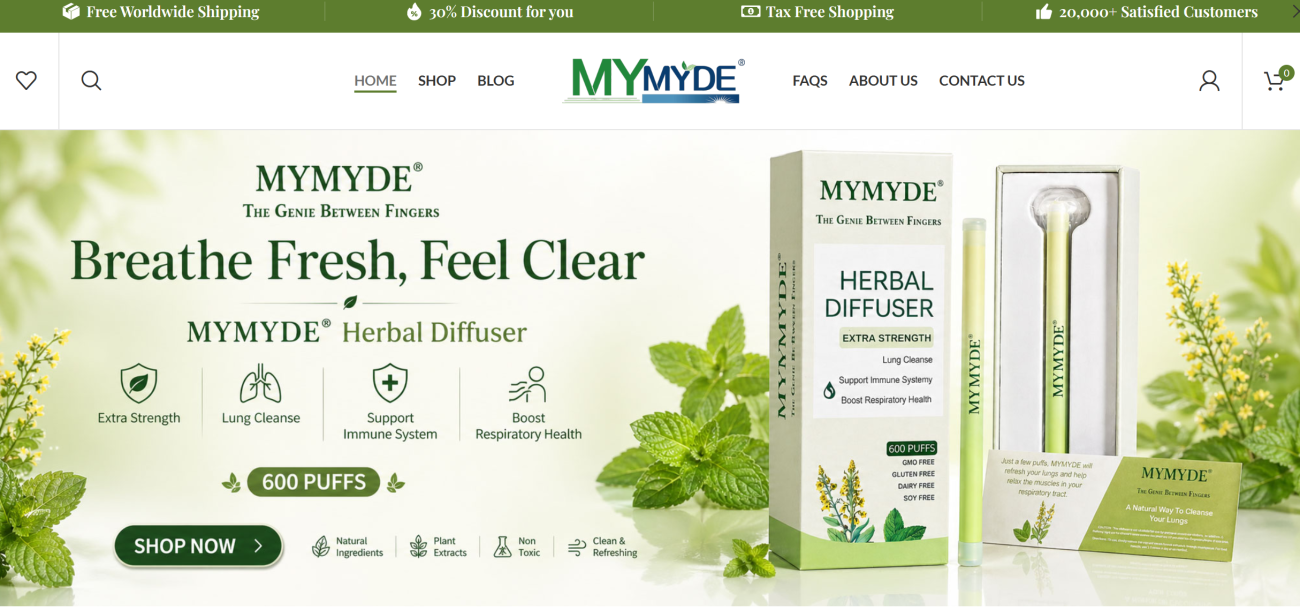
If you’ve been scrolling TikTok lately, you’ve probably seen the MyMyde Herbal Diffuser. The ads are everywhere. Someone throws away their vape, picks up this herbal diffuser instead, inhales deeply, and suddenly they’re “detoxing their lungs,” breathing better, sleeping peacefully, and finally breaking nicotine cravings naturally.
It’s one of those products that instantly sounds appealing, especially if you’re trying to quit smoking or vaping but still miss the physical habit of inhaling something.
In this review, we dug through the marketing claims, ingredient positioning, and real-world user expectations behind the MyMyde Herbal Diffuser to see whether it actually offers a meaningful alternative for quitting vaping or smoking, or whether it’s mainly repackaged wellness branding built around emotional “lung detox” messaging.
Quick Take
- Marketed as a nicotine-free herbal diffuser for quitting vaping and “lung detox”
- Uses ingredients like mullein, thyme, and mint commonly associated with respiratory wellness
- Claims around lung cleansing and detoxification appear heavily overstated
- Looks extremely similar to many generic herbal diffuser pens sold online under different names
- Overall impression: probably more useful as a vape replacement habit tool than an actual lung-health breakthrough
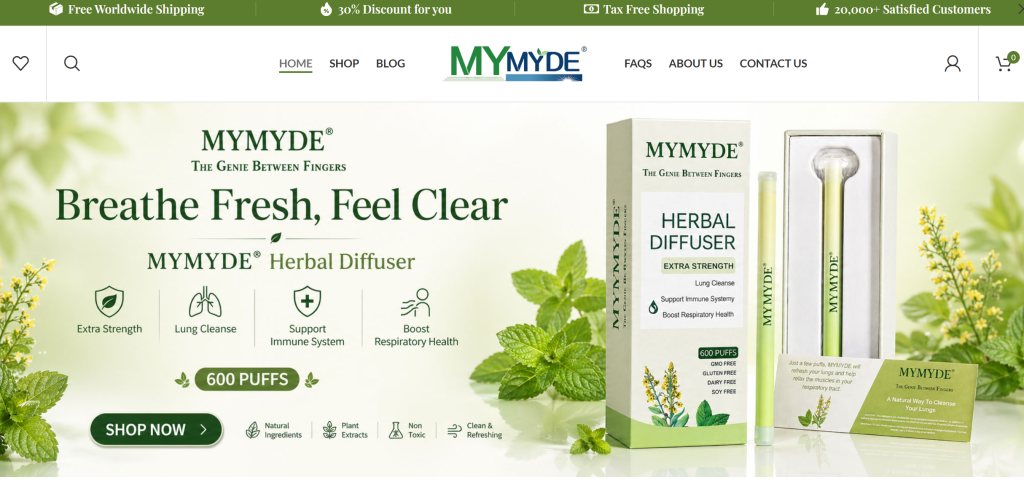
Table of Contents
- Quick Take
- What MyMyde Is Actually Selling
- The “Lung Detox” Marketing Is Doing Most of the Work
- What Stood Out Most During Research
- Does It Actually Help People Quit Smoking?
- The Reviews Feel Mixed in a Very Familiar Way
- A Pattern I Keep Seeing
- Better Alternatives To Consider
- Is MyMyde Herbal Diffuser Legit?
- Conclusion
- FAQ
What MyMyde Is Actually Selling
At its core, MyMyde is basically a vape-style inhalation device without nicotine. The company markets it as a plant-based herbal diffuser containing ingredients like mullein, mint, and thyme that are supposedly designed to support clearer breathing and help users quit smoking or vaping naturally.
And honestly, this is where the marketing gets smart. Because the product doesn’t just sell “flavored air.” It sells the feeling of healing. The ads strongly imply that every inhale is helping clean your lungs, reduce toxins, and repair damage from smoking. That’s a very emotional pitch.
Especially for people who already feel guilty about vaping or smoking and want something that feels healthier without fully giving up the hand-to-mouth habit.
The “Lung Detox” Marketing Is Doing Most of the Work
This is where I started getting skeptical.
Words like:
- detox
- cleanse
- breathe freely
- repair your lungs
- remove toxins
…show up constantly around products like this. The problem is that “lung detox” itself is not really a medically recognized process the way these ads present it.
Your lungs already have natural mechanisms for clearing mucus and irritants over time. There’s very little strong evidence showing that inhaling herbal vapor through a diffuser suddenly “cleans” the lungs in the dramatic way social media ads suggest.
That doesn’t mean herbs like mullein or mint are meaningless. Mullein, for example, has a long history in herbal traditions related to respiratory support. But there’s a massive difference between:
“traditionally associated with soothing”
and
“actively detoxifies your lungs”
The marketing blurs that line heavily.
What Stood Out Most During Research
One thing that immediately caught my attention was how many nearly identical diffuser pens exist online.
I found products with:
- almost identical ingredient lists
- nearly the same claims
- similar packaging
- the exact same “600 puffs” language
- nearly identical lung-detox messaging
That usually points to private-label manufacturing, where generic products get rebranded and marketed aggressively through social media.
And once you start seeing the same product repeated under multiple names, the “exclusive wellness breakthrough” angle becomes a lot less convincing.
Does It Actually Help People Quit Smoking?
This is probably the area where MyMyde makes the most practical sense. Not because of “detox,” but because habit replacement itself can genuinely matter.
A lot of smoking and vaping addiction is behavioral:
- hand movement
- inhaling
- routine
- stress association
- oral fixation
So replacing nicotine with a nicotine-free inhalation device could absolutely help some people reduce cravings psychologically. That part feels believable to me.
But that’s very different from claiming the device is actively repairing lungs or dramatically improving respiratory health. Those are two completely different levels of claim.
The Reviews Feel Mixed in a Very Familiar Way
The feedback pattern around MyMyde-style herbal diffusers feels very similar to other viral wellness products.
Some people genuinely like:
- the minty feeling
- the smoother inhale compared to vaping
- having something to reach for during cravings
- the calming ritual aspect
Others complain that:
- the effects feel weak
- the “600 puffs” claims don’t match reality
- the diffuser stops working early
- it feels overpriced for what it is
And honestly, that mixed response makes sense. Because expectations are being set extremely high by the ads. When people hear phrases like “lung detox” and “breathe freely again,” they expect dramatic physical results. Most likely, the real experience is much more subtle.
A Pattern I Keep Seeing
The overall structure behind MyMyde reminded me a lot of what I saw with products like GenciVie Dental Powder and CraveCut Cutting Mix.
Different products, same emotional framework.
Take a real fear or frustration:
- smoking damage
- anxiety
- gum recession
Then present a simple wellness product as the hidden “natural solution” mainstream approaches supposedly overlook. That doesn’t mean the products themselves are fake. But the marketing consistently pushes them much further than the underlying evidence comfortably supports.
Better Alternatives To Consider
- Nicorette Nicotine Gum
- Nicoderm CQ Patches
- Füm Core Device
- Ripple+ Herbal Diffuser
Is MyMyde Herbal Diffuser Legit?
MyMyde appears to be a real product. It’s not some fake invisible item that never ships. And as a nicotine-free inhalation alternative for people trying to break vaping habits, I can see why some users would find it genuinely helpful. But the bigger lung-cleansing and detoxification claims feel much more like wellness marketing than established science.
My overall impression is that MyMyde works better as:
- a behavioral replacement tool
than - a true respiratory-health breakthrough
That distinction matters.
Conclusion
After researching MyMyde Herbal Diffuser, the biggest thing that stood out to me was how heavily the product relies on emotional “lung healing” marketing.
The device itself is probably best understood as a nicotine-free herbal inhaler designed to mimic the ritual of vaping. For some people, that alone may genuinely help during the quitting process. But once the ads start drifting into dramatic detox and lung-repair territory, the science becomes much less convincing.
At the end of the day, MyMyde feels less like a revolutionary wellness device and more like a familiar vape-alternative product wrapped in very effective health-focused branding.
FAQ
Does MyMyde actually detox your lungs?
I could not find strong scientific evidence proving that herbal diffuser pens actively “detox” lungs the way the marketing suggests.
Is MyMyde safer than vaping nicotine?
It does remove nicotine exposure, but inhaling any substance repeatedly still deserves caution, especially long term.
What ingredients are inside MyMyde?
The company advertises ingredients like mullein, thyme, mint, and other herbal extracts.
Can MyMyde help with quitting smoking?
Possibly for some users, especially through behavioral replacement and oral habit support rather than medical nicotine treatment.
Is MyMyde unique?
Not really. I found many nearly identical herbal diffuser products being sold online under different branding.
Also Read >>> Plemora.com Fashion Review: What You Should Know
