If you’ve seen Joint Glide ads, they don’t sell it like a regular joint supplement. They push a bigger story… cartilage rebuilding, a “rust enzyme,” and fast joint recovery that sounds almost too advanced for a simple capsule.
That alone is enough to make you take a closer look.
This review reveals what the ads don’t clearly tell you about Joint Glide.
Quick verdict
- Real supplement product, but heavily marketing-driven
- Uses “rust enzyme” and cartilage rebuilding claims aggressively
- Multiple clone-style websites pushing the same product
- Standard joint ingredients stretched into breakthrough-level promises
- Fits typical joint supplement funnel model, not a breakthrough treatment
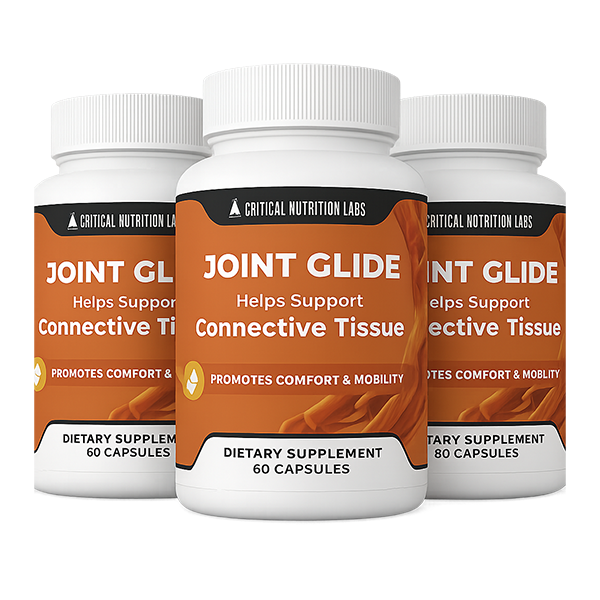
Table of Contents
- Quick verdict
- What Joint Glide Claims To Do
- Ingredient Breakdown
- The Marketing Angle
- Domain Setup and Transparency
- The “Clinically Backed” Illusion
- Emotional Selling Tactics
- Urgency and Funnel Tactics
- Real User Experience Pattern
- A Pattern I Keep Seeing
- Is Joint Glide Scam or Legit?
- Conclusion
- FAQ
What Joint Glide Claims To Do
Joint Glide is marketed as a joint support supplement designed to reduce pain, improve mobility, and restore flexibility. But the claims go far beyond basic support. Across different pages, it is positioned as something that can rebuild cartilage, reduce inflammation and stiffness, lubricate joints, support connective tissue, and even help users avoid surgery or injections. Some versions also present it as a full “joint restoration system” rather than a simple supplement for discomfort.
This is where expectations start getting inflated because joint pain relief supplement claims are being framed like medical repair claims.
Ingredient Breakdown
The formula typically includes familiar joint-support ingredients like glucosamine, chondroitin, MSM, pine bark extract, devil’s claw, and white willow bark. These are not new or experimental ingredients. They are commonly used in joint health supplements and may offer mild support for inflammation or stiffness in some users. However, there is no strong clinical evidence showing that this combination can rebuild cartilage or reverse joint degeneration in a meaningful way. The ingredients are standard, but the way they are presented in marketing is far more advanced than what they realistically do.
This is a common pattern in cartilage repair supplement marketing where normal anti-inflammatory compounds are framed as regenerative solutions.
The Marketing Angle
The core marketing hook is the idea of a “rust enzyme” supposedly responsible for joint stiffness and degeneration. Joint Glide is then positioned as the solution that blocks this enzyme and restores normal joint function.
Another major angle is the “WD-40 for joints” comparison, which simplifies joint pain into a lubrication problem that can be quickly fixed.
This kind of messaging is powerful because it takes a complex issue like arthritis or chronic joint pain and turns it into a single-cause, single-solution story. But biologically, joint health is not that simple.
Domain Setup and Transparency
One of the first things that stood out during research is that Joint Glide is not tied to a single clean brand website. Instead, there are multiple similar domains such as jointglide.com, jointgllide.com, and other near-identical variations. Most of them use the same layout, same product messaging, and similar discount structures. Many of these domains appear to have been created within a short timeframe around late 2024 to 2026, which suggests a campaign-style rollout rather than a long-term brand build. This is important because legitimate supplement brands usually consolidate under one domain and build authority over time, not rotate across multiple funnel pages.
The “Clinically Backed” Illusion
The marketing frequently uses phrases like “clinically tested ingredients” and “science-backed formula.” But this is where the wording becomes misleading. These claims usually refer to individual ingredients, not the finished Joint Glide formula itself. From what is publicly available, there are no clear clinical trials proving that Joint Glide as a complete product delivers the advertised outcomes like cartilage rebuilding or full joint restoration. This creates a gap between ingredient research and product-level claims, which is a common issue in supplement scam investigation breakdowns.
Emotional Selling Tactics
A major part of the marketing strategy is emotional targeting.
The messaging often focuses on:
- fear of aging and losing mobility
- difficulty walking or climbing stairs
- frustration with chronic joint discomfort
- concern about surgery or long-term degeneration
Then Joint Glide is positioned as the solution that helps users “get their life back.” This emotional framing is not accidental. It is designed to shift attention away from scientific detail and toward personal urgency.
I’ve seen a similar emotional funnel approach in Adora Delight Weight Loss Patch and SlimPic, where lifestyle fear is used as the primary conversion driver.
Urgency and Funnel Tactics
The sales pages consistently rely on urgency mechanics such as limited-time discounts, countdown timers, bundle deals, and “last chance” pricing structures.
There are also strong push strategies like buy-more-save-more offers, which encourage multi-bottle purchases before the user fully evaluates the product.
This is a standard supplement funnel strategy designed to increase conversion speed rather than build careful trust.
Real User Experience Pattern
User feedback appears mixed. Some users report mild improvements in stiffness or mobility after consistent use over time. Others report little to no noticeable difference compared to the expectations created by the marketing.
This inconsistency is typical in joint supplements where results depend heavily on individual health conditions, lifestyle, and expectations. It also highlights the gap between joint pain relief supplement marketing and real-world outcomes.
A Pattern I Keep Seeing
This Joint Glide situation didn’t feel new to me at all. It actually fits into a pattern I keep running into across a lot of supplement reviews I’ve done recently. The structure is usually the same: a familiar health problem like joint pain, fatigue, or weight gain gets paired with a “hidden cause” explanation, then wrapped into a simple solution that sounds more advanced than it really is.
I’ve seen this exact setup before in products like SciatiEase, where nerve pain is explained through overly simplified internal mechanisms, and in JointVance, where inflammation gets positioned as a multi-layer breakdown system that only one formula can fix.
Even outside joint supplements, the same funnel logic shows up in products like Moon Rind Microneedle Patch, where the delivery method itself becomes the “breakthrough,” even though the actual clinical backing doesn’t match the marketing story.
What connects all of them is not the ingredients or even the product type. It’s the way they all rely on the same storytelling structure: a hidden cause, a fast solution, and emotional urgency tied to discomfort people are already dealing with.
Once you start seeing that pattern, it becomes much easier to separate what’s real support from what’s just marketing design.
Is Joint Glide Scam or Legit?
Joint Glide is a real supplement product with commonly used joint-support ingredients. However, the marketing clearly exaggerates what those ingredients can realistically do.
It is not a scam in the sense of being fake, but it is heavily positioned in a way that stretches standard joint supplement effects into claims of cartilage rebuilding and full joint restoration. So the issue is not existence, but expectation framing.
Conclusion
Joint Glide is a real supplement, but the marketing clearly goes far beyond what the ingredients can realistically do.
What’s left is a standard joint support formula wrapped in a much bigger promise built on storytelling, not strong clinical proof. Once you separate the claims from the actual product, the gap becomes pretty clear.
FAQ
Does Joint Glide really work?
It may provide mild support for stiffness or mobility in some users, but results are inconsistent and do not match the stronger claims in the marketing.
Can Joint Glide rebuild cartilage?
There is no strong clinical evidence showing that Joint Glide can rebuild cartilage or reverse joint degeneration.
What is the “rust enzyme” in Joint Glide?
The “rust enzyme” appears to be a marketing concept used to simplify joint pain into a single cause, rather than a medically recognized condition.
Is Joint Glide legit or a scam?
It is a real supplement, but the marketing exaggerates what it can realistically do.
How long does Joint Glide take to work?
Some users report gradual changes over weeks, but there is no guaranteed or clinically defined timeline for results.
Also Read >>> I Bought the Viral Cloud Pillow…. Here’s What They Don’t Tell You
