Have you noticed how suddenly everyone is talking about “microneedle patches” for weight loss? No injections. No pills. Just stick a patch on your skin and supposedly watch your appetite drop and your weight go down.
That’s exactly how Moon Rind Microneedle Patch is being sold. And I’ll be honest… the moment I saw “needle-free Ozempic alternative,” I already knew I needed to dig deeper. Because that’s a very big claim.
So I went into the Rabbit hole on this one.
Quick verdict
- Marketed as a semaglutide-style weight loss patch (huge claim)
- No verifiable proof it delivers anything close to GLP-1 results
- Strong funnel-style marketing with heavy discounts
- Multiple product angles (weight loss, veins, skin) under same branding
- Fits directly into the microneedle patch hype cycle
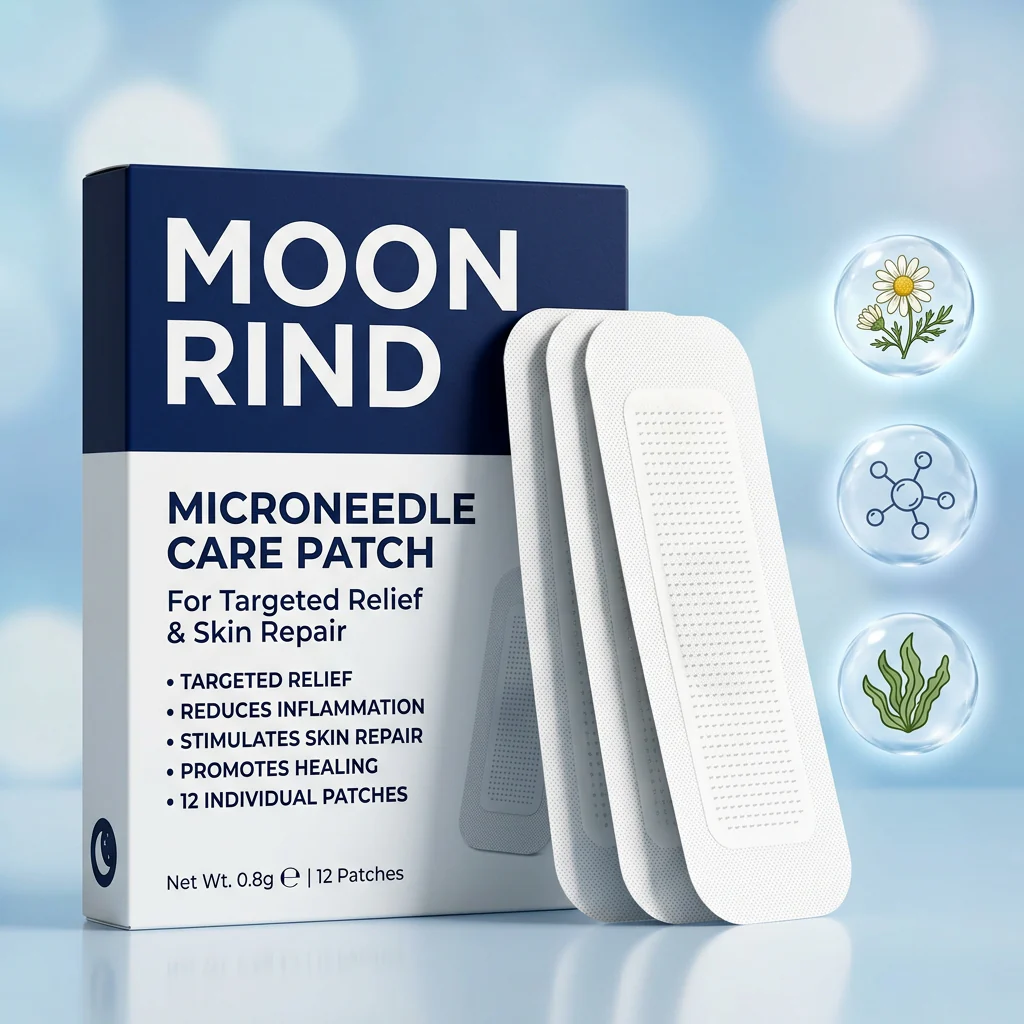
Table of Contents
- Quick verdict
- What Moon Rind Microneedle Patch Claims To Do
- Domain and Product Structure
- The Microneedle Angle
- The Marketing Pattern
- The Ingredient Problem
- Real User Experience Pattern
- Compared to Similar Products
- Red Flags That Kept Showing Up
- What This Product Actually Is
- My Final Take
- FAQ
What Moon Rind Microneedle Patch Claims To Do
Depending on where you land, this product is positioned in different ways.
Some pages push it as:
- a weight loss microneedle patch
- an Ozempic alternative (without injections)
- a metabolism or appetite control solution
Other versions promote it as:
- a vein treatment patch
- a circulation-support product
That alone is a problem.
Because when one product is trying to solve weight loss, circulation, and skin issues at the same time, it usually means one thing:
the branding is flexible… not the science.
Some versions even claim the patch can deliver semaglutide-like effects through the skin using microneedles
That’s where things start to break down.
Domain and Product Structure
This is not a clean, single-brand setup.
What I noticed:
- multiple websites selling the same product
- different names like “VeinTarget” attached to it
- identical descriptions reused across domains
- heavy discount pricing (from ~$49 down to ~$14.95)
That’s not how stable brands operate.
That’s how campaign-based products are pushed.
I’ve seen this same structure in products like VLSVLS Bee Venom and Gfouk VeinTarget Patch , where the product changes names, but the marketing stays the same.
The Microneedle Angle
The main selling point is “microneedle delivery.”
The idea:
tiny dissolvable needles push ingredients into your skin.
Sounds scientific. And to be fair, microneedle technology does exist in real medicine.
But here’s the issue.
There’s no clear evidence that these viral patches deliver meaningful weight loss compounds through the skin. And especially not something like semaglutide. That’s a prescription drug that requires controlled dosing.
A patch like this? No transparency on dosage. No verification. No clinical backing.
The Marketing Pattern
This is where it really clicked. The structure follows the exact same playbook used across viral products.
You’ll see:
- “doctor-inspired breakthrough” language
- before-and-after transformation claims
- emotional hooks (stubborn belly fat, slow metabolism)
- urgency tactics (limited stock, countdown timers)
This isn’t random.
It’s the same system described in broader microneedle patch investigations, where brands reuse identical funnels under different names That’s why so many of these products look and feel the same.
The Ingredient Problem
Here’s what stood out the most.
There’s:
- no clear ingredient transparency
- no confirmed active dosage
- no verified GLP-1 or semaglutide presence
Yet the marketing heavily implies those effects.
That’s a huge gap.
Because you’re being sold: “works like Ozempic”
But without:
- prescription control
- clinical trials
- verified formulation
Real User Experience Pattern
Looking at user feedback patterns, the experience is very consistent.
From what I found:
- patches don’t stick well
- little to no appetite suppression
- no noticeable weight loss results
- confusion about what’s actually inside the patch
That lines up with what you’d expect from a product where the marketing is stronger than the formulation.
Compared to Similar Products
Once you step back, this sits right next to products like SciatiEase and JointVance.
Different names. Same structure:
- modern-sounding delivery method
- big weight loss promise
- low transparency
- aggressive funnel marketing
Only the branding changes.
Red Flags That Kept Showing Up
A few things repeated clearly:
- multiple product variations under the same name
- unrealistic “needle-free semaglutide” positioning
- no clinical proof
- unclear ingredient transparency
- heavy discount and urgency tactics
- reused marketing templates across domains
These are not small issues. They’re patterns.
What This Product Actually Is
When you strip everything back, this is what you’re left with: a microneedle-style patch with unclear active ingredients, marketed as a high-tech weight loss solution.
Not a proven fat loss method.
Not a replacement for GLP-1 treatments.
Not a clinically validated system.
My Final Take
Moon Rind Microneedle Patch isn’t just another supplement. It’s part of a bigger trend. Take a real concept (microneedles), combine it with a high-demand outcome (weight loss), then build a strong marketing funnel around it.
That’s what you’re seeing here.
The idea sounds advanced.
The execution doesn’t hold up.
And once you look past the surface, it becomes very clear: this product is being sold much harder than it’s being proven.
FAQ
Is Moon Rind Microneedle Patch legit?
The product exists, but the claims around weight loss and semaglutide-like effects are not supported by clear clinical evidence.
Does Moon Rind patch really help with weight loss?
Based on available information and user feedback, there’s no strong proof it leads to meaningful weight loss.
Does it contain semaglutide?
There is no verified evidence showing it contains or delivers semaglutide effectively through the skin.
Are microneedle patches effective for fat loss?
Current viral weight loss patches are not backed by strong clinical evidence for fat loss results.
Why are there multiple Moon Rind products?
This is common in funnel-based marketing, where the same product is rebranded and sold under slightly different angles.
