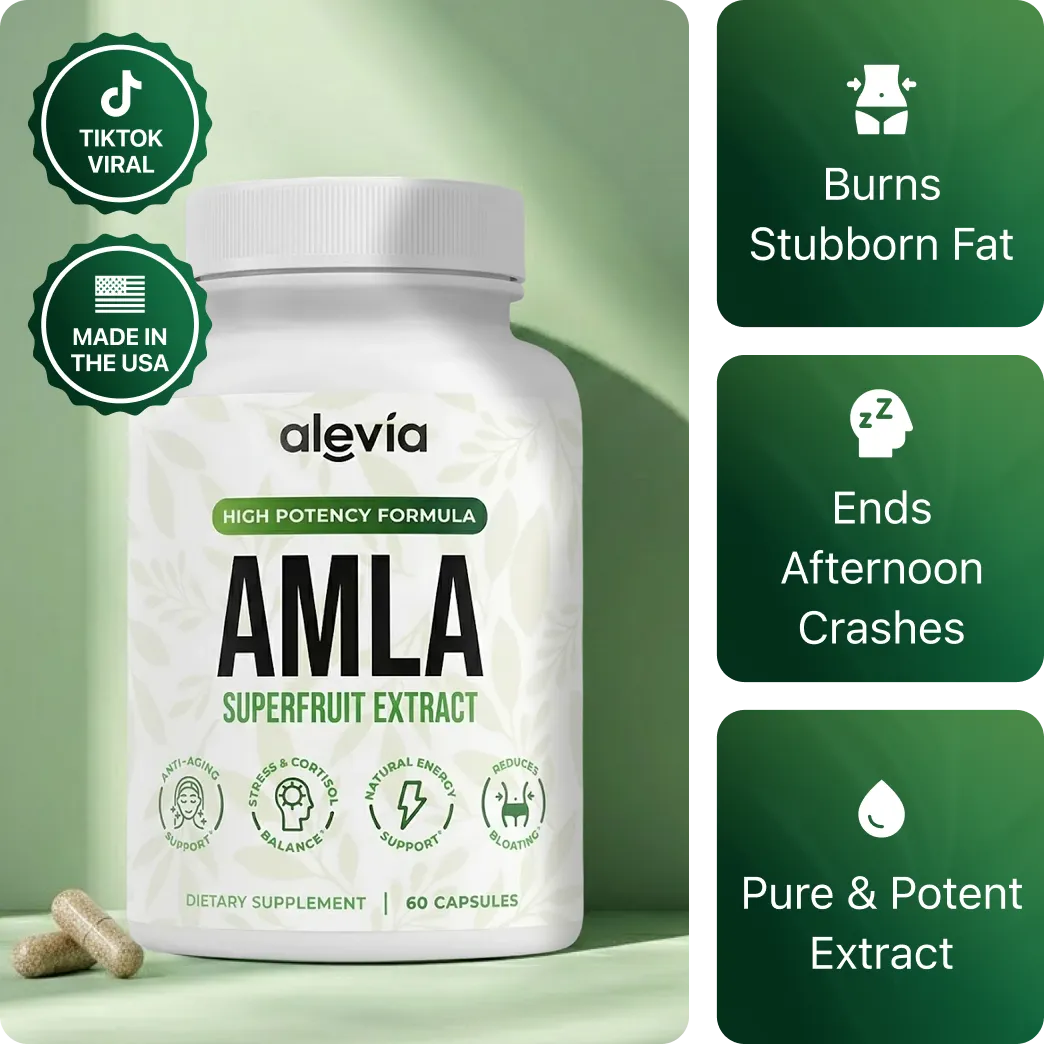

If you’ve been seeing Alevia Amla online lately, it doesn’t usually show up like a normal supplement you’d casually find in a pharmacy search or trusted health listing.
It appears through short ads and long-form video funnels built around bloating concerns, “slow metabolism” explanations, and detox-style storytelling that frames amla (Indian gooseberry) as a natural fat-burning reset for the body. The product is then introduced as a simple liquid drop solution that supposedly helps with digestion, weight loss, and internal cleansing in one step.
The way it’s presented feels less like a straightforward nutritional product and more like a guided wellness narrative designed to build belief before the supplement is even fully explained.
In this review, we’ll break down how Alevia Amla is being marketed, what amla actually does, and why the structure looks similar to other viral detox and weight loss supplement funnels.
Quick Takeaway
- Alevia Amla is marketed through detox and natural weight loss storytelling funnels
- Ads heavily rely on bloating, digestion, and metabolism “reset” framing
- Amla (Indian gooseberry) is used as a natural authority ingredient in the marketing
- Claims often extend beyond basic nutritional benefits into fat-burning expectations
- The structure matches common viral supplement funnel patterns seen across the weight loss niche
What It Is and What It Claims To Do
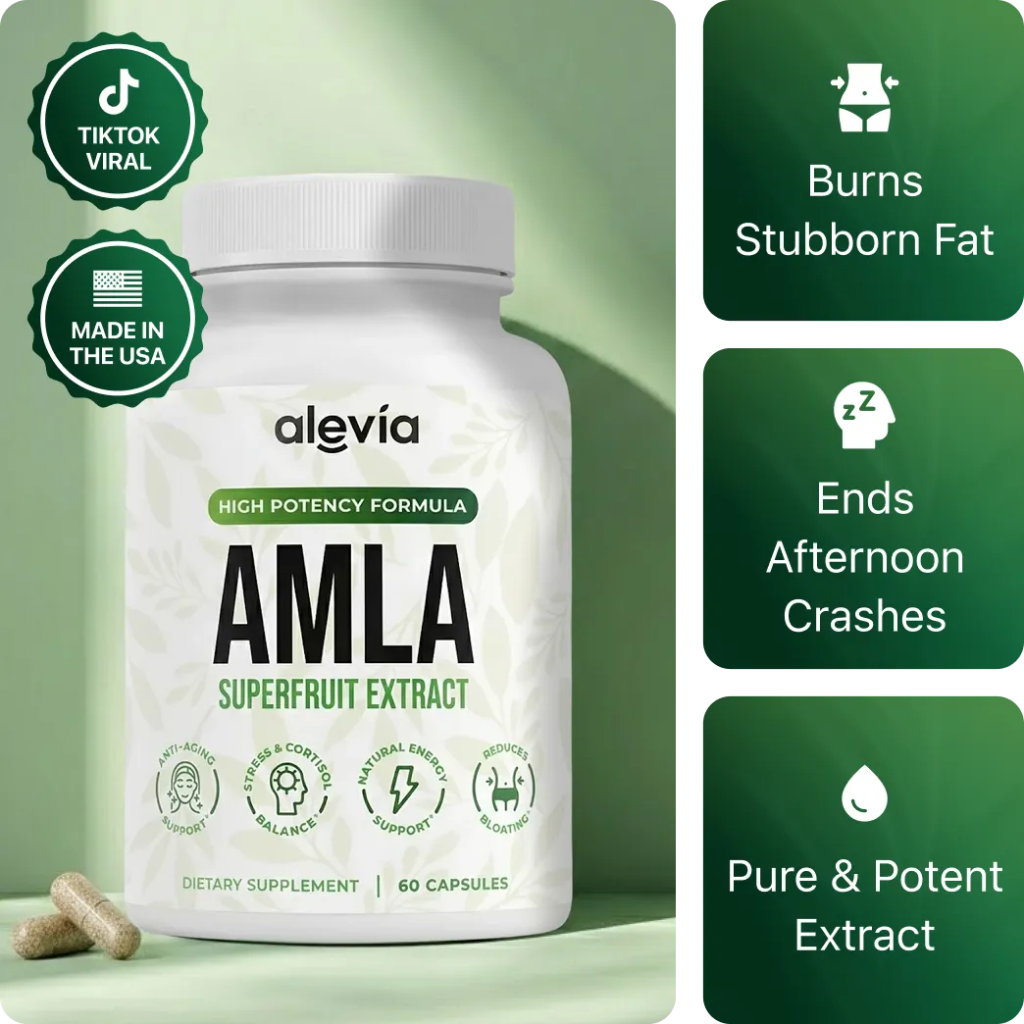
Alevia Amla is presented as a liquid supplement made with amla extract, positioned as a natural detox and weight management aid.
The marketing typically focuses on:
digestion support, bloating reduction, metabolism improvement, appetite control, and “internal cleansing” that supposedly helps the body function more efficiently for weight loss.
Some versions of the ads also suggest that it helps activate fat burning naturally by removing internal buildup that slows metabolism. That framing is important because it shifts the product from general wellness support into a more aggressive weight loss promise.
Ingredient Breakdown
The core ingredient is amla (Indian gooseberry), a fruit known for its antioxidant content, vitamin C levels, and traditional use in herbal wellness systems.
Amla is commonly associated with general digestive and nutritional support, and it has been studied for antioxidant and metabolic health properties. However, the marketing around Alevia Amla often expands these basic benefits into broader claims like detoxification, rapid fat burning, and metabolism “reset effects,” which go beyond what the ingredient itself can directly guarantee in a supplement form.
Outside of amla, most descriptions rely on general herbal wellness language rather than a clearly detailed clinical-grade formulation breakdown.
The Marketing Angle
The ads rely heavily on “natural ancient remedy” positioning. Amla is framed as a forgotten traditional solution that modern diets have ignored, and Alevia Amla is presented as the concentrated modern version of that remedy.
This creates a strong emotional narrative of rediscovery, where the product feels like a hidden wellness solution rather than a standard supplement. The storytelling usually focuses on bloating, low energy, slow digestion, and weight gain resistance as signs of internal imbalance.
The “Clinically Backed” Illusion
Alevia Amla marketing often uses scientific-sounding language around antioxidants, metabolism support, and digestive function. The issue is not the existence of amla’s nutritional research, but how far the marketing stretches those general benefits into specific weight loss outcomes.
The ads tend to blur the line between:
nutritional support evidence and full-body fat loss claims. This creates the impression of clinical certainty without clearly showing product-specific studies that validate the advertised results.
Domain Setup and Transparency
Alevia Amla sales pages typically follow long-form funnel structures rather than simple product listings. Key information like pricing, usage instructions, and offers is often placed after extended storytelling about digestion issues, detox theory, and metabolism problems. This structure prioritizes emotional engagement first, with product clarity introduced later in the funnel.
Emotional Selling Tactics
The marketing heavily targets bloating discomfort, frustration with slow digestion, fatigue, and difficulty losing weight despite dieting efforts. These concerns are framed as signs of internal imbalance that can supposedly be corrected through a natural detox solution. The emotional angle focuses on feeling “lighter,” “cleaner,” and “reset,” which positions the product as a lifestyle change rather than just a supplement.
Urgency and Funnel Tactics
Many versions of the funnel include urgency-based triggers such as limited-time discounts, bundle deals, and time-sensitive promotions.
These tactics are designed to reduce hesitation after emotional engagement has already been built through the video storytelling.
Real User Experience Pattern
Across similar detox-style supplements, real-world experiences tend to be more moderate than the marketing suggests. Rather than dramatic weight loss, users typically report general digestive support, mild bloating changes, or inconsistent results depending on lifestyle factors. This difference between expectation and experience is common in products that rely heavily on funnel-based marketing.
A Pattern I Keep Seeing
Alevia Amla follows the same recurring structure I’ve seen across other viral wellness supplements I’ve already reviewed, including SlimTides, Brain Honey, Alpha Honey Gummies, GlicoDex, and Sonvyra Fat Burning Shorts.
The pattern stays consistent:
emotional health concern, hidden cause explanation, authority or tradition-based trust framing, and then a simple supplement solution presented at the end.
This structure appears repeatedly across weight loss, detox, brain health, and metabolism-focused products, even when the branding changes completely.
Is Alevia Amla a Scam or Legit?
Alevia Amla appears to be a real supplement product, but the concern comes from how it is marketed rather than its existence. The combination of detox-heavy storytelling, expanded interpretations of amla’s benefits, and weight loss framing places it in a high-intensity wellness funnel category. The presentation relies more on persuasion-driven marketing than transparent, evidence-forward communication.
Conclusion
Alevia Amla is marketed as a natural detox and weight loss support product built around traditional wellness storytelling.
Once the emotional narrative is stripped away, the product aligns more with general herbal supplementation than the transformative fat-loss solution suggested in the ads.
FAQ
What is Alevia Amla used for?
It is marketed for digestion support, detoxification, bloating relief, and general metabolic wellness.
Does Alevia Amla actually help with weight loss?
There is no strong independent clinical evidence showing significant fat loss results from Alevia Amla as advertised.
Is amla good for health?
Amla is rich in antioxidants and vitamin C and is associated with general digestive and metabolic health support.
Why do detox supplements like Alevia Amla use weight loss claims?
Because detox and metabolism framing simplifies complex digestion topics into emotionally appealing marketing messages.
Is Alevia Amla legit?
It appears to be a real supplement, but the marketing uses exaggerated wellness and weight loss claims that should be viewed critically.