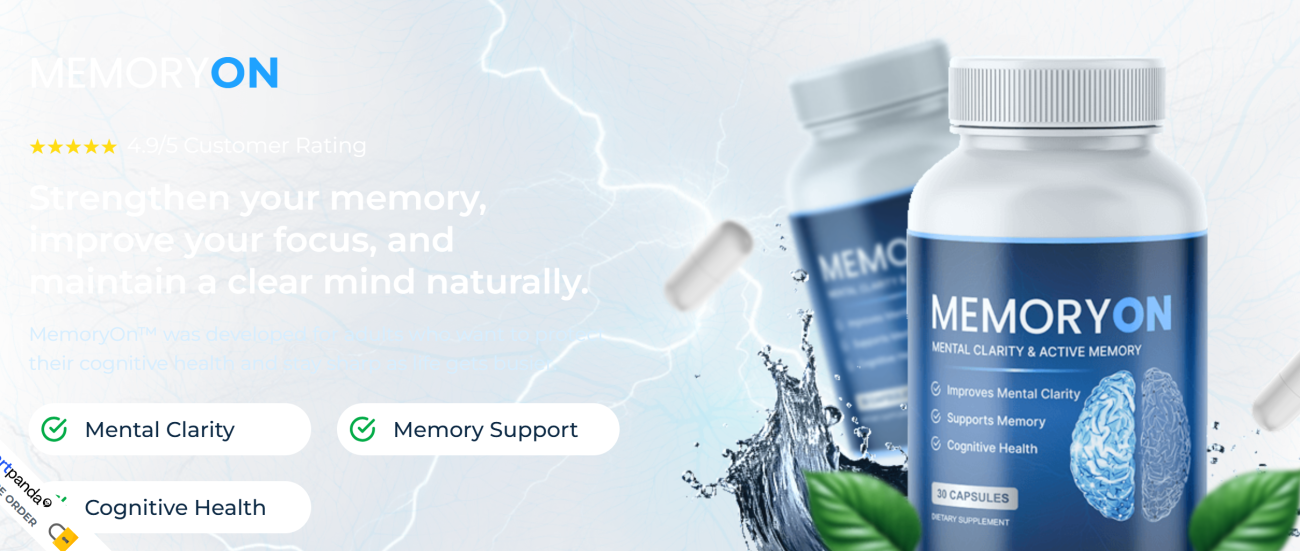
If you’ve come across MemoryOn, chances are it wasn’t through a normal product search. It likely appeared as a video, ad, or article talking about a “15-second brain trick” that can supposedly restore memory, improve focus, or even reverse cognitive decline. These types of ads are designed to hook attention quickly, especially for people worried about brain fog, forgetfulness, or conditions like Alzheimer’s and dementia. But when you dig deeper, MemoryOn starts to look less like a breakthrough and more like a familiar marketing pattern seen across many viral brain supplements.
Quick Verdict
• Promoted using a “15-second brain trick” hook
• Uses viral ads and celebrity-style endorsements
• No verified clinical evidence on the product
• Relies heavily on emotional and authority-based marketing
• Strong similarities to known supplement funnel scams
Table of Contents
- Quick Verdict
- What MemoryOn Claims to Do
- Ingredients, Marketing, Pricing and Website History
- What Research Actually Shows
- How Brain Supplements Are Regulated
- Red Flags to Consider
- Who Should Consider MemoryOn
- Who Should Skip MemoryOn
- What to Do If You Already Bought MemoryOn
- How to Avoid Similar Supplement Traps
- Final Verdict
- FAQ
What MemoryOn Claims to Do
MemoryOn is marketed as a cognitive support supplement that can improve memory, sharpen focus, and protect the brain from decline. The messaging often suggests that a simple daily routine or “brain trick” can unlock better mental performance. In some versions of the promotion, the claims go further, implying support for serious conditions like Alzheimer’s or dementia. This is a major red flag because no over-the-counter supplement has been proven to reverse these conditions. The “15-second brain trick” itself is presented as a hidden or overlooked discovery, but this type of claim is commonly used as bait rather than a real scientific method.
Ingredients, Marketing, Pricing and Website History
MemoryOn is typically presented as containing common nootropic ingredients like ginkgo biloba, bacopa monnieri, and vitamins. These ingredients appear in dozens of brain supplements, and while some have been studied individually, results are usually modest and depend on proper dosing. What stands out more than the ingredients is the marketing structure. The funnel usually begins with a video or article that looks like a news report or expert feature. It introduces a problem, memory loss, brain fog, or fear of cognitive decline, then presents a “breakthrough trick” before eventually leading to a supplement purchase. This exact pattern has been widely documented in similar products. These campaigns often use fake celebrity endorsements, deepfake-style videos, and fabricated expert claims to build trust. Badges like “clinically proven,” “doctor recommended,” or “FDA approved facility” may appear, but they are often used as visual trust signals rather than verifiable proof. Pricing usually follows a bundle model, encouraging users to buy multiple bottles upfront with “limited-time discounts.” This creates urgency and increases spending before the buyer has time to evaluate the product. Another important detail is website inconsistency. Products like MemoryOn are often sold across multiple landing pages rather than a single transparent brand website, making it difficult to verify ownership, manufacturing, or accountability. This same structure appears in supplements like Memo Genesis, MemoPezil, and BoostMind, where storytelling and urgency are used to drive conversions rather than evidence.
What Research Actually Shows
There is no strong clinical evidence showing that MemoryOn, as a finished product, improves memory or prevents cognitive decline. More broadly, experts have repeatedly stated that brain supplements do not have solid evidence supporting major cognitive improvements. Many rely on ingredient-level studies rather than testing the final formula itself. Claims suggesting that a quick “brain trick” or simple supplement can reverse Alzheimer’s or dementia are not supported by science and are often considered misleading.
How Brain Supplements Are Regulated
MemoryOn is sold as a dietary supplement, meaning it does not need to prove effectiveness before being marketed. This allows companies to use general claims like “supports memory” or “boosts brain function” without strong clinical validation. It also creates room for marketing to appear more scientific than it actually is.
Red Flags to Consider
• “15-second brain trick” or similar secret formula claims
• Fake or unverifiable celebrity endorsements
• Deepfake-style videos and voiceovers
• Fake news-style landing pages designed to build trust
• No product-specific clinical trials
• Common ingredients reused across multiple supplements
• Urgency tactics like “limited stock” or countdown timers
• Multiple sales pages with inconsistent branding
These tactics are widely associated with supplement funnel scams targeting people concerned about memory loss.
Who Should Consider MemoryOn
• Adults looking for general cognitive support
• People curious about nootropic supplements
• Individuals exploring ways to support focus and clarity
Who Should Skip MemoryOn
• Anyone expecting treatment for Alzheimer’s or dementia
• People looking for clinically proven results
• Individuals who want transparent, evidence-backed supplements
What to Do If You Already Bought MemoryOn
If you’ve already purchased MemoryOn, review your receipt and check for any recurring billing. Some supplement funnels include auto-ship programs that can charge you repeatedly. Monitor how you feel after use and stop if you notice side effects. If you suspect misleading billing or advertising, contact your bank or payment provider immediately. It’s also a good idea to document the website, emails, and transaction details in case you need to dispute charges.
How to Avoid Similar Supplement Traps
Be cautious of products that introduce a “secret trick,” “hidden formula,” or “breakthrough discovery” early in a video or article. These are often designed to hold attention and build curiosity rather than provide real value. Watch for fake authority signals. If a product claims endorsements from doctors, celebrities, or major media outlets, verify them independently. Many scams use AI-generated videos or fabricated quotes to create false credibility. If a page looks like a news report but leads directly to a product checkout, it is likely a marketing funnel, not independent journalism. Also pay attention to repetition. The same story, same structure, and even the same ingredients often appear under different product names. This allows marketers to relaunch the same campaign when trust in one name fades. Look for clear ingredient transparency, a consistent official website, and independent reviews outside of promotional pages before buying any supplement.
Final Verdict
MemoryOn follows a well-established supplement funnel pattern built around viral hooks, emotional messaging, and manufactured authority. The “15-second brain trick” is not supported by scientific evidence and appears to function as marketing bait rather than a real solution. While the ingredients may offer mild general support, there is no proof that the product delivers meaningful improvements in memory or cognitive health. It is best approached with caution.
FAQ
Is MemoryOn legit? It appears to be a real supplement, but the marketing tactics raise serious concerns.
Does the 15-second brain trick work? There is no scientific evidence supporting this claim.
Is MemoryOn FDA approved? No, like most supplements, it is not FDA approved for treating or preventing disease.
Are the celebrity endorsements real? Many similar products use fake or unverifiable endorsements.
