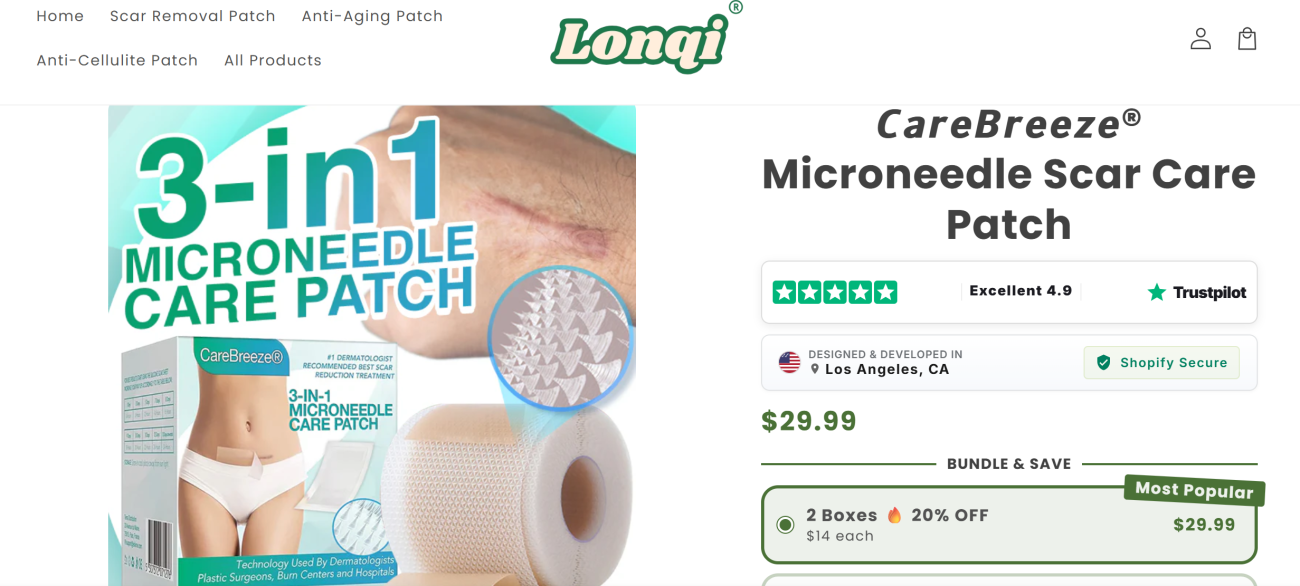
If you’ve seen the Lonqi Microneedle Patch online, it probably looked like a skincare miracle with tiny dissolving needles, dramatic before-and-after photos, and doctor-approved claims. But a closer look reveals no verifiable clinical proof, fake or vague expert endorsements, and a so-called secret skin trick that is mostly slick marketing. Behind the flashy videos and urgent sales pitches, the patch promises more than the technology can deliver.
Quick Verdict
Lonqi Microneedle Patch is unlikely to live up to its hype. At best, it may provide minor skin hydration or a temporary smoothing effect, but the bold claims about erasing wrinkles, scars, and pigmentation in days are unsupported. The marketing is sophisticated, but the product itself does not have the evidence to back it.
Table of Contents
- Quick Verdict
- What’s Missing Tells You Everything
- Bottom Line
- Frequently Asked Questions About Lonqi Microneedle Patch
The “Secret Skin Trick” Hook
The first thing the marketing leans on is the idea that this is some kind of hidden breakthrough. The ads and landing pages push angles like a “microneedle discovery” or a “simple patch trick” that supposedly replaces expensive skincare treatments. It’s framed as something you were never meant to know about, almost like an insider secret rather than a product being sold to you.
This is a deliberate tactic. It shifts your mindset from being skeptical to feeling like you’ve stumbled onto something exclusive. Instead of questioning it, you’re pulled into the idea that you’re early to a breakthrough.
The Doctor and “Clinical” Authority Angle
Another major tactic is the heavy use of medical credibility. You’ll see phrases suggesting it was developed by dermatologists or backed by clinical testing. Sometimes the marketing even implies doctor recommendations or expert approval.
But when you look closer, there’s a problem. There are no verifiable names, no published studies, and no traceable credentials tied to these claims. It’s all vague. In some cases, the videos even feature someone in a lab coat speaking in scientific terms, but there’s no proof they’re a real medical professional connected to the product.
This creates what’s known as borrowed authority. It gives the impression of legitimacy without actually providing any evidence.
What the Marketing Video Actually Says
The promotional video follows a very predictable structure. It usually starts by calling out common frustrations like wrinkles, aging skin, or dark spots, immediately trying to connect with anyone who has struggled with those issues. It then pivots into a supposed discovery, presenting microneedle technology as something revolutionary and newly accessible.
From there, the explanation becomes very technical-sounding, but not actually informative. You’ll hear about “thousands of dissolving microneedles” delivering ingredients deep into the skin and boosting collagen quickly. The language sounds scientific, but it avoids specifics. There’s no real explanation of depth, dosage, or clinical results.
Then come the bold claims. The video suggests fast, visible changes in a matter of days, sometimes implying dramatic improvements in wrinkles, scars, and skin texture all at once. This is usually followed by before-and-after images and claims that a high percentage of users saw results.
Finally, the video shifts into urgency. Limited-time discounts, low stock warnings, and countdown timers appear, pushing you to act quickly before thinking too deeply about what you’ve just watched.
The Fake Credibility Signals
The product pages are often filled with badges and trust symbols. You’ll see things like “clinically proven,” “dermatologist recommended,” or even regulatory-style logos. These are meant to reassure you at a glance.
But there’s no real evidence behind them. No links to studies, no official approvals, nothing you can independently verify. They function more like visual persuasion tools than actual proof.
The Advertorial Disguise
Instead of a straightforward product page, Lonqi is often sold through what looks like an article or blog post. It reads like a personal story or an investigation, sometimes even mimicking a news report. This format makes it feel more trustworthy because it doesn’t look like a direct advertisement.
In reality, it’s a carefully structured sales page designed to guide you from curiosity to purchase without triggering skepticism.
Emotional Pressure and Psychological Hooks
The entire funnel is built around emotional triggers. It taps into frustration with aging or skin issues, then offers hope through a quick, painless solution. It emphasizes convenience, avoiding expensive treatments, and achieving results without effort.
By the time you reach the end of the page, the urgency kicks in. Discounts, timers, and limited availability create pressure to make a decision quickly, before you have time to research or question the claims.
What’s Missing Tells You Everything
What really stands out is what the marketing doesn’t include. There are no detailed ingredient breakdowns, no clinical trial data, no dermatologist publications, and no transparent company information. For a product making such strong claims, that absence is a major red flag.
Bottom Line
The Lonqi Microneedle Patch may hydrate the skin slightly or provide a temporary smoothing effect, but it is highly unlikely to deliver the dramatic results advertised. The marketing is sophisticated, the narrative convincing, and the videos compelling, but the science and clinical validation are missing. Anyone considering this product should approach with caution and skepticism.
If you want to see how Lonqi compares to other products using similar viral marketing tactics, check out our BoostMind Supplement full review to understand how pseudo-scientific claims are often used in wellness products. For a deep dive into questionable patch products, see our Cleantra Lymphatic Drainage Drops analysis for a detailed breakdown. You can also explore the Alpha Pro Force Gummies investigation to learn more about the patterns used in viral supplement marketing.
Frequently Asked Questions About Lonqi Microneedle Patch
Does Lonqi Microneedle Patch really work?
There is no verifiable clinical evidence showing that Lonqi delivers the dramatic results claimed in the marketing. At best, it may provide minor hydration or temporary smoothing, but it cannot erase wrinkles, scars, or pigmentation in just days.
Are the doctor endorsements real?
The ads mention dermatologists and clinical tests, sometimes showing people in lab coats. None of these experts can be independently verified, and there are no published studies backing the product claims. The endorsements are likely fabricated to create credibility.
What is the “secret skin trick” the marketing mentions?
The so-called secret skin trick is a marketing tactic designed to make the patch feel exclusive and innovative. It is not a proven scientific method or breakthrough; the product itself relies on micro-needles that only slightly improve skin hydration.
Is it safe to use?
For most healthy adults, using microneedle patches carries minimal risk, but some users may experience irritation or redness. There is no evidence the patch can cause harm beyond mild skin reactions, but it also does not produce the results advertised.
Where can I buy Lonqi safely?
The product is sold through its official website and various social media ads. Exercise caution, as many sellers use cloned pages or affiliate schemes, and there is no guarantee the product is authentic or effective.
