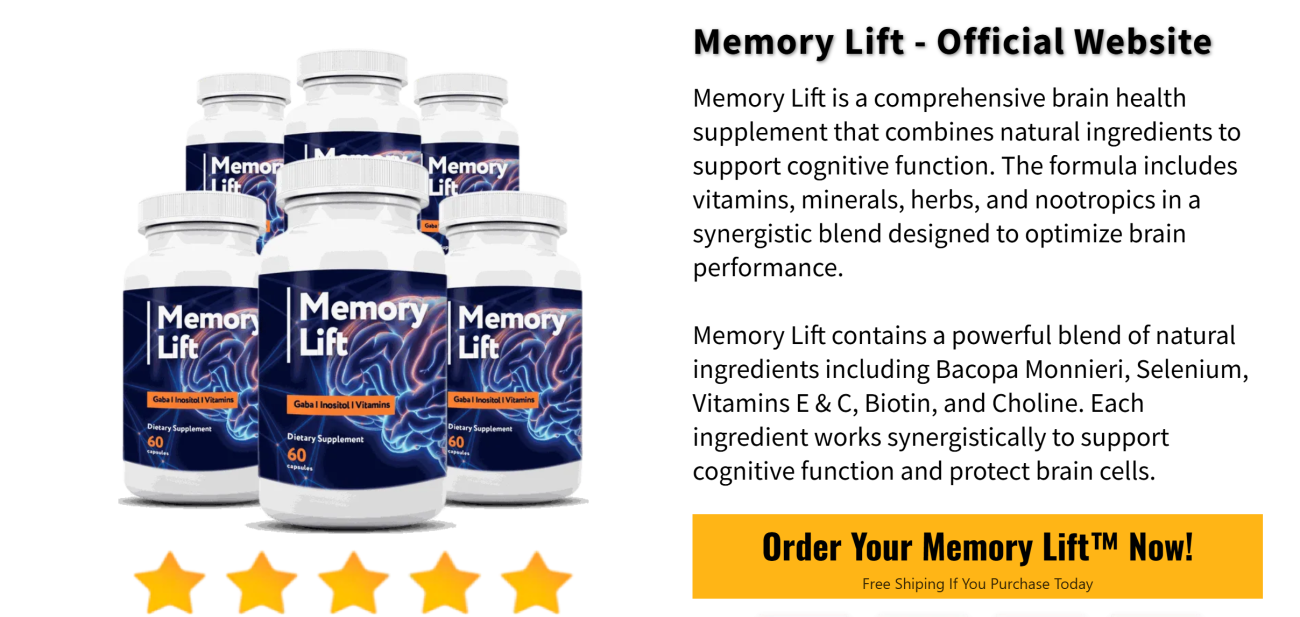
If you’ve searched for Memory Lift reviews, you’re probably trying to figure out whether this supplement can actually improve memory and focus or if it’s just another heavily marketed brain pill. Products like this often show up when people are dealing with brain fog, forgetfulness, or worries about long-term cognitive decline. Memory Lift leans into those concerns, presenting itself as a simple solution to staying mentally sharp. But once you slow down and look beyond the claims, the picture becomes more familiar.
Quick Verdict
• Marketed for memory, focus, and cognitive performance
• Uses common nootropic ingredients found in many supplements
• No strong clinical evidence on the finished product
• Relies heavily on marketing and authority-style messaging
• Transparency and consistency are limited
Table of Contents
- Quick Verdict
- What Memory Lift Claims to Do
- Ingredients, Marketing, Pricing and Website History
- What Research Actually Shows
- How Brain Supplements Are Regulated
- Red Flags to Consider
- Who Should Consider Memory Lift
- Who Should Skip Memory Lift
- What to Do If You Already Bought Memory Lift
- Conclusion
- How to Avoid Similar Supplement Traps
- FAQ
What Memory Lift Claims to Do
Memory Lift is promoted as a brain health supplement designed to improve memory, sharpen focus, and reduce brain fog. The messaging often suggests better recall, clearer thinking, and long-term cognitive protection. In some cases, the positioning goes further, hinting at support for age-related decline or conditions linked to memory loss.
You’ll also see it described as a “nootropic,” which is a term used for substances that claim to improve cognitive function. The issue is that many nootropic supplements are marketed with benefits that are not strongly proven in real-world use . The language used around Memory Lift makes it feel like a breakthrough, but the actual claims are broad and familiar.
Ingredients, Marketing, Pricing and Website History
Memory Lift is typically described as containing ingredients like ginkgo biloba, bacopa monnieri, phosphatidylserine, L-theanine, and B vitamins . These are some of the most common compounds used in brain supplements, and they appear repeatedly across different products in this category.
While these ingredients have been studied individually, effectiveness depends heavily on dosage and formulation. Without clear, consistent disclosure of ingredient amounts, it’s difficult to determine whether the product can deliver meaningful results.
The marketing behind Memory Lift follows a well-known pattern. It often starts with a problem, brain fog, forgetfulness, or fear of cognitive decline, then introduces a “breakthrough” or “hidden solution.” Some versions use long-form videos or article-style pages that resemble educational or news content. Others reference experts, research, or scientific backing without providing easily verifiable details tied directly to the product.
You may also see badges like “clinically tested,” “doctor recommended,” or “GMP certified.” While these sound reassuring, they are often used as trust signals rather than proof of product effectiveness.
This same structure appears in other supplements like NeuroQ, and BoostMind, where authority, storytelling, and urgency are used to guide the buying decision.
Pricing is usually structured in bundles, encouraging multiple-bottle purchases. This creates urgency and increases upfront spending while suggesting that results require long-term use.
Another point worth noting is that Memory Lift appears across different websites and promotional pages rather than a single clearly established brand platform. This makes it harder to verify consistency, quality control, and long-term accountability.
What Research Actually Shows
Some ingredients used in Memory Lift have been studied for cognitive support, but results are mixed and often modest. For example, ginkgo biloba has been widely researched, yet large studies show it does not prevent or slow dementia .
More broadly, experts point out that there is no solid evidence that brain supplements can significantly improve memory or prevent cognitive decline . This is important because Memory Lift, like many products in this category, relies on ingredient-level research rather than clinical studies on the finished formula.
How Brain Supplements Are Regulated
Memory Lift is sold as a dietary supplement, which means it is not required to prove effectiveness before being marketed. This allows companies to promote general benefits like “supports memory” or “enhances focus” without needing strong clinical proof.
Because of this, supplements can appear more scientifically validated than they actually are, especially when marketing blends real research with product claims.
Red Flags to Consider
• No product-specific clinical trials confirming effectiveness
• Common ingredient formula seen across many supplements
• Ingredient dosages are not clearly disclosed
• Use of authority-style claims without verifiable sources
• Marketing that resembles news articles or expert features
• “Breakthrough” or “hidden solution” messaging
• Sold across multiple platforms instead of a single brand site
• Limited independent, detailed customer feedback
These patterns are common in supplement funnels where presentation is stronger than measurable results.
Who Should Consider Memory Lift
• Adults looking for general cognitive support
• People curious about nootropic supplements
• Individuals exploring ways to support focus and mental clarity
Who Should Skip Memory Lift
• Anyone expecting treatment for Alzheimer’s, dementia, or serious cognitive conditions
• People looking for clinically proven memory improvement
• Individuals who prefer fully transparent formulations
What to Do If You Already Bought Memory Lift
If you’ve already purchased Memory Lift, keep your receipt and review the refund policy carefully. Monitor your experience and avoid relying on expectations created by marketing. Some users report mild side effects like headaches or digestive discomfort , so stop using it if you notice any issues. If there are billing or delivery problems, contact your payment provider promptly.
Conclusion
Memory Lift follows a familiar supplement pattern: common ingredients, broad cognitive claims, and marketing built around authority and emotional appeal. While some ingredients may offer mild support, there is no strong evidence that the product delivers significant improvements in memory or protects against cognitive decline. It is best approached as a general wellness supplement, not a proven brain health solution.
How to Avoid Similar Supplement Traps
Be cautious of supplements presented as “breakthrough discoveries” or “hidden recipes,” especially when introduced through long videos or emotional storytelling before revealing the product. Watch for authority signals like doctor references or scientific claims that are not clearly verifiable.
If a page looks like a news article or expert report but leads directly into a product sale, it’s usually designed to build trust rather than provide neutral information.
Also pay attention to patterns. Many supplements reuse the same ingredients, same claims, and same marketing structure under different brand names. This allows products to be rebranded and relaunched when trust declines.
Look for clear ingredient transparency, a consistent official website, and independent reviews outside of sales pages. These are stronger indicators of reliability than polished marketing.
FAQ
Is Memory Lift legit? Memory Lift appears to be a real supplement, but limited transparency and marketing tactics raise caution.
Does Memory Lift improve memory? There is no strong clinical evidence showing significant improvement.
Is Memory Lift FDA approved? No, like most supplements, it is not FDA approved for treating or preventing disease.
Are there side effects? Possible, including headaches or digestive discomfort depending on individual response.
