I first came across the Stiebel Eltron Tempra 29 while looking into tankless water heaters because my old tank system had started to feel like a constant limitation instead of something I could rely on. Either the hot water ran out too fast, or I was stuck waiting for the tank to recover after someone else used it. It wasn’t broken, but it was clearly holding the house back in everyday use.
So I started looking into on-demand systems, and that’s how I ended up with the Tempra 29. At first, I wasn’t fully convinced it would actually feel different in real use. Most of what you read online sounds technical and a bit over-optimistic, especially with flow rate claims and “endless hot water” promises.
But I decided to try it anyway and see how it behaves in a real household setting.
Quick Takeaways
- Provides continuous hot water without recovery downtime like tank systems
- Performance feels consistent once properly installed and sized
- Can handle multiple uses at once, but flow is still system-limited
- Compact wall-mounted design frees up physical space
- Requires serious electrical capacity and professional-level installation planning
- Slight temperature variation can occur depending on water source and pressure systems
- Feels less like an “upgrade gadget” and more like a structural home improvement
- Best value shows up over time, not immediately
What the Stiebel Eltron Tempra 29 Actually Is
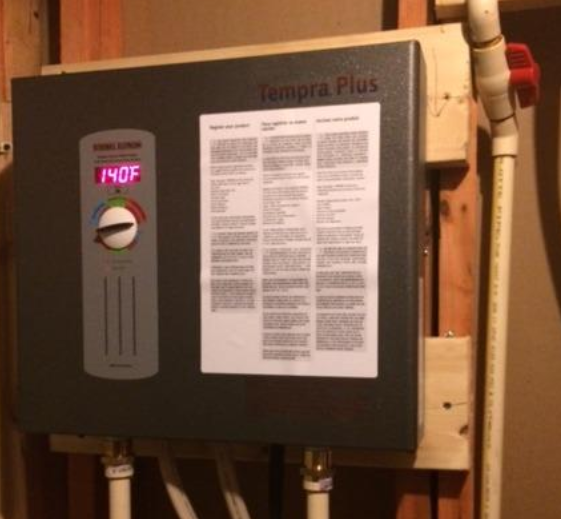
The Stiebel Eltron Tempra 29 is a high-capacity electric tankless water heater designed to provide continuous hot water on demand instead of storing heated water in a tank.
Instead of heating a fixed volume like a traditional system, it heats water instantly as it flows through the unit, adjusting power output based on demand and incoming water temperature.
On paper, it is designed to support multiple simultaneous uses like showers, faucets, and appliances, depending on flow rate and incoming conditions.
Why I Switched to It
The biggest frustration with my old tank system was not just hot water running out, but the downtime. If you drained the tank with showers or multiple uses, you were basically waiting for recovery before anyone else could properly use hot water again. That cycle started to feel restrictive in a busy household. What pushed me toward tankless was the idea that hot water should not come with a “recovery delay.” It should just be available whenever needed.
First Impressions After Installation
Once installed, the first thing that stood out was how compact the unit actually is. Compared to a bulky tank sitting in a utility space, this felt like reclaiming part of the house. It mounts cleanly and does not dominate the room. The second thing I noticed was how quickly it responds once water starts flowing. When demand is steady, it delivers consistent hot water without the usual drop-off you get with tanks.
I was able to run multiple uses at once, like a shower while another faucet was running, with only a slight reduction in flow depending on conditions.
What Using It Actually Feels Like Day to Day
The biggest change is not dramatic heat or extreme performance. It is consistency over time. You turn on hot water and it just stays available. There is no moment where you mentally calculate whether someone else used up the tank or whether you need to wait.
For showers, it feels uninterrupted in a way that makes older systems feel slightly outdated once you adjust to it.
For things like filling larger tubs or running multiple outlets, performance depends more on flow rate and incoming water temperature than anything else. That is where you start to understand the real tradeoff with tankless systems.
Performance Limits and What You Notice in Real Use
The system is powerful, but it is still governed by electrical capacity and flow limits. If multiple hot water points are used at the same time, the system balances output, which can slightly reduce flow depending on demand.
It does not “run out” like a tank, but it does distribute capacity based on load. That is an important mental shift compared to traditional systems. You are not limited by stored water anymore, but you are still limited by maximum throughput.
Temperature Behavior and Small Fluctuations
One thing I did notice in real-world use is slight temperature variation in certain conditions.
In setups where well systems or pressure cycling are involved, you can sometimes feel small shifts in water temperature.
It is not dramatic, but it is noticeable enough that sensitive users might pick up on it during longer showers.
This is more about incoming water variation than the heater itself, which continuously adjusts output to compensate.
In most normal municipal water setups, this tends to be less noticeable.
Installation Reality and System Requirements
This is not a casual install.
The electrical requirements alone make it a serious upgrade project, not a plug-and-play appliance. It requires proper planning for breaker capacity, wiring, and safe load distribution.
On the plumbing side, installation is more straightforward, but still requires proper fittings, valves, and attention to system setup if you want long-term reliability and service access.
In most cases, this is not a DIY “afternoon project” unless you already have experience with high-capacity electrical systems.
What Actually Stands Out Over Time
After living with it, the biggest benefit is still the same.
Hot water is no longer something that runs on a cycle of “available” and “not available.”
It is just there when you need it.
That changes how you use showers, how you run appliances, and how you think about household water usage in general.
It feels less like managing a system and more like just using water normally.
Pros and Cons
Pros
Continuous hot water without recovery time
Compact wall-mounted design that saves space
Consistent performance during normal household use
Works well for multiple simultaneous outlets within system limits
More efficient use of energy compared to stored heating
Cons
Requires significant electrical capacity and proper installation planning
Performance is still limited by flow rate under high simultaneous demand
Slight temperature fluctuations can occur depending on water source conditions
Installation cost and setup complexity are higher than traditional tanks
Is It Worth It?
For me, yes.
Not because it feels flashy or dramatically different in a visible way, but because it removes one of the most annoying limitations of traditional water heating systems.
There is no waiting for recovery and no planning around tank capacity.
It simply delivers hot water when needed, as long as the system is properly sized and installed.
Final Thought
The Stiebel Eltron Tempra 29 does not feel like an exciting upgrade in the way some appliances do.
It feels more like a structural change in how the house handles hot water.
Once you adjust to it, going back to a tank system feels less convenient than you remember, not because the old system was bad, but because this one removes a limitation you stop wanting to deal with.
