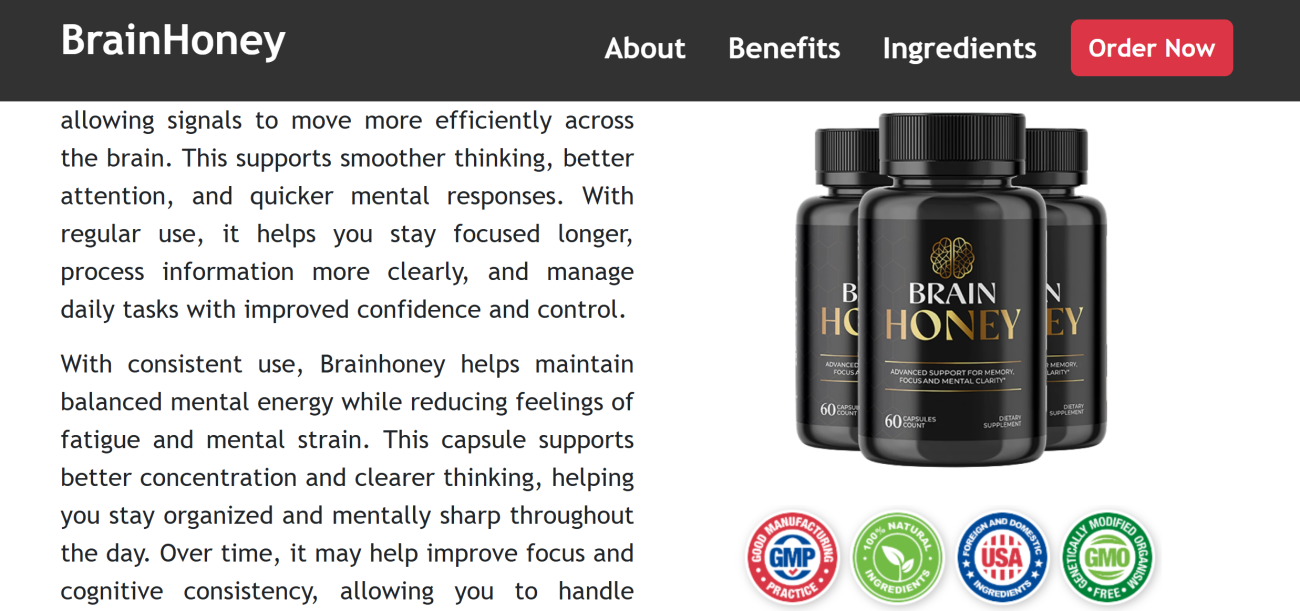
If you’ve seen Brain Honey online recently, chances are you didn’t find it through a normal supplement ad. It usually starts with a long dramatic video about memory loss, dementia, brain inflammation, or Alzheimer’s disease. Then suddenly Bill Gates, a fake doctor, or some “medical expert” appears talking about a hidden honey trick the public supposedly doesn’t know about. The videos are designed to feel urgent and emotional fast.
In this review, we’ll break down what Brain Honey actually is, how the fake Bill Gates “honey trick” videos are being used to sell it, and why so many of these viral Alzheimer’s cure ads start falling apart once you look past the emotional marketing.
Quick Takeaways
- Brain Honey is promoted through fake “honey trick” Alzheimer’s cure videos
- Bill Gates endorsement claims appear completely fabricated
- Many ads use AI-generated voices, edited footage, and fake authority tactics
- The marketing heavily targets fear around memory loss and aging
- No credible evidence shows Brain Honey reverses dementia or Alzheimer’s
- The funnel looks far more focused on emotional manipulation than science
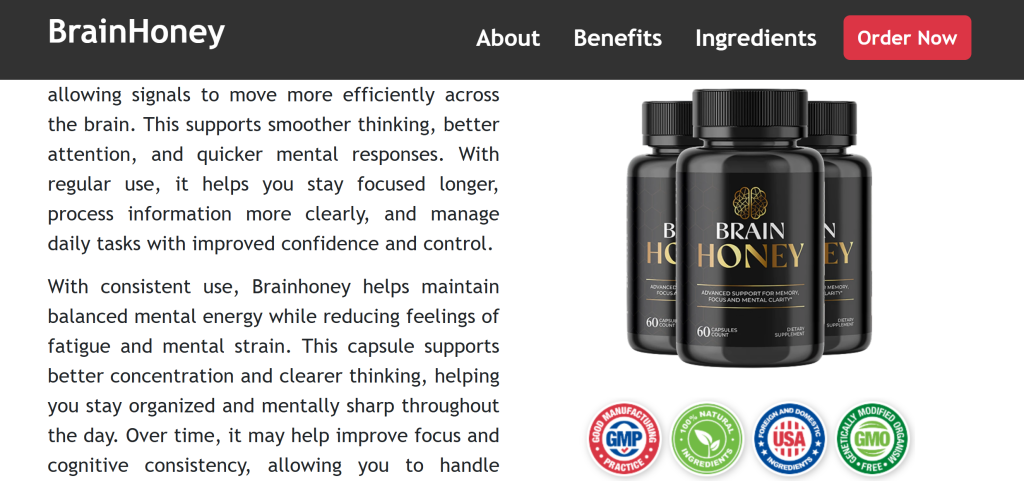
What Is Brain Honey Supposed To Be?
Brain Honey is usually marketed as a memory support or cognitive health supplement. The claims vary depending on the ad, but most versions push the idea that it can:
- improve memory
- clear brain fog
- sharpen focus
- “repair” cognitive decline
- or even help reverse dementia naturally
But the interesting thing is that the product itself almost feels secondary. Most of the videos spend way more time building fear around Alzheimer’s and memory loss than actually explaining what the supplement does. That’s usually the first sign you’re looking at a funnel designed around emotion first and evidence second.
The Fake Bill Gates “Honey Trick” Videos
This is where things start getting really deceptive. A huge part of the Brain Honey marketing revolves around fake videos claiming Bill Gates discovered, funded, or secretly endorsed some kind of honey-based dementia breakthrough. Some versions even make it sound like the medical industry is hiding the truth from the public.
The problem?
None of it is real.
There’s no verified evidence Bill Gates has anything to do with Brain Honey or any Alzheimer’s “honey trick” cure. Independent scam investigations have already flagged these videos as misleading and AI-manipulated. And honestly, once you watch a few of the ads carefully, the manipulation becomes easier to notice: weird voice syncing, unnatural pauses, edited interview clips, and fake news-style presentations designed to look legitimate at first glance.
The Videos Follow The Same Exact Formula
One thing I noticed almost immediately is how repetitive these funnels are. The structure barely changes. First, the video creates fear around memory decline. Then it introduces a “hidden cause” mainstream medicine supposedly ignored.
Then comes the emotional hook: a natural honey recipe, brain trick, or forgotten discovery. And only after a long emotional buildup does the supplement finally appear. The entire setup is designed to keep viewers emotionally engaged long enough to trust the sales pitch before realizing they’re inside a supplement funnel.
The Fake Doctor & AI Expert Problem
Another huge red flag is how aggressively these ads try to manufacture credibility.
You’ll constantly see:
- fake doctor clips
- AI-generated narrators
- edited interviews
- medical buzzwords
- fake research language
- news-style graphics
Some versions even use fake “breaking news” style pages to make the product look medically endorsed. But when you actually trace the claims back, there’s no real clinical proof behind the dramatic Alzheimer’s or dementia promises. That’s the part people really need to slow down and notice.
Does Brain Honey Actually Work?
There’s no credible scientific evidence showing Brain Honey can reverse Alzheimer’s disease or dementia. That’s the reality underneath all the emotional marketing. Some ingredients commonly used in “brain supplements” may be associated with general cognitive support or wellness claims.
But that’s nowhere near the same thing as curing neurodegenerative disease. The marketing takes that small gap and stretches it into something that sounds revolutionary.
The Subscription Trap & Billing Complaints
This is another pattern that keeps showing up around products like this. A lot of these supplement funnels are built around:
- recurring subscriptions
- aggressive upsells
- “limited-time” discounts
- difficult refund processes
People often think they’re making a simple one-time purchase, then later discover repeat charges or complicated cancellation systems. And sincerely, that pattern appears constantly in these viral health funnels.
Why These Dementia Scams Keep Spreading
Because fear and hope are an incredibly powerful combination. Alzheimer’s and memory loss are emotional topics. Families dealing with cognitive decline are naturally vulnerable to anything promising improvement or reversal.
Scammers know that. So, they build videos designed to trigger emotion fast:
fear, urgency, hope, hidden cures, fake experts, celebrity involvement. And now that AI-generated content has become easier to produce, these scams are becoming much more convincing than they used to be.
A Pattern I Keep Seeing
The overall structure behind Brain Honey reminded me a lot of what I found while researching Harm Brain, Apex Neuro Elite, and the Steve Martin Alzheimer’s Cure scam. Different names, same formula underneath: emotional fear, fake authority, miracle discovery storytelling, then a supplement waiting at the end of the funnel.
I also noticed similarities with NeuroPrime Drops and Alpha Honey Gummies, especially the way ordinary wellness ingredients get wrapped inside exaggerated transformation claims. Once you’ve reviewed enough of these funnels, the structure becomes extremely predictable.
Is Brain Honey Legit Or A Scam?
At this point, Brain Honey raises far more red flags than trust. The fake Bill Gates claims, AI-generated videos, emotional manipulation, exaggerated dementia promises, and fake authority tactics all point toward another viral supplement funnel built around hype instead of credible science.
And honestly, if a real Alzheimer’s breakthrough existed, it would not be hidden behind long sales videos and social media ads pretending celebrities discovered it.
Conclusion
Brain Honey doesn’t look like a real Alzheimer’s breakthrough. It looks like another emotionally manipulative “honey trick” funnel built to exploit fear around aging and memory loss.
The supplement itself almost feels secondary. The real engine behind the entire thing is the storytelling, fake authority, AI-generated videos, and the emotional promise that a simple hidden cure supposedly exists. Once you separate the marketing from reality, the whole illusion starts falling apart pretty quickly.
FAQ
Did Bill Gates endorse Brain Honey?
No. There’s no credible evidence Bill Gates has any connection to Brain Honey or a dementia “honey trick” cure.
Does Brain Honey cure Alzheimer’s?
No. There is no scientific evidence showing Brain Honey can cure or reverse Alzheimer’s disease.
Are the Brain Honey videos fake?
Many appear heavily edited and likely use AI-generated voices, manipulated footage, or fake authority tactics.
Is Brain Honey a scam?
The marketing surrounding Brain Honey shows multiple major scam-style red flags, including fake endorsements and exaggerated medical claims.
Why do these “honey trick” scams keep appearing?
Because emotional health fears combined with celebrity-style storytelling are extremely effective at driving clicks and supplement sales.
Also Read >>> Is Marys-Closet.com Legit? The Truth Behind the “Closing Sale”
