If you’ve been scrolling through golf forums, social media, or ads lately, you may have noticed Ameni Golf Glasses popping up everywhere. On the surface, they look like a stylish pair of polarized sunglasses—but the marketing hints at something more: clearer vision, less glare, and even a slight performance edge on the course.
But here’s the question few people ask: do these glasses actually make a noticeable difference, or are they just another accessory with a fancy story?
In this review, I’ll break down what Ameni Golf Glasses really offer, where they shine, and where they might fall short. We’ll cover the lenses, comfort, real-world usability, and even how they stack up against other golf eyewear options. By the end, you’ll know exactly what to expect before you spend a dime.
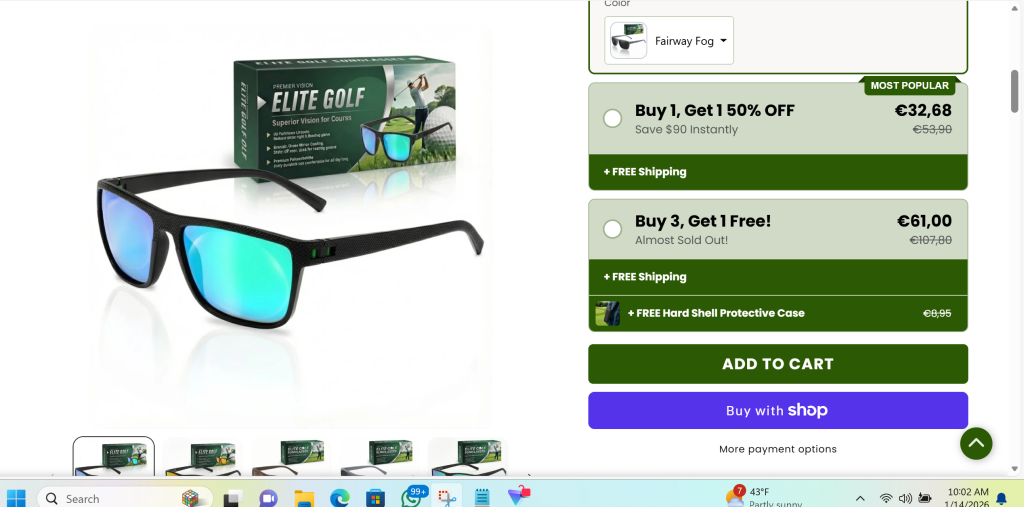
- Why Ameni Golf Glasses Are Showing Up Everywhere
- The Idea They’re Selling — Not Just the Glasses
- What You’re Really Getting
- Where Expectations Start to Get Tricky
- When These Glasses Actually Make Sense
- What These Glasses Can’t Do for You
- So Where Does That Leave Ameni Golf Glasses?
- Frequently asked Questions (FAQ)
- How to Shop Safely Online (Without Getting Scammed)
Why Ameni Golf Glasses Are Showing Up Everywhere
Ameni Golf Glasses aren’t suddenly everywhere because golfers discovered a new vision problem. They’ve gained attention because golf culture increasingly rewards small, incremental improvements. When progress is slow and subtle, even a minor edge like reducing glare or making greens easier to read can feel worth investing in.
These glasses have appeared in feeds, ads, and social posts because they promise a way to see better without changing your swing, your training, or your strategy. That’s a compelling story, especially for golfers who already feel like they’re doing everything “right” but still want an advantage.
This trend isn’t unique to Ameni. Golfers have long been drawn to accessories that hint at performance gains. From specialty clubs to high-tech rangefinders, the culture favors small advantages, and Ameni Golf Glasses fit neatly into this environment.
The Idea They’re Selling — Not Just the Glasses
Ameni’s marketing doesn’t just sell sunglasses, it sells clarity, focus, and confidence on the course. The subtle promise is that if you wear them, your rounds might feel smoother, your eyes will feel less fatigued, and your focus won’t waver as sunlight and glare try to distract you.
It’s a quiet narrative: performance comes from seeing better, not swinging differently. That’s appealing because it doesn’t require effort, just the “right” tool. But the real question is whether these glasses truly deliver on that story or if the effect is mostly comfort and perception.
This promise fits a larger pattern in golf marketing: many accessories suggest that marginal gains add up to real results. Ameni taps into that mindset, offering a visual improvement that feels significant to those sensitive to light.
What You’re Really Getting
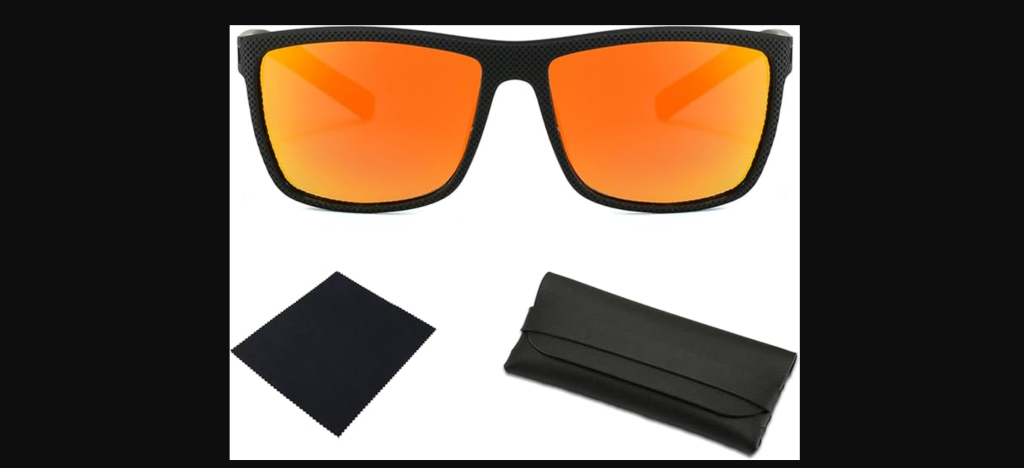
Strip away the marketing language, and Ameni Golf Glasses are sport-focused sunglasses optimized for outdoor conditions. They feature:
Polarized or glare-reducing lenses
Slightly tinted lenses to enhance contrast
Lightweight frames designed for extended wear
A design that balances comfort and stability for walking and swinging
They don’t contain proprietary optics or revolutionary lens technology. Essentially, they’re well-made golf sunglasses rather than a performance-altering device.
Compared to generic sunglasses, the main difference is optimization. The lens tints and polarization aim to make subtle differences in greens, fairways, and sand traps easier to see. For someone sensitive to light or glare, this can improve comfort and focus. For others, especially casual players, the difference may feel minor.
Where Expectations Start to Get Tricky
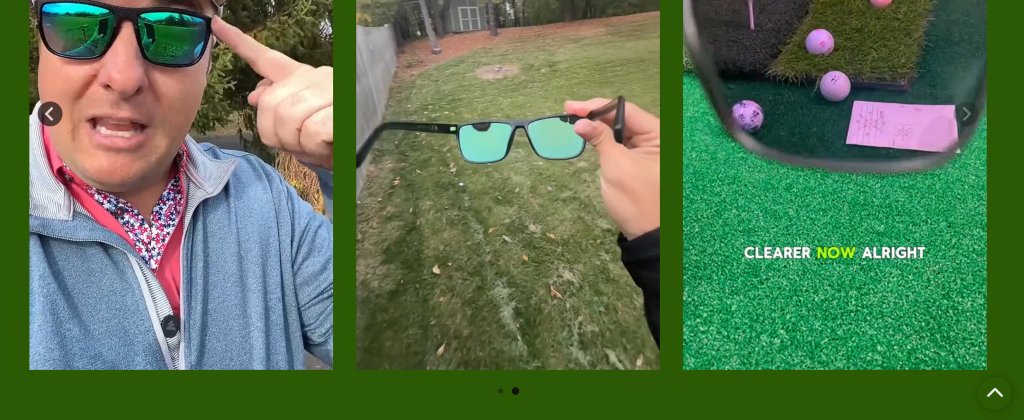
These glasses can reduce glare and make visual details more comfortable, but they won’t improve green-reading, putt accuracy, or swing mechanics. Golfers expecting a noticeable jump in scores may be underwhelmed.
Higher-end competitors may offer more specialized lens coatings or fully custom prescriptions. For golfers used to those, Ameni may feel like a modest upgrade rather than a breakthrough. The key is to approach them as an enhancement to comfort and clarity, not a shortcut to better performance.
When These Glasses Actually Make Sense
Ameni Golf Glasses shine in specific situations: Frequent golfers who spend hours on sunny courses. Players sensitive to glare or bright light. Golfers who value comfort and stability in eyewear during swings. Those seeking small visual enhancements without spending heavily on high-end sports sunglasses
They are less valuable for casual or infrequent golfers, or anyone who already owns high-quality polarized sunglasses. They also perform well in transitional lighting, early morning or late afternoon when glare spikes suddenly.
What These Glasses Can’t Do for You
No matter the marketing, they cannot:
Fix your swing or putting technique
Replace practice, coaching, or course experience
Dramatically increase performance or scores
Over-relying on them as a performance shortcut risks frustration. They help with comfort and visibility, but golf fundamentals still matter.
Durability is another factor: frames are lightweight and comfortable, but rough handling or drops can affect fit and lens integrity.
So Where Does That Leave Ameni Golf Glasses?
Ameni Golf Glasses are neither revolutionary nor misleading. They are thoughtfully positioned as an accessory that improves comfort and visual clarity on the golf course.
For frequent golfers noticing eye fatigue or glare, they make rounds more pleasant. For casual players or those expecting dramatic performance boosts, they may feel unnecessary.
Compared to competitors, Ameni sits in the mid-range of the golf eyewear market. They don’t match high-end specialized lenses but offer good value in comfort, clarity, and usability.
Frequently asked Questions (FAQ)
Q1: Are Ameni Golf Glasses polarized?
Yes, they feature polarized lenses designed to reduce glare and improve contrast, especially in bright sunlight.
Q2: Will these glasses improve my golf score?
They can improve comfort and visibility but won’t fix swing mechanics or putting skills. Benefits are mostly subtle.
Q3: Who should consider buying Ameni Golf Glasses?
Frequent golfers, players sensitive to bright light, or those prioritizing visual comfort during long rounds. Casual players may notice less difference.
Q4: How durable are Ameni Golf Glasses?
Frames are lightweight and comfortable, but drops or rough handling may impact lens or fit. Treat them like any quality eyewear.
Q5: Are these glasses worth the price?
If you spend significant time outdoors and want comfort plus glare reduction, they are a solid mid-range choice. Not a high-end performance upgrade, but good value for comfort and clarity.
How to Shop Safely Online (Without Getting Scammed)
Online shopping is convenient, but it also comes with risks. Fake stores, cloned websites, and misleading ads are more common than ever. The good news? Most online shopping scams follow predictable patterns and once you know them, they’re easier to avoid.
1. Check the Website Before You Buy
Before adding anything to your cart, pause and look at the website itself.
- Make sure the URL starts with https:// (not just http)
- Look for a real About Us, Contact page, and Return Policy
- Be cautious if the site looks polished but has very little information about who runs it
Scam sites often look good on the surface but are shallow once you click around.
2. Be Wary of “Too Good to Be True” Prices
Massive discounts are one of the oldest tricks in online scams.
- Brand-new items at 70–90% off are a red flag
- Countdown timers (“Only 5 minutes left!”) are designed to rush you
- “Limited stock” warnings on every product are often fake
Legitimate stores don’t need pressure tactics to make sales.
3. Research the Store Outside Its Own Website
Never rely only on what the website says about itself.
- Search the store name + “review” or “scam” on Google
- Look for reviews on Trustpilot, Reddit, blogs like Malwaretips, Ibisik
- Pay attention to patterns (no delivery, wrong items, no refunds)
- Search for Domain name on website search tools like, Who.is.
A complete lack of reviews or only overly positive ones is suspicious.
4. Use Safe Payment Methods
How you pay matters just as much as where you shop.
- Use credit cards or PayPal whenever possible
- Avoid bank transfers, crypto payments, or gift cards
- Credit cards and PayPal offer buyer protection if something goes wrong
If a store only accepts risky payment methods, walk away.
5. Look Closely at Product Photos and Descriptions
Many scam stores reuse images from real brands.
- Reverse-image search product photos (Google Images works well)
- Watch for vague descriptions with lots of hype but few specifics
- Be cautious of spelling errors and awkward grammar
Sloppy content often signals a rushed or disposable website.
6. Don’t Shop Through Random Ads Alone
Social media ads are a major source of scam traffic.
- Ads on Facebook, Instagram, or TikTok are not endorsements
- Always click through and verify the store independently
- Never buy impulsively straight from an ad
Scammers rely on emotional reactions and quick decisions.
7. Check Delivery Times and Policies
Long or unclear shipping timelines are a common warning sign.
- “Delivery in 15–30 business days” may indicate drop-shipping or scams
- No clear refund or return policy = high risk
- Legitimate stores explain delays clearly and transparently
8. Trust Your Instincts
If something feels off, it usually is.
- Confusing policies
- Overly aggressive marketing
- No way to contact real customer support
Walking away costs nothing. Getting scammed costs time, money, and peace of mind.
